



 Home
HomeAcrylic vs PET High Gloss Film: The Engineer's Guide to Cabinet Manufacturing
 30 Jun,2026
The Procurement Blind Spot: Looking Beyond the Spec Sheet
For over two decades on the lamination floor, I have watched purchasing managers and product engineers argue over the ideal surface for modern high gloss furniture. The debate usually centers on a highly simplified metric: the unit price per square meter. However, when a furniture manufacturer chooses between acrylic and PET high gloss, relying solely on upfront material costs or static specification sheets is a critical engineering misstep. The true cost of a decorative surface is only realized after it has passed through the flat lamination line, survived the edge banding station, endured international shipping, and performed flawlessly in a residential environment for years.
The industry is shifting. While acrylic has long been the default for luxury cabinet surfaces, a significant transition is occurring. Many panel processing facilities and cabinet manufacturers are recalibrating their surface material strategies, forcing a deep technical reassessment of PET vs acrylic furniture panels. To understand why, we must evaluate these materials not as isolated films, but as integral components of a complex manufacturing ecosystem.
The Machining Floor Reality: Yield Rates and Edge Processing
The most significant hidden cost in panel production is not the material itself; it is the yield loss during processing. The difference between PET and acrylic becomes glaringly obvious at the sizing saw and the edgebander.
Overcoming CNC Chipping and Edge Banding Failures
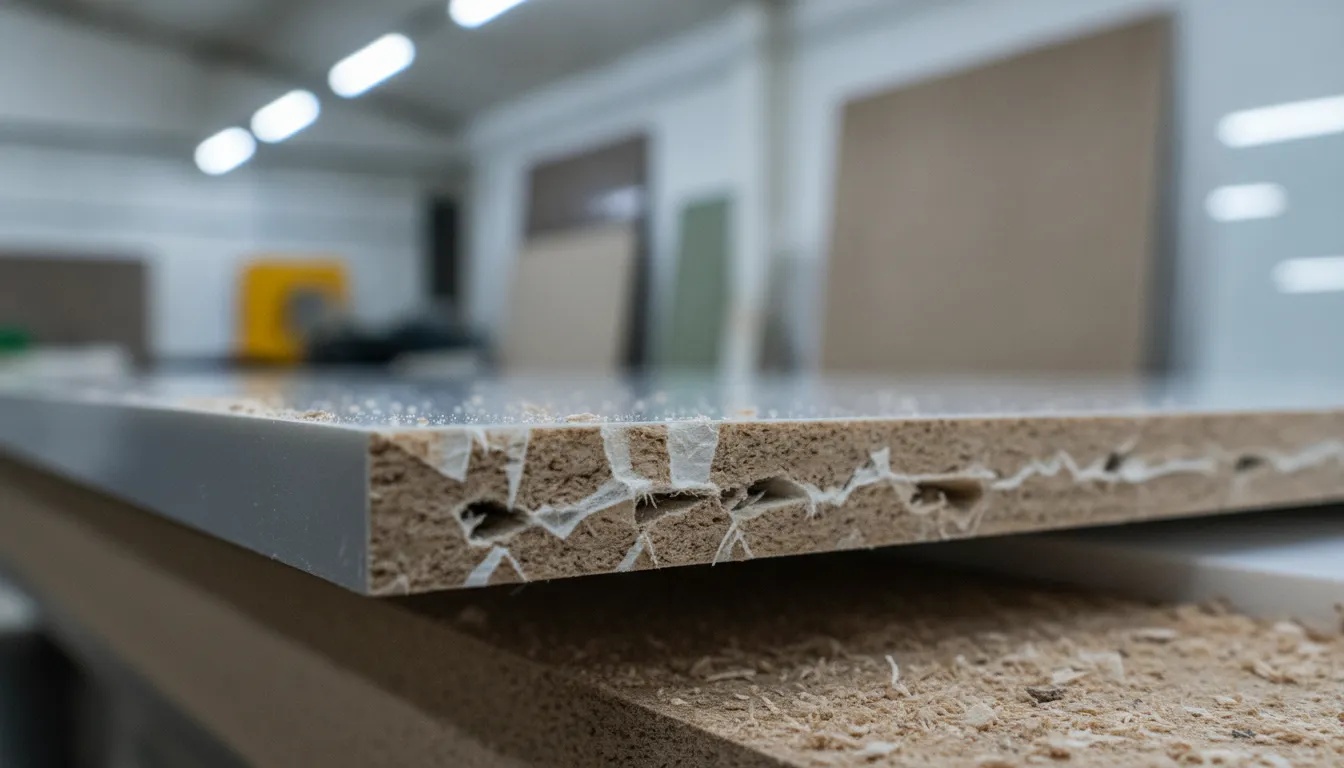
Acrylic, typically supplied as a 0.8mm to 1.0mm sheet, is inherently brittle. Its structural rigidity provides excellent panel flatness, but this same hardness becomes a liability during CNC machining. If the cutting tools are not perfectly sharp or the feed rates are marginally off, acrylic is prone to micro-chipping along the cut line. When applying matching edge tape, these micro-fractures prevent a seamless, invisible joint, leading to a higher rejection rate at the quality control station.
Conversely, high gloss PET film (usually 0.3mm to 0.5mm thick) possesses superior flexibility and dimensional stability under mechanical stress. When a factory producing high-volume wardrobe sliding door finishes switches to a PET membrane foil, the immediate result is often a drastic reduction in edge-chipping defects. PET accommodates the slight tolerances of high-speed edge banders without shattering. Furthermore, when utilizing advanced PUR adhesive technology, PET decorative film bonds with a tenacity that practically eliminates the risk of delamination, even in high-moisture environments. This translates to fewer production bottlenecks and a higher throughput of high gloss MDF panels wholesale.
The Hidden Math in Lamination: Material Cost vs. Total Applied Cost
Discussing the cost of PET vs acrylic requires a holistic view of the factory floor. If we only look at the purchase order sent to a PET high gloss film supplier or an acrylic sheet distributor, PET appears significantly more economical. But the engineering calculation goes deeper.
Flat Lamination Efficiency and Adhesive Compatibility
Acrylic lamination requires heavy-duty pressing equipment and substantial adhesive coat weights to secure the rigid sheet to the MDF or particleboard substrate. Any slight waviness in the board is telegraphed through the acrylic, meaning only premium-grade, high-density substrates can be used.
PET laminated panels, while also demanding smooth substrates to prevent the dreaded "orange peel" effect, are lighter and easier to process on continuous flat lamination lines. Because PET high gloss film for MDF is thinner and more pliable, it calibrates better with the substrate surface tension when applied with the correct roller pressure and PUR coat weight.
Furthermore, inventory management heavily influences the total applied cost. A furniture decorative film supplier can typically provide PET in long continuous rolls, minimizing waste during continuous lamination runs. Acrylic is mostly supplied in rigid sheets, leading to unavoidable offcut waste when optimizing panel yields for custom high gloss kitchen cabinet doors. When a factory calculates the true PET vs acrylic cost comparison, factoring in yield, machine downtime, and offcut waste, PET often emerges as the far more efficient manufacturing choice.
Visual Physics: Depth of Gloss and Surface Tension
If manufacturing efficiency strongly favors PET, why do many brands still specify acrylic? The answer lies in the optics.
The Mirror Effect and Orange Peel Mitigation
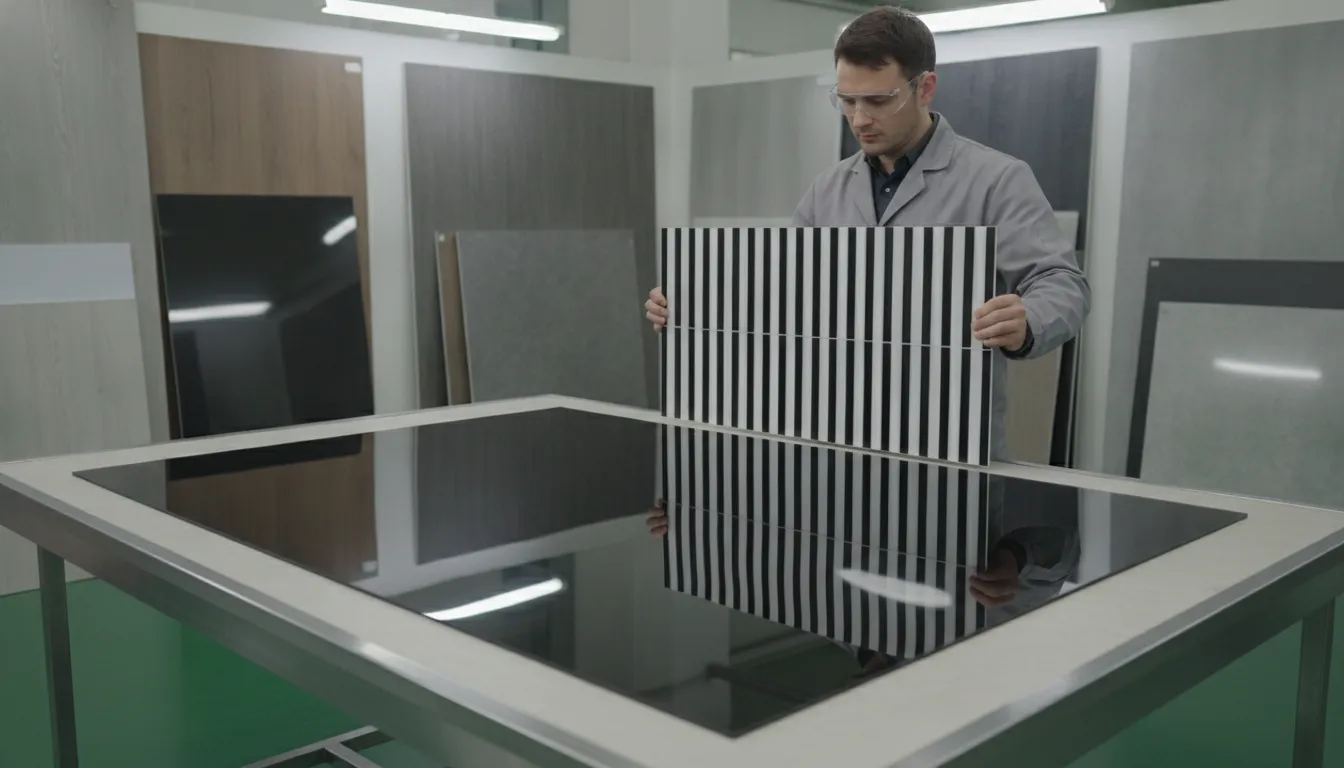
Acrylic possesses a unique refractive index. A high-quality UV resistant acrylic film or sheet delivers a deep, glass-like mirror reflection that is exceptionally difficult to replicate. For ultra-premium, minimalist kitchen cabinet finishes where absolute planar reflection is non-negotiable, acrylic remains a formidable contender. Its thickness allows it to absorb minor substrate imperfections better than extremely thin films, assuming the adhesive application is flawless.
However, advancements from top-tier PET decorative film manufacturers have narrowed this gap significantly. Modern high gloss PET film utilizes co-extrusion technology that dramatically improves its surface tension and reflective clarity. While it may lack the microscopic depth of a 1mm acrylic sheet, premium PET now achieves a mirror finish that satisfies 95% of the market demands for decorative panels for interior design.
A critical nuance for product engineers to remember is the comparison of PET vs PVC vs acrylic. PVC, historically the budget option for glossy surfaces, suffers from severe orange peel and plasticizer migration over time. Manufacturers evaluating PET or acrylic for cabinets have largely abandoned glossy PVC due to these visual defects and environmental concerns.
Chemical Stability and the Long-Term Liability
The procurement decision you make today dictates the warranty claims you will manage five years from now. Field performance—specifically regarding scratch resistance and color stability—is where the engineering trade-offs of acrylic vs PET cabinets become critical.
UV Aging, Yellowing, and Scratch Resistance
Historically, acrylic held the crown for surface hardness. It can withstand significant abrasion, and minor scratches can often be buffed out—a distinct advantage for luxury installations. However, modern scratch resistant high gloss film technology has revolutionized PET. Through UV-cured hard-coating processes, advanced PET films now rival acrylic in daily wear-and-tear resistance. When evaluating PET vs acrylic scratch resistance for daily furniture use, hard-coated PET provides exceptional durability without the brittleness associated with acrylic.
Anti-yellowing performance is another crucial engineering parameter. Acrylic is inherently UV stable; it will not yellow under prolonged sunlight exposure. This makes it an excellent choice for sun-drenched coastal apartments. But how does PET compare? Standard PET can degrade under UV light, but any reputable PET laminate manufacturer China or Europe-based will specify UV-inhibitors in their premium architectural films. When sourcing, specifying UV-stabilized PET high gloss sheet ensures the PET vs acrylic yellowing resistance debate is largely neutralized for standard indoor environments.
We must also consider chemical resistance. Kitchens are harsh environments exposed to oils, acidic food spills, and aggressive cleaning agents. PET exhibits phenomenal chemical inertness. It is highly resistant to staining and chemical degradation, which is why anti-fingerprint PET film technology has migrated so successfully from ultra-matte to high-gloss formulations, keeping surfaces pristine with minimal maintenance.
Supply Chain Resilience and Export Considerations
For an OEM supplier serving premium apartment projects globally, the journey from the factory door to the final installation site is fraught with peril. Transportation damage is a hidden cost that destroys margins.
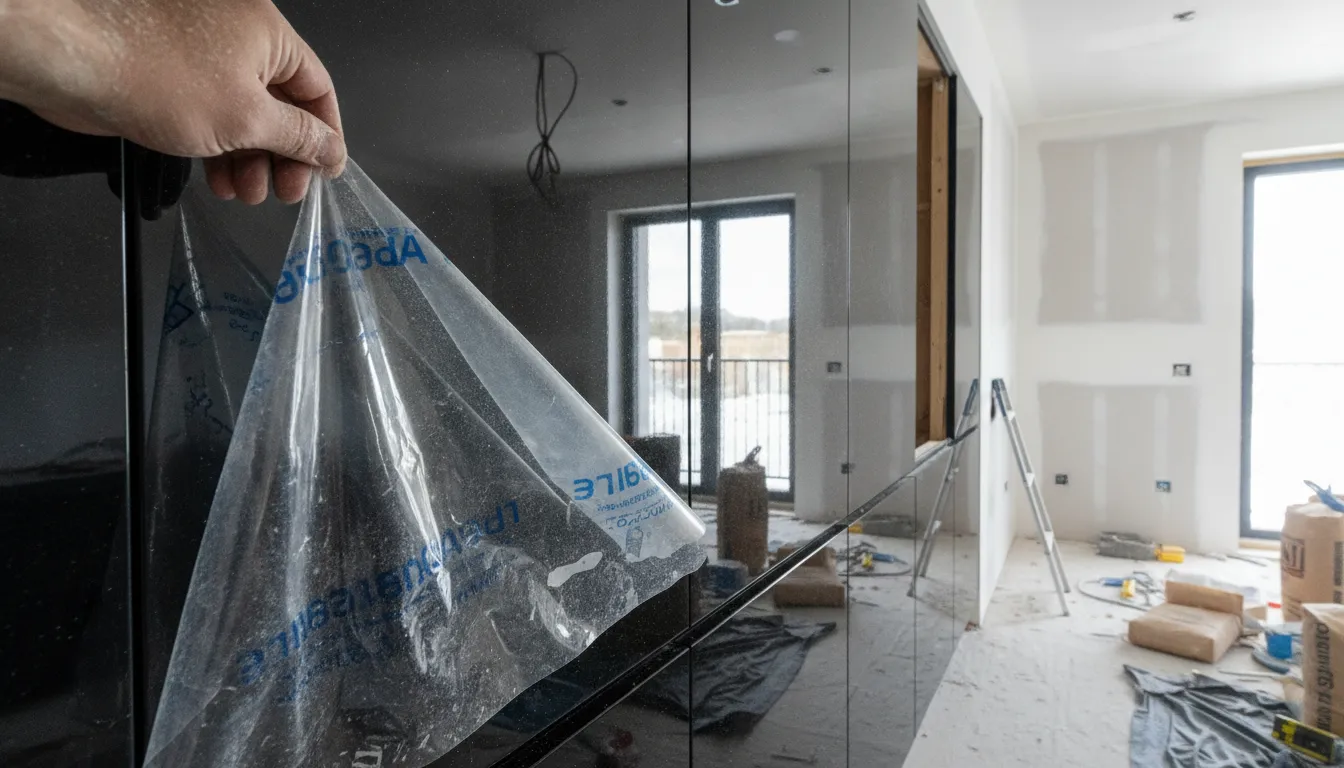
Acrylic-faced boards are heavy. A shipping container loaded with acrylic laminated MDF reaches its weight limit long before it reaches its volume limit. Furthermore, the brittle nature of acrylic edges means that any impact during transit can result in shattered corners, rendering the panel useless.
PET is significantly lighter and highly impact-resistant. It absorbs shocks that would crack an acrylic surface. For factories exporting high-volume flat-pack furniture, this impact resistance directly translates to fewer replacement parts shipped at the manufacturer's expense.
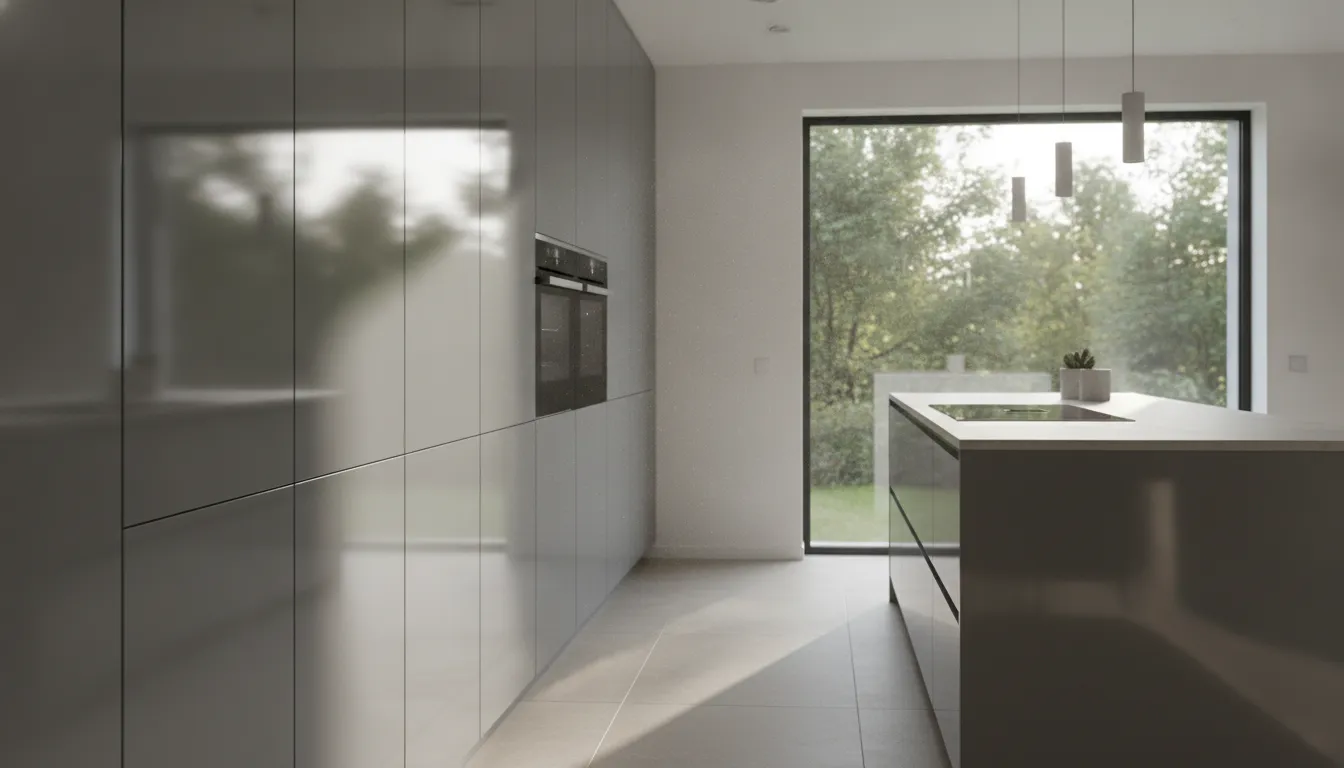
Finally, the regulatory environment in Europe and North America is increasingly dictating material choices. Eco-friendly cabinet finishes are no longer a niche request; they are a compliance requirement. PET (Polyethylene Terephthalate) is 100% recyclable, non-toxic, and free from halogens and plasticizers. It burns clean, producing only water and carbon dioxide. As large retail chains and developers enforce strict sustainability mandates, determining which is better PET or acrylic cabinets often comes down to environmental compliance, firmly pushing the needle toward PET as the best high gloss cabinet material for future-proof manufacturing.
Frequently Asked Questions
Which is better for kitchen cabinets, PET or acrylic?
For high-volume manufacturing and cost-efficiency, PET is generally better due to its flexibility, ease of machining, and lower defect rate during edge banding. Acrylic offers a slightly deeper glass-like reflection for ultra-luxury projects but is more brittle, heavier, and prone to chipping during production.
Is PET high gloss film scratch resistant?
Yes, premium PET high gloss films feature a UV-cured hard coating that provides excellent scratch resistance suitable for daily furniture use. While traditional acrylic is inherently harder, hard-coated PET bridges this gap, making it highly durable against micro-scratches and cleaning abrasions.
Does PET decorative film turn yellow over time?
Standard PET can degrade under UV light, but architectural-grade PET high gloss films are manufactured with advanced UV inhibitors. These premium PET films offer excellent anti-yellowing performance, matching the long-term color stability of acrylic in standard residential indoor environments.
What is the cost difference between PET and acrylic furniture panels?
From a strict material standpoint, PET high gloss film is significantly cheaper per square meter than rigid acrylic sheets. Furthermore, the total applied manufacturing cost of PET is lower because it is supplied in continuous rolls (reducing waste) and processes faster on flat lamination lines with fewer edge-chipping defects.
Why is PET replacing PVC in high gloss cabinet doors?
PET is replacing PVC because it is an eco-friendly, 100% recyclable material free of toxic plasticizers. Technologically, PET offers a much superior surface tension, eliminating the "orange peel" effect common in glossy PVC, resulting in a cleaner, more mirror-like finish for modern cabinets.
 Minimalist Hardware Meets PET Surfaces: Designing Truly Seamless Modern Cabinetry