



 Home
HomeBeyond the Surface: Why Antibacterial PET Decorative Films Are Becoming Essential in Public Space Projects
 27 Apr,2026
The unmistakable, sharp scent of industrial-grade bleach hung heavy in the corridor of a major regional medical center. I was walking the floor with the facility's director of operations, evaluating a recently renovated pediatric wing. It had only been eighteen months since the ribbon-cutting, yet the wainscoting and lower wall panels were already failing. The surfaces were clouded, the edges were micro-chipping, and worst of all, the latest ATP swab tests from the infection control team were coming back with elevated biological loads.
"We are cleaning these walls three times a day," the director told me, clearly frustrated. "But the more aggressive our chemical protocols get, the faster the material breaks down. And the more it breaks down, the more the bacteria seem to thrive."
This scenario is playing out in public facilities across the globe. We are trapped in a cycle where high-traffic environments demand rigorous sanitation, but the traditional materials specified for those spaces simply cannot survive the assault. It is a fundamental engineering mismatch. Solving this requires rethinking how we approach commercial interiors, moving away from legacy finishes toward advanced hygienic surface materials.
As a consultant navigating these exact challenges alongside architects and procurement teams, I have watched a quiet but massive shift in material specification. Here is why the industry is fundamentally changing its approach to surface engineering.
The Hidden Problem in High-Traffic Environments
To understand the solution, we must first dissect the failure. In environments like transit hubs, educational facilities, and healthcare centers, surfaces do not just sit there—they participate in the ecosystem. They act as fomites, passive carriers of pathogens.
When traditional materials—like standard laminates, porous paints, or basic vinyls—are subjected to thousands of daily interactions, luggage impacts, and medical cart collisions, they develop microscopic fissures. These micro-scratches are invisible to the naked eye but serve as perfect, protected harbors for pathogens.
Once the surface integrity is compromised, facility managers are forced to deploy harsher quaternary ammonium compounds or bleach solutions. These chemicals degrade the material further, stripping away any superficial protective layers. The surface becomes porous, the aesthetic is ruined, and the material ultimately fails its primary purpose: protecting the substrate and the public.
What Designers & Engineers Actually Look For
When architects and specification engineers go back to the drawing board after a failure like the one at the medical center, their criteria matrix changes drastically. Aesthetic flexibility remains important—nobody wants a hospital or an airport to look like a sterile warehouse—but it is no longer the primary driver.
Decision-makers are actively hunting for the holy trinity of commercial surface engineering:
- Active Hygiene: Materials that don't just endure cleaning, but actively contribute to infection control.
- Chemical and Mechanical Durability: Easy to clean wall materials for public spaces that can withstand harsh disinfectants without hazing, while resisting the blunt force of daily traffic.
- Lifecycle Economics: Finishes that offer a lower total cost of ownership through reduced maintenance labor and extended replacement cycles.
The Material Shift Happening in the Industry
This stringent set of criteria has led the architectural community directly to antibacterial PET decorative film.
We are seeing a rapid phasing out of legacy PVC and standard high-pressure laminates in critical areas, replaced by these highly engineered polyethylene terephthalate (PET) films. The shift is not driven by a marketing trend; it is driven by material science. PET is inherently stable, environmentally safe, and highly adaptable.
More importantly, it provides completely non-porous surface materials. When you upgrade a standard PET substrate to an antimicrobial decorative film, you transition the wall or furniture from a passive design element into an active layer of facility defense. It is a shift from hoping a surface is clean, to engineering a surface that fights contamination.
The Mechanics: How Antibacterial Technology Actually Works
When discussing this with project managers, I often have to clarify that not all "antibacterial" claims are created equal. We are not talking about a temporary topical spray that washes off after a month of maintenance.
In high-grade commercial films, the defense mechanism is molecular. The gold standard utilizes silver ion antibacterial technology. During the manufacturing process, silver ions are homogeneously integrated into the polymer matrix or the hardened antimicrobial coating of the film.
How does it perform in the real world? Ambient moisture in the air—or the moisture from human touch—triggers the slow, controlled release of these silver ions at the surface level. When pathogens like E. coli or MRSA come into contact with the film, the silver ions pierce the bacterial cell walls, bind to their DNA, and block the enzymes required for respiration and nutrient metabolism.
This results in continuous bacterial growth inhibition. The bacteria cannot multiply, and they die off. This creates a perpetually self-sanitizing surface between active cleaning cycles, providing a critical fail-safe for facility management.
Application Snapshots: Engineering in the Real World
To truly grasp the impact of this material, we have to look at how it performs under pressure in distinct environments.
The Healthcare Headwall
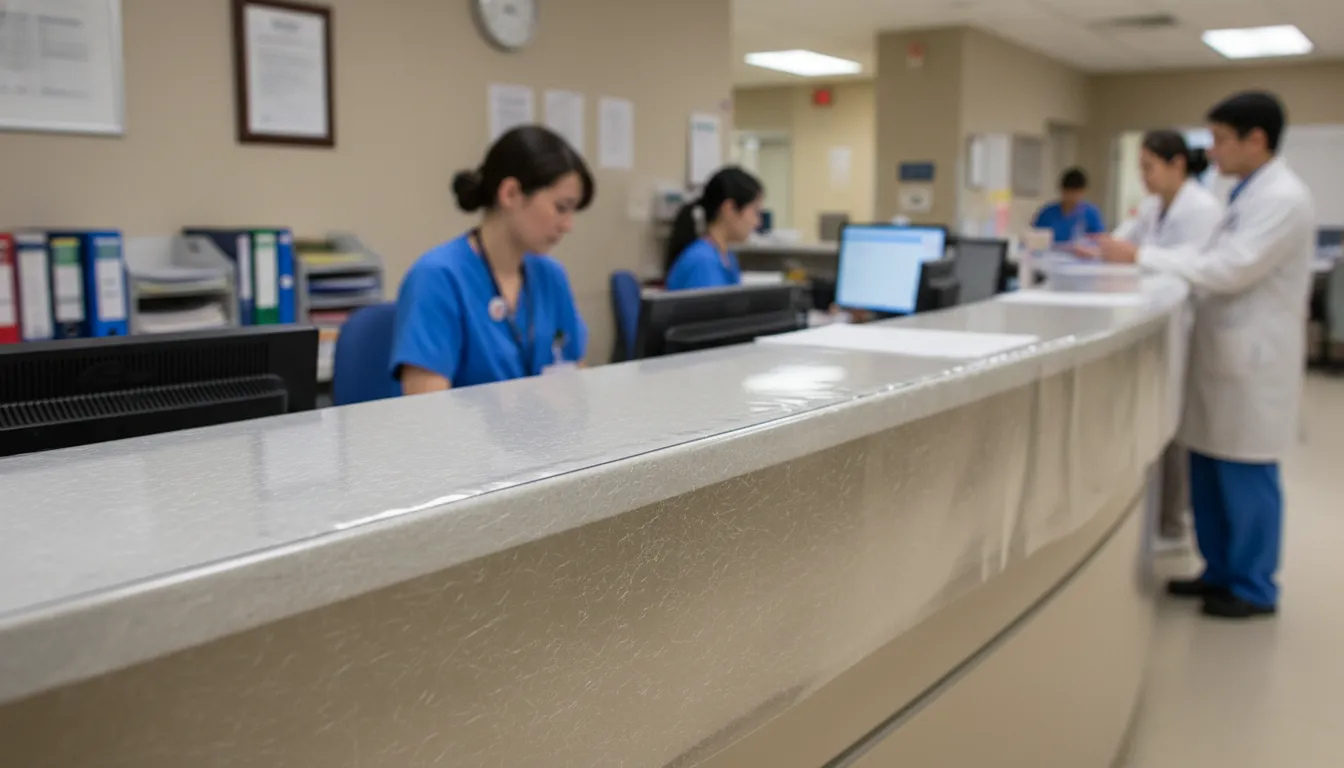
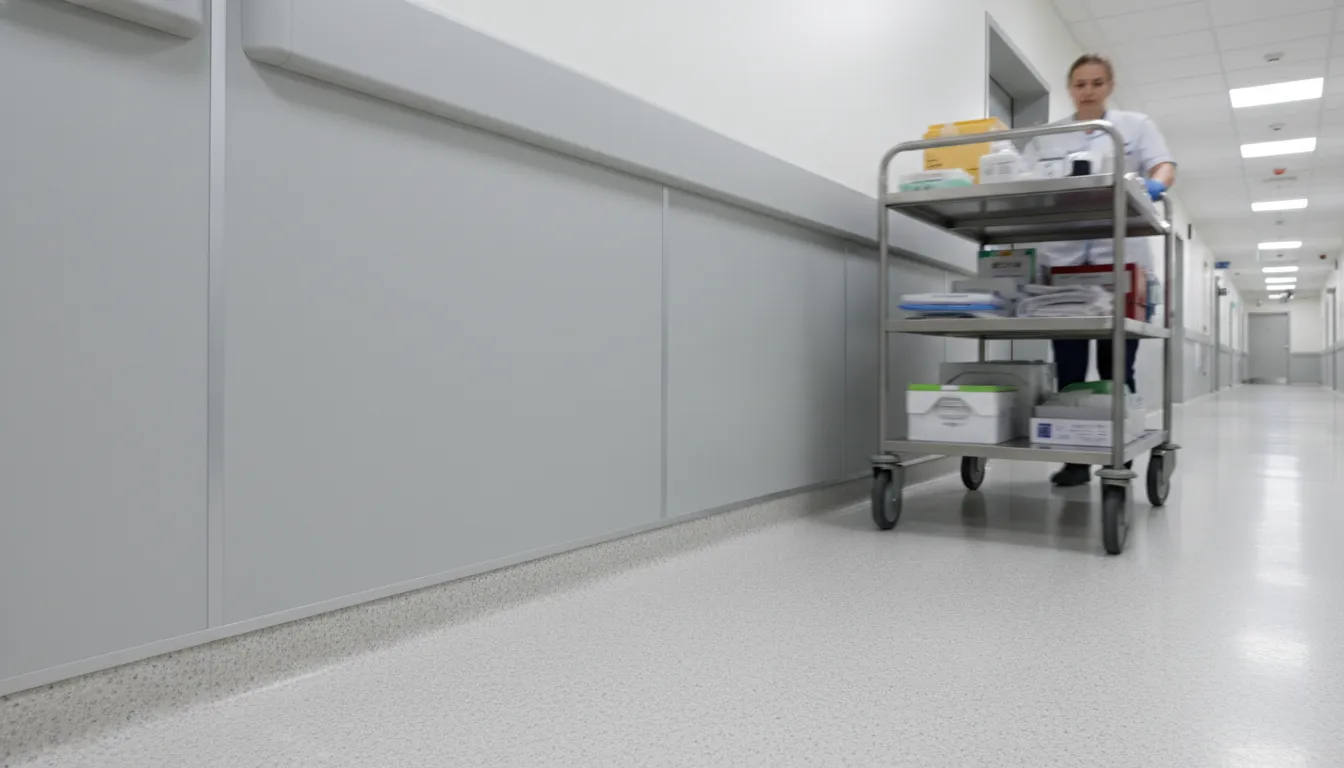
Consider the patient room in a high-acuity hospital ward. The headwall behind the bed houses essential gases and monitors, and it is a high-touch zone for nurses, doctors, and equipment. Specifying hospital grade decorative film here is a game-changer. By using an antibacterial PET film, designers can introduce calming, biophilic woodgrain textures to lower patient blood pressure, while the infection control team gets a non-porous, active barrier. When evaluating the best antibacterial surface materials for hospitals, this dual capability—clinical performance wrapped in therapeutic design—makes it unmatched.
The High-Density Classroom
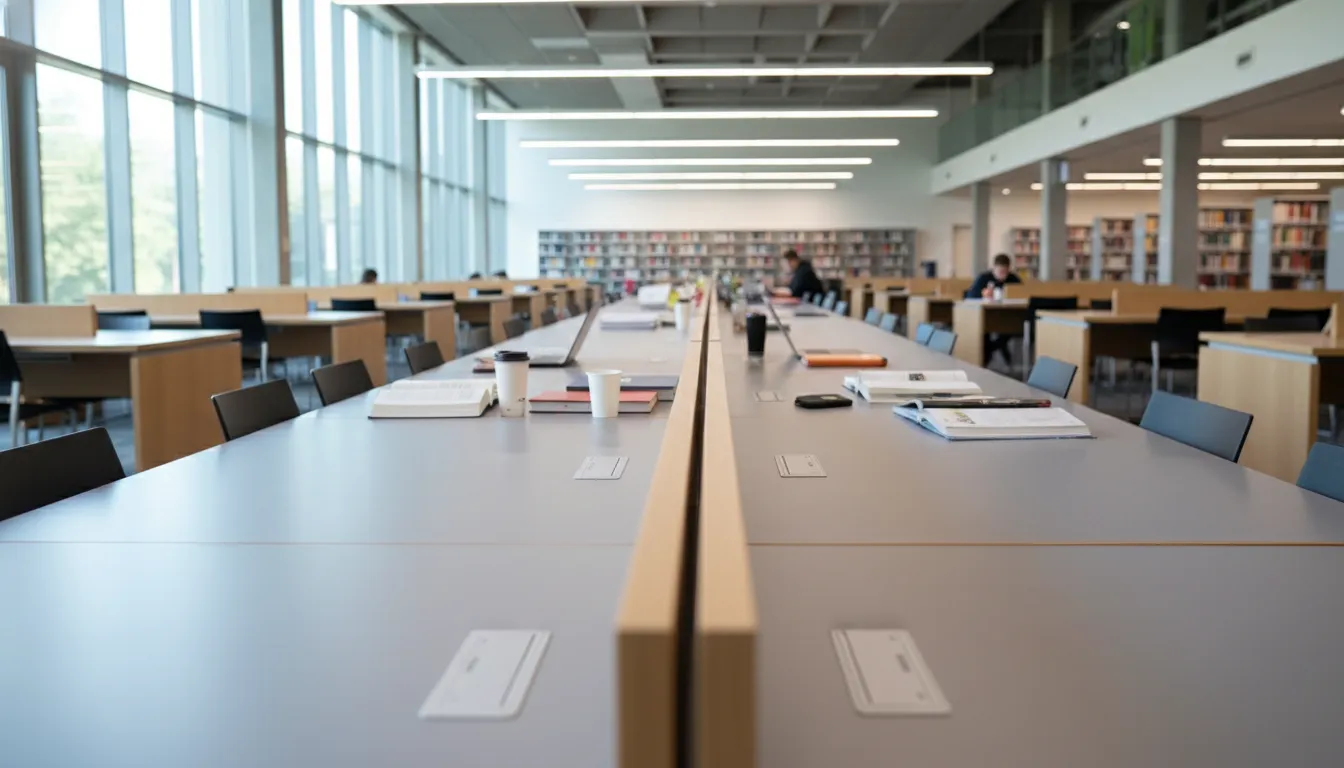
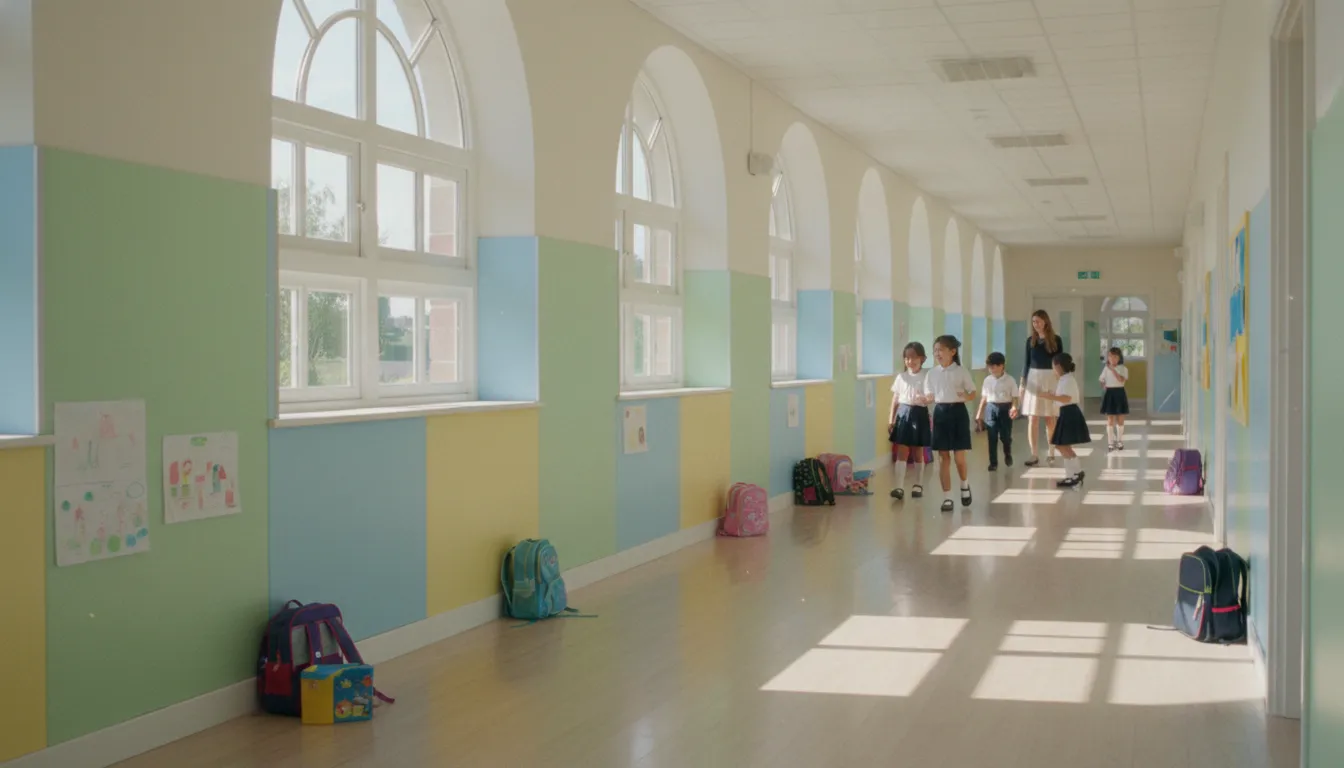
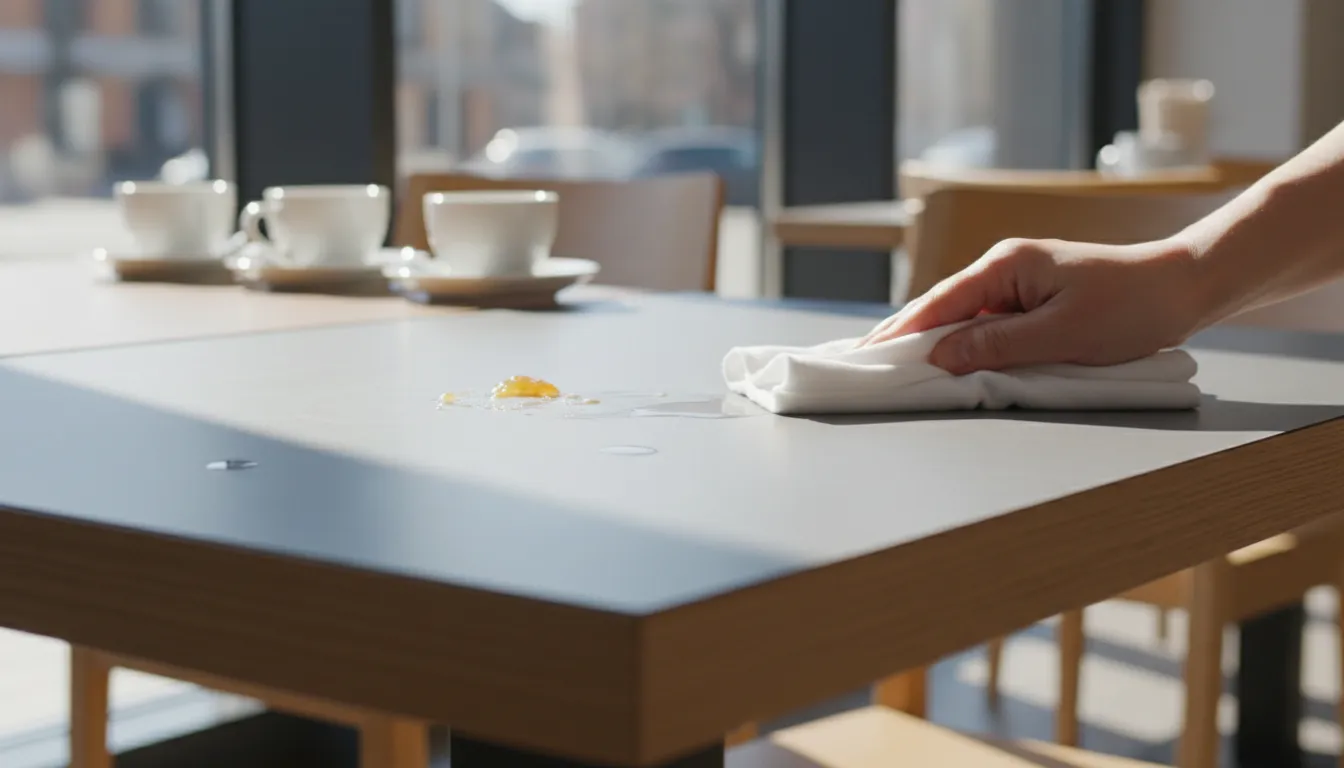
Schools are notorious vectors for seasonal illness, and their furniture takes incredible abuse. A middle school desk is subjected to compass points, heavy backpacks, and daily cafeteria spills. By wrapping these substrates in hygienic surfaces for schools, specifically a scratch-resistant PET film, the district achieves two goals: the toughened wear-layer prevents the micro-scratches where germs hide, and the silver ion technology mitigates the spread of the winter flu virus. It is an easy to clean wall film and furniture surface that dramatically reduces the labor burden on night-shift janitorial staff.
The International Airport Terminal
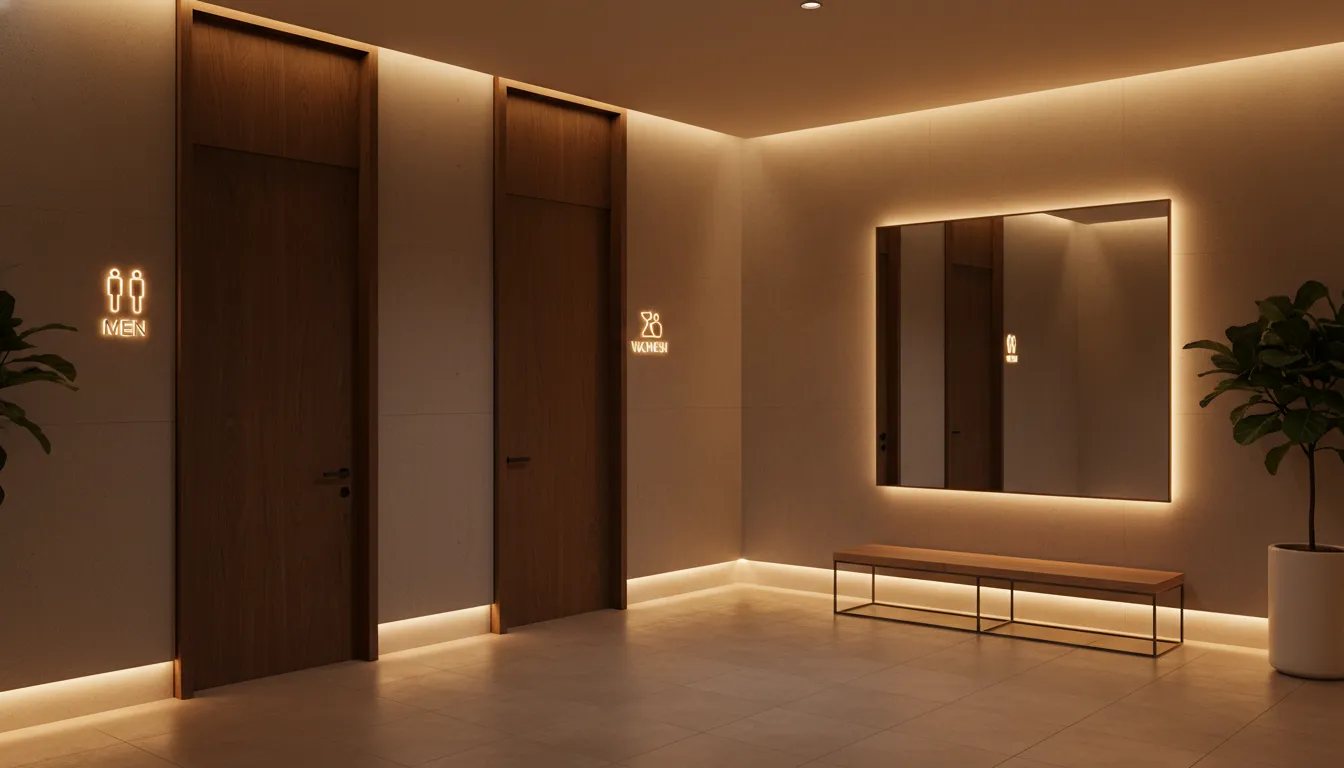
An airport concourse sees millions of travelers, massive temperature fluctuations, and constant luggage impact. Here, the material is applied as a commercial wall covering over structural pillars and corridor panels. Because airport codes are exceptionally strict, the material specified must be a fire-retardant interior film. Public space interior film made from PET meets these rigorous fire safety standards while providing a continuous, seamless aesthetic that defends against global pathogens.
Rethinking Materials: Traditional vs. Modern Solutions
When sitting at the specification table, the conversation inevitably turns to budget and comparison. Why not just use high-pressure laminate (HPL) or high-grade commercial paint?
The answer lies in the lifecycle cost. Traditional painted drywall is cheap on day one, but it is highly porous. It stains, chips, and requires constant repainting and patching. HPL is durable, but its edges are prone to chipping over time, and standard HPL offers no active bacterial resistance.
An antibacterial PET decorative film, applied via flat lamination or membrane pressing onto MDF or metal substrates, bridges the gap. It offers the impact resistance of HPL, the seamless wrapping capability of a flexible film, and active hygiene. While the initial specification might be slightly higher than paint, the reduction in maintenance labor, the elimination of repainting cycles, and the mitigation of healthcare-associated infections (HAIs) make the ROI undeniable.
Decision Logic: How to Choose the Right Material
When consulting on a new build or a major renovation, my advice to procurement teams sourcing antimicrobial film for commercial interiors boils down to a few strict decision gates:
- Assess the Traffic and Chemical Load: If the space will be cleaned with anything stronger than soap and water more than once a day, you need a highly cross-linked PET film, not standard vinyl.
- Demand Verifiable Efficacy: Never accept the word "antibacterial" without data. Require your PET interior film supplier to provide ISO 22196 or JIS Z 2801 testing data proving a 99% or greater reduction in bacteria.
- Evaluate the Manufacturer: The quality of the film is entirely dependent on the extrusion and coating process. Partner with a dedicated antibacterial PET film manufacturer who understands commercial tolerances, rather than a residential wallpaper supplier.
As an interior consulting and engineering professional at WellP, this is exactly the paradigm we operate within. We don't just supply aesthetic wraps; we engineer comprehensive decorative film for commercial projects that function as active hygiene systems. By treating the surface as an engineered layer of defense, our teams help architects and facility managers solve the hidden crises of public space durability and safety.
The spaces we design today will face unprecedented foot traffic and stringent health protocols tomorrow. Specifying the right material is no longer just about the finish; it is about the future of the facility.
Frequently Asked Questions
Q: Does the antibacterial coating wear off over time with heavy cleaning?
A: If the film utilizes a cheap topical spray, yes. However, high-quality antibacterial PET films integrate the silver ions directly into the polymer wear layer or the hardened UV topcoat during manufacturing. The antimicrobial properties remain active for the functional lifespan of the film, enduring heavy commercial cleaning without losing efficacy.
Q: Can these films be retrofitted onto existing commercial surfaces?
A: Yes. While they are frequently laminated onto raw boards for new furniture and panels, self-adhesive versions of these films can be expertly applied over existing smooth, non-porous surfaces (like metal elevator doors, existing HPL panels, or solid partitions). This allows facilities to rapidly upgrade their hygiene profiles without the downtime and dust of a full demolition.
Q: Are PET films environmentally safe for enclosed public spaces?
A: Absolutely. Unlike PVC-based materials, PET is free of heavy metals and plasticizers. It does not off-gas harmful Volatile Organic Compounds (VOCs), ensuring exceptional indoor air quality. This makes it an ideal specification for green building projects and enclosed environments with strict air quality standards.
 Middle East Hotel Construction: Why Metallic Texture Interior Design Dominates Luxury Hospitality Spaces