 Home
Kitchen Cabinet Materials: How to Specify the Box, Door Core and Finish
December 9, 2025
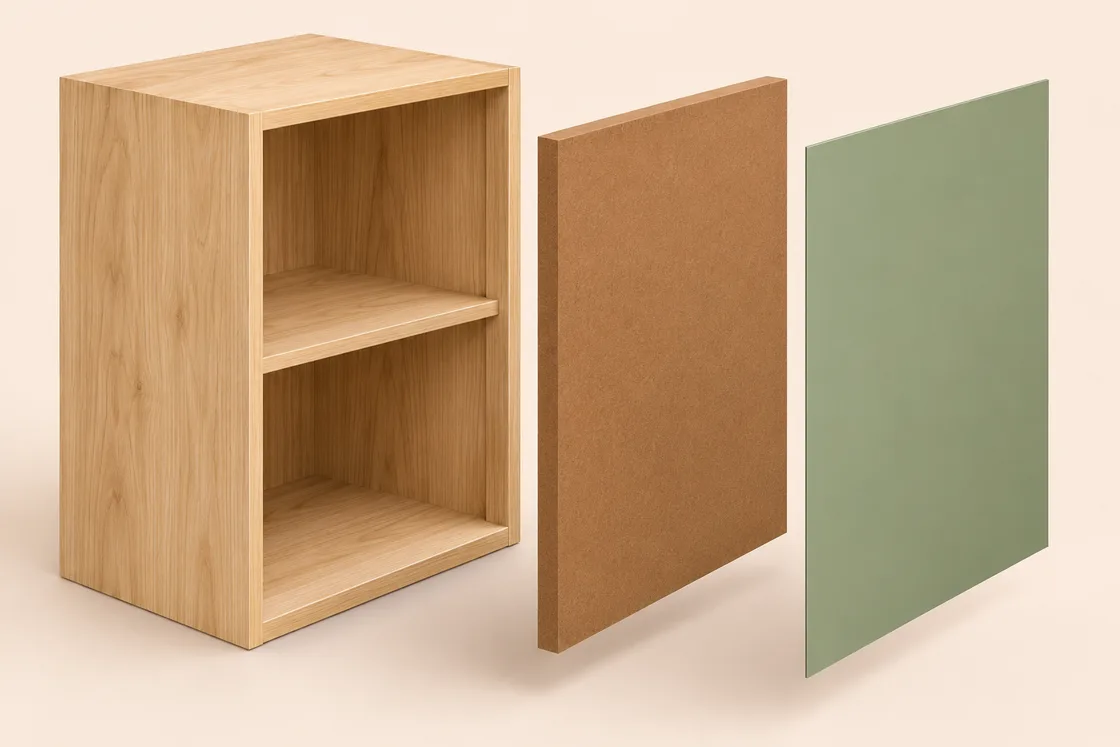
Write a kitchen cabinet materials specification in three layers: the cabinet box, the door core and the finish people see and clean. The box carries the hardware and supports the contents. The door core sets the profile and influences how the front machines and hangs. The finish determines most of the visible appearance and how the surface should be cleaned. One material name rarely covers all three decisions.
A useful order can say “plywood case, MDF slab door, matte PET face, coordinated edge and specified back finish.” Each part can then be priced, sampled and checked. Another project might use a thermally fused decorative panel for the case and a wrapped front on a routed door. Compare both as finished constructions with their own acceptance criteria.
Make the cabinet box a separate line item
Start with the case drawings and the use of the cabinet. A base unit under a sink has cutouts and edges that can be exposed to leaks. An upper cabinet has wall fixing points and needs a verified installation arrangement. A pantry often has a demanding combination of tall sides and loaded shelves. Verify the board grade, fasteners, back construction and installation requirements for each, taking the load in the actual assembly into account.
Plywood, MDF and particleboard can all appear in cabinet construction. Plywood grades vary in construction and face quality. MDF offers a uniform surface but the actual assembly needs the right fixtures and edge details. Particleboard is widely used in furniture panels, including factory-finished interiors, and the grade and machining requirements matter. The USDA Wood Handbook chapter on panel materials explains how these wood-based panels are constructed.
Be specific about the inside finish too. A decorative interior board can simplify coordination and cleaning. It still needs a cut-edge policy, and the supplier must know whether penetrations and wet-zone cutouts need additional protection. If an alternative core is proposed, check how the substitution affects joinery, hardware and the finished thickness. A cost saving on the board may require changes to machining or packing.
Choose the door core by shape and fit
For a flat slab door, evaluate the board face, the appearance of the edge after trimming, and the ability of the finished panel to stay flat enough for the specified reveal. MDF is often a candidate for a smooth face that is painted or laminated. If the quote calls for plywood, clarify whether the veneer will be visible, laminated or otherwise finished. Patches, grain and edge layers can be desirable in one specification and unacceptable in another.
For a routed detail, look at the shallowest remaining section and the tightest radius. Ask the manufacturer to make a representative part before signing off. A profile that looks good in a drawing can expose machining marks in paint or bring the surface film to a difficult corner. Check the reverse face and hinge boring too. The core must accommodate the hardware without leaving too little material at the drilled or routed areas.
For a large front, inspect a full-size sample with the production hinge arrangement. View neighbouring fronts together and confirm they can hold the agreed gaps and line up in use. The film thickness and the board tolerance both matter to fit. Ask which backing or balancing layers are planned and review the assembly after storage or conditioning, not simply at the end of the finishing line.
Specify what the door finish has to do
Start with the required appearance, such as low-sheen neutral, mirror-like gloss, printed woodgrain or a real veneer. Then define the use: frequent contact, routine cleaning, exposure near appliances and the possibility of replacing a single door. Ask for a sample made on the intended board, with the same edge and reverse face the manufacturer will supply.
- Decorative film
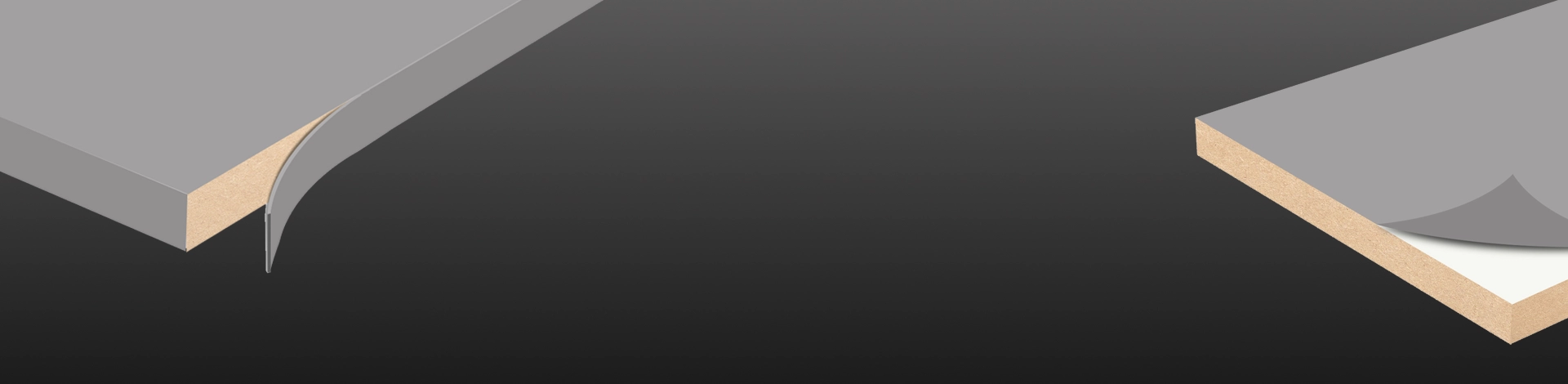
- Specify the film grade, sheen, texture, substrate and bonding route. A flat film-faced door often has a separate edge. If the surface is meant to follow a routed shape, verify the exact forming grade and test piece.
- HPL or a thermally fused decorative surface
- Specify whether a separate HPL sheet is bonded onto a board or the decorative surface is fused directly to the panel. The construction affects purchasing, tooling and edge treatment. Request data for the exact grade and finished application.
- Paint or veneer
- For paint, confirm the preparation, approved color and sheen across the face and machined edges. For veneer, confirm the species, cut, grain direction and approved variation. Both need a finished sample with edge details.
Lit cabinet faces can display finish differences that are hard to see on small swatches. When a project uses a cabinet face and an adjacent end panel in the same color, show the two together at the intended orientation. Check grain direction, gloss, shadows at the reveal and the edge highlight. A matte finish viewed face-on may have a more noticeable edge when light comes from the side.
Example of a complete material schedule
Consider a small kitchen run with flat cabinet doors, a sink base and an appliance panel. The door spec identifies the substrate grade, front film, back treatment, edging and hinge positions. The sink base adds the relevant moisture exposure, treatment around plumbing cutouts and the details that need sealing. The appliance panel gets its own drawing and attachment points, as well as the manufacturer’s clearance information. The finish can be visually consistent across the run while the construction differs by part.
Record the grade and supplier for each part in the order. Keep the drawing revision with the approved samples. If a supplier quotes a material substitution, ask which test results, appearance samples and process records support it. A substitution can be reasonable if it still meets the defined requirements. The finished assembly and the installation checks are the basis for that decision.
For repeat projects, check whether small replacement quantities are available for the approved finish and whether the face and edge can be ordered under stable item codes. Keep a piece of the finished door and a spare edge sample. If the original lot is unavailable, you can use the reference to decide whether to replace one front, swap a coordinated section or accept a documented match.
Check the finish on the edges of the sample as carefully as you check the face. A design revision can change which edge will be visible, or where a dark core might show against a light surface. On approved drawings, mark which narrow edges need to match the face and whether a separate edge strip is acceptable.
For repeat quantities, agree what happens when the buyer reorders one front months after the original job. The specification should identify the supplier’s actual finish and edge codes. Keep a physical sample in ordinary storage conditions and reference it before quoting the replacement.
Compare supplier quotes on the same scope
Ask suppliers to bid on the same case, door, edge, finish, hardware drilling and packaging. List any test reports or environmental documentation needed in that market. Request that any claim apply to the actual material or assembly named in the quote. A report for a raw surface film does not establish the performance of the complete cabinet.
Before approving, verify a finished door, an exposed end panel, a representative interior edge and any parts with cutouts. Inspect the assembly in the intended lighting and use the hardware specified in the drawings. The approval record should tell the shop exactly what was accepted, how it was checked and which version of the material schedule to use.
If the project calls for a film-faced front, compare WellP’s roll formats and cut-sheet formats, and share the door drawing and intended construction when requesting samples. The most useful sample is the one that can be checked on the same substrate and with the same edge treatment as the production door.
 How PET Film Enhances Modern Cabinet Design: A Complete Guide for Manufacturers, Designers, and Homeowners