



 Home
HomeThe Strategic Guide to Modular Furniture Surface Materials
 24 Apr,2026
The architecture of interior spaces has fundamentally shifted. Static, monolithic furniture design is rapidly being replaced by dynamic, reconfigurable systems. For B2B furniture manufacturers, cabinet producers, and procurement teams, this transition to modularity is not just a design trend—it is a complex manufacturing challenge that fundamentally rewrites the rules of material specification.
At the core of this transformation is the growing demand for highly versatile modular furniture surface materials. When furniture is designed to be scaled, adapted, and reassembled over time, the surfaces covering those components must deliver unprecedented levels of consistency, durability, and aesthetic flexibility. As an internal team of materials engineers and product development strategists at WellP, we recognize that the selection of furniture surface finishes can make or break the viability of a modular product line.
This technical report breaks down the shifting demands of modular systems, the manufacturing challenges they present, and the advanced polymer-based solutions—specifically PET and PP—that are engineered to meet these rigorous B2B requirements.
1. The Paradigm Shift: Why Modular Systems Reshape Material Requirements
The transition from fixed-form manufacturing to modular fabrication requires a complete reevaluation of decorative surfacing for furniture. The underlying philosophy of modularity relies on three pillars: flexibility, scalability, and mass customization.
In traditional manufacturing, a cabinet or wardrobe is finished as a single, cohesive unit. In modular systems, individual components—doors, structural panels, and shelving—are manufactured, finished, stored, and shipped independently, only to be combined later by the end-user or installer.
This shift has catalyzed the move from single-finish furniture to multi-finish, customizable surface finishes. Consumers and designers now expect to mix textures and colors within the same unit—pairing a matte woodgrain carcass with high-gloss monolithic doors. Consequently, manufacturers must maintain an extensive, yet meticulously controlled, inventory of versatile surface materials that can be applied across diverse substrates, from MDF and particleboard to advanced engineered wood surface options.
2. Manufacturing Challenges in Modular Surfacing
Applying surface materials to modular components introduces strict technical hurdles that do not exist in traditional furniture production. If these challenges are not addressed at the procurement and material specification level, they result in high defect rates and compromised brand reputation.
- Batch-to-Batch Consistency and Scalability: A consumer may purchase a base modular unit today and an expansion module two years later. If the color fading resistance in furniture foil is poor, or if the manufacturer cannot guarantee absolute batch-to-batch color matching, the new module will clash visually with the old one.
- Edge Integration and Component Sealing: Modular components expose more edges than traditional built-in furniture. Achieving seamless edge banding solutions is critical, not just for aesthetics, but to prevent moisture ingress into the engineered board core at the joints.
- Substrate Adaptability: A modular system might use heavy-duty OSB for structural bases and lighter MDF for doors. Procurement teams need furniture surface material solutions that behave consistently during lamination and thermal pressing, regardless of the underlying board.
3. Critical Performance Imperatives
For modular units deployed in high-traffic residential or commercial environments, aesthetic appeal must be backed by uncompromising physical performance.
- Scratch and Abrasion Resistance: Modules are frequently moved, reconfigured, and subjected to daily wear. Specifying anti-scratch surface finishes for cabinets is non-negotiable to maintain the product's lifecycle.
- Environmental Resilience: Components designed for modular kitchen cabinets or bathroom vanities face fluctuating humidity and temperature. Utilizing moisture-resistant modular furniture materials prevents substrate warping, delamination, and microbial growth.
- Chemical Stability: The surfaces must withstand harsh household cleaners without degrading the topcoat or losing their tactile properties.
4. Advanced Material Solutions: The Role of PET and PP
To meet the stringent demands outlined above, the industry is rapidly transitioning away from legacy materials like melamine and PVC, moving toward advanced thermoplastic polymers. At WellP, as a dedicated decorative film manufacturer, our product development relies heavily on the superior chemical and physical properties of PET (Polyethylene Terephthalate) and PP (Polypropylene).
The Durability of PET vs PVC Film
For decades, PVC was the standard for vacuum pressing and flat lamination. However, the durability of PET vs PVC film strongly favors PET in modern modular applications. PET offers superior UV resistance (solving the color fading problem), better impact resistance, and does not release toxic plasticizers over time. Furthermore, as global regulations tighten, eco-friendly PET furniture finishes provide a 100% recyclable, food-grade safe alternative that aligns with international green building standards.
PET Decorative Film for Furniture
PET is exceptionally versatile. When manufacturers require deep, mirror-like reflectivity, high-gloss PET film for cabinets delivers a glass-like aesthetic without the fragility or weight of actual glass or acrylic. Furthermore, our proprietary PET decorative film for furniture is engineered with anti-fingerprint and self-healing topcoats, making it ideal for high-touch modular door panels.
PP Surfacing Film
Where PET dominates the high-gloss and ultra-matte solid color space, PP (Polypropylene) excels in tactile and textural applications. PP surfacing film is highly flexible, making it ideal for profile wrapping and intricate modular geometries. A matte PP decorative foil can perfectly replicate the haptics of natural wood veneer or raw stone, providing a premium feel while maintaining the robust moisture resistance required for modular bases.
5. Application Mapping: Matching Materials to Modular Systems
Different rooms dictate different material strategies. As a PET film supplier for modular furniture, we advise our B2B partners to segment their material procurement based on the end-use environment:
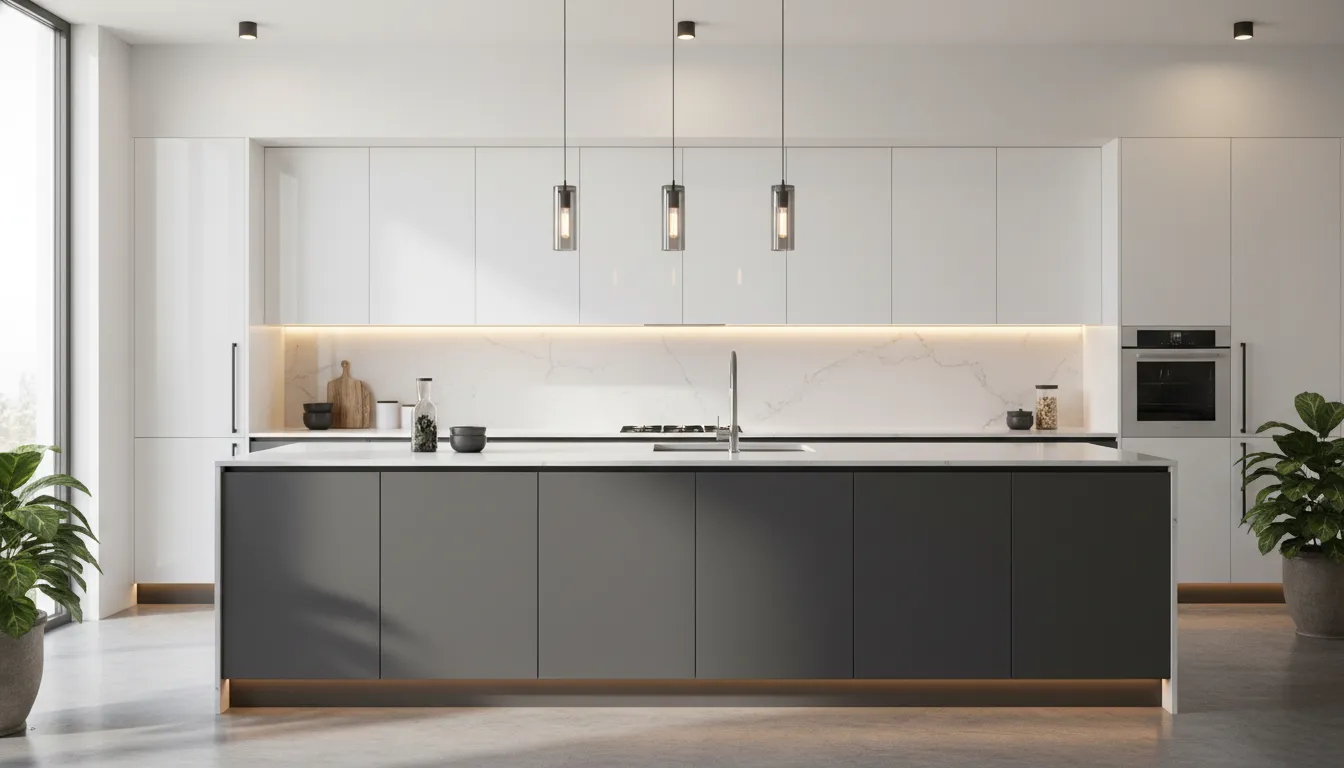
- Modular Kitchen Cabinets: This environment demands the highest level of moisture and thermal resistance. High-gloss PET is ideal for upper cabinets to reflect light, while anti-scratch, matte PP is highly recommended for lower base cabinets that endure impact and frequent cleaning.
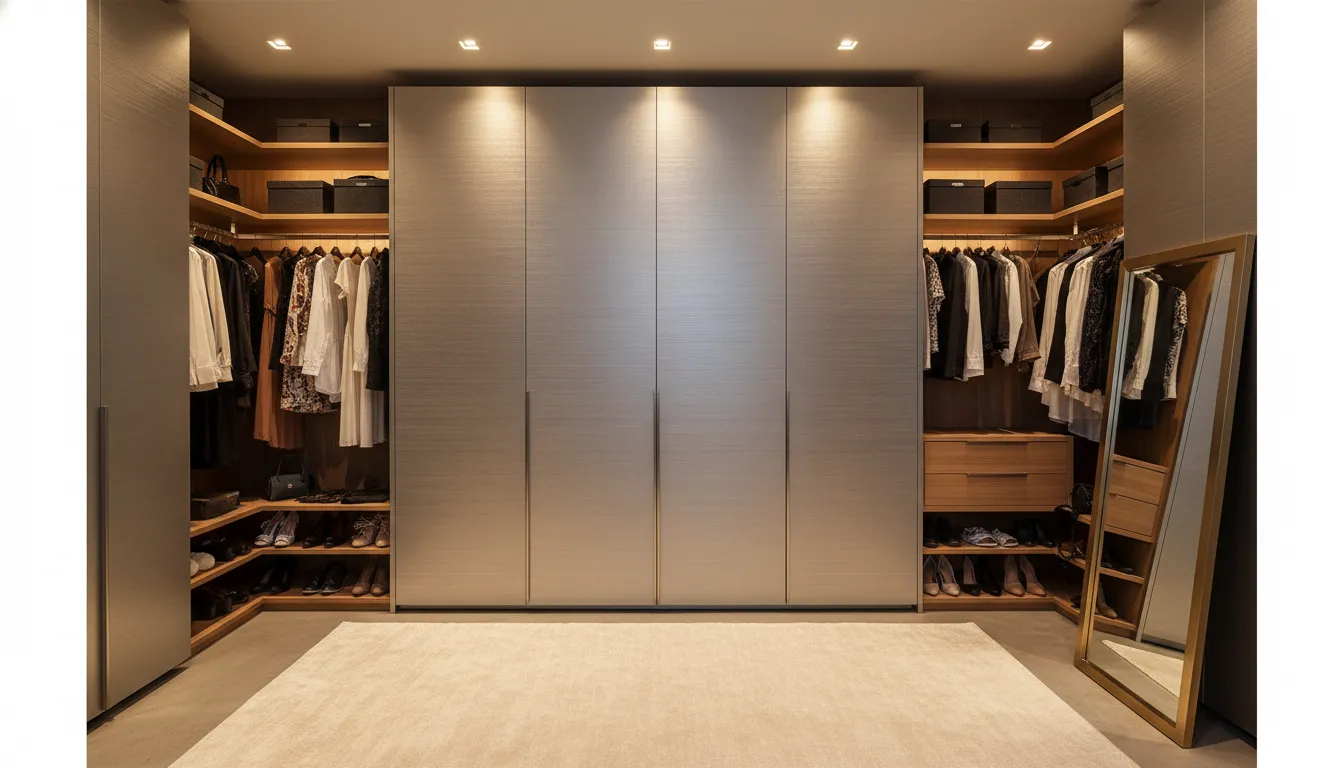
- Modular Wardrobe Systems: Large, uninterrupted vertical planes require absolute dimensional stability and flatness. Here, premium modular cabinet finishes on high-density MDF prevent bowing. Seamless edge banding solutions are critical here to prevent clothes from snagging.
- Office and Commercial Systems: Modularity in the workplace requires extreme durability. High-wear PET laminates offer the necessary abrasion resistance for modular desks and dividing partitions.
6. How to Choose Surface Materials for Modular Furniture
For B2B procurement teams and factory managers sourcing wholesale furniture surface materials, selecting the correct finish requires a calculated approach. We recommend evaluating material choices through the following decision matrix:
- Define the Market Positioning (Cost vs. Premium): * Volume/Value Market: Standard PP films offer excellent cost-to-performance ratios for mass-market modular units. Premium/Luxury Market: Specify advanced anti-fingerprint PET or synchronized texture PP to compete with lacquered or natural wood finishes.
- Assess the Manufacturing Infrastructure: * Ensure your pressing lines (flat lamination, membrane pressing, or profile wrapping) are calibrated for the specific thermal properties of PET or PP. Custom furniture foil manufacturing allows us at WellP to adjust primer formulations on the back of our films to match your factory's specific PUR or EVA adhesives.
- Evaluate the Substrate Ecosystem: * Partner with suppliers who understand B2B engineered board solutions. A high-quality PET film will only perform as well as the MDF or plywood it is bonded to. Ensure the substrate's surface smoothness matches the required gloss level of the foil to avoid "orange peel" defects.
- Prioritize Supply Chain Consistency: * Choose a manufacturer with stringent optical color-matching protocols. In modular furniture, the ability to order the exact same color hex code years later is a critical operational requirement.
7. The Future of Modular Surfacing
The future of decorative surfacing for furniture lies at the intersection of sustainability and smart technology. We are moving toward an era where surfaces are not merely passive decorative elements, but active components of the furniture. The next generation of materials will see further advancements in bio-based polymers, enhanced thermal healing capabilities, and even thinner, higher-yield gauges that reduce shipping weight without compromising strength.
As modularity continues to dominate furniture design, the reliance on highly engineered, consistent, and adaptable surface materials will only grow.
Frequently Asked Questions
Q: Why is PET increasingly preferred over PVC for modular cabinet finishes?
A: PET offers vastly superior UV stability, meaning it will not yellow or fade over time—a critical factor for modular furniture where new components may be added to older units. Additionally, PET is free of toxic plasticizers, offering a much more eco-friendly and health-conscious profile compared to traditional PVC.
Q: Can PP surfacing film be used on all engineered wood surface options?
A: Yes, PP is highly adaptable and can be laminated onto MDF, HDF, particleboard, and plywood. However, for the best visual result—especially with ultra-matte or thin-gauge PP foils—a high-density, ultra-smooth substrate (like premium MDF) is recommended to prevent substrate telegraphing (the texture of the board showing through the film).
Q: How does WellP ensure batch-to-batch color consistency for custom furniture foil manufacturing?
A: We utilize advanced spectrophotometry and automated optical inspection systems during the extrusion and coating processes. This ensures that the Delta E (color difference) remains strictly within industry tolerances, guaranteeing that modular panels produced months or years apart will match perfectly.
Conclusion
The rapid expansion of modular furniture systems has permanently elevated the technical requirements for surface materials. For manufacturers aiming to capture market share in this dynamic sector, treating surface finishes as an afterthought is no longer viable. Success requires a strategic approach to procurement—shifting away from legacy plastics and embracing high-performance, customizable surface finishes like PET and PP. By partnering with an expert decorative film manufacturer like WellP, B2B brands can ensure their modular systems deliver the aesthetic brilliance, uncompromising durability, and scalable consistency that today's global market demands.
 Middle East Hotel Construction: Why Metallic Texture Interior Design Dominates Luxury Hospitality Spaces