



 Home
HomePET vs Acrylic Kitchen Cabinets: Evaluating Surface Performance and Finished-Door Economics
 12 Aug,2026
Two cabinet doors can sit side-by-side in a showroom, both looking flawless under calibrated lighting. Yet, six months into real-world use, one may exhibit micro-scratches and visible wiping marks, while the other maintains its original factory appearance. This divergence is exactly why the debate over PET vs Acrylic kitchen cabinets remains a central topic for interior designers, project buyers, and furniture manufacturers.
Selecting the right surface is rarely a matter of declaring one material universally superior. Both are highly capable modern kitchen cabinet materials, but they follow entirely different design philosophies and manufacturing logics. To make an informed decision between an acrylic kitchen cabinet finish and a PET cabinet finish, one must look beyond the generic material names and evaluate the entire surface system—from the substrate and lamination technology to the edge treatment and the daily usage environment of the end consumer.
Beyond the Surface Name: Understanding Material Constructions
A common error in B2B procurement is treating "acrylic" and "PET" as absolute, standardized commodities. In reality, performance depends heavily on the specific surface construction, thickness, coating technology, substrate, and processing quality.
An acrylic finish in the furniture industry can refer to various constructions, such as solid acrylic sheets (typically 1mm to 2mm thick) bonded to MDF, acrylic-faced laminates, or co-extruded surface systems. These materials are celebrated for their thickness and rigidity, which contribute to their unique optical properties.
Conversely, a PET (Polyethylene Terephthalate) cabinet finish is generally achieved by flat-laminating a specialized PET decorative film onto an engineered wood substrate, such as MDF or particle board. These films, commonly manufactured in thicknesses up to 0.8mm, offer an optimal balance of workability for cabinet doors and impact resistance for daily use. When bonded using PUR (Polyurethane) hot melt adhesives, the resulting panel forms a highly stable, moisture-resistant barrier that is increasingly favored in large-scale cabinet production.
Where Acrylic Finishes Still Command the Luxury Space
It is essential to acknowledge that acrylic materials possess distinct optical advantages that other plastics struggle to replicate exactly. If a project prioritizes maximum visual depth and a highly reflective surface, acrylic remains a formidable choice.
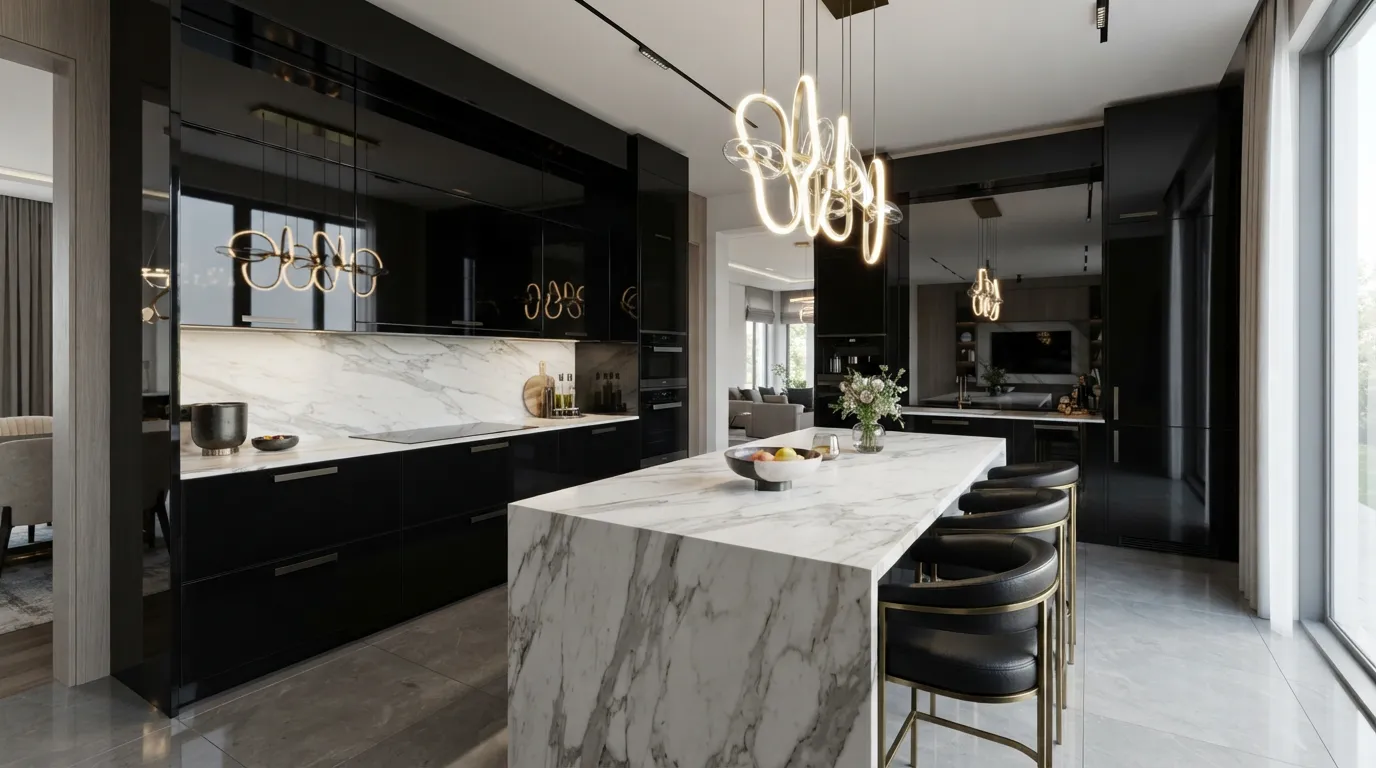
The primary appeal of acrylic lies in its mirror-like high-gloss appearance. The thickness of the acrylic layer creates a strong visual depth, allowing light to refract in a way that mimics back-painted glass. This makes high gloss kitchen cabinets finished in acrylic highly sought after for contemporary luxury interiors and statement cabinetry. In spaces where visual drama, high light reflectivity, and a premium showroom appearance are the main priorities, a high-quality acrylic surface system delivers an undeniable aesthetic impact.
However, high gloss is not automatically equal to better performance. The very optical clarity that gives acrylic its luxurious depth can also act as a magnifying glass for surface imperfections, dictating how the material must be maintained over time.
Why PET Cabinet Finish is Redefining Modern Kitchen Aesthetics
While acrylic dominates the ultra-high-gloss sector, PET film for kitchen cabinets has rapidly captured the broader market for modern cabinet surface materials. The driving force behind this shift is the architectural trend toward understated luxury and softer visual appearances.
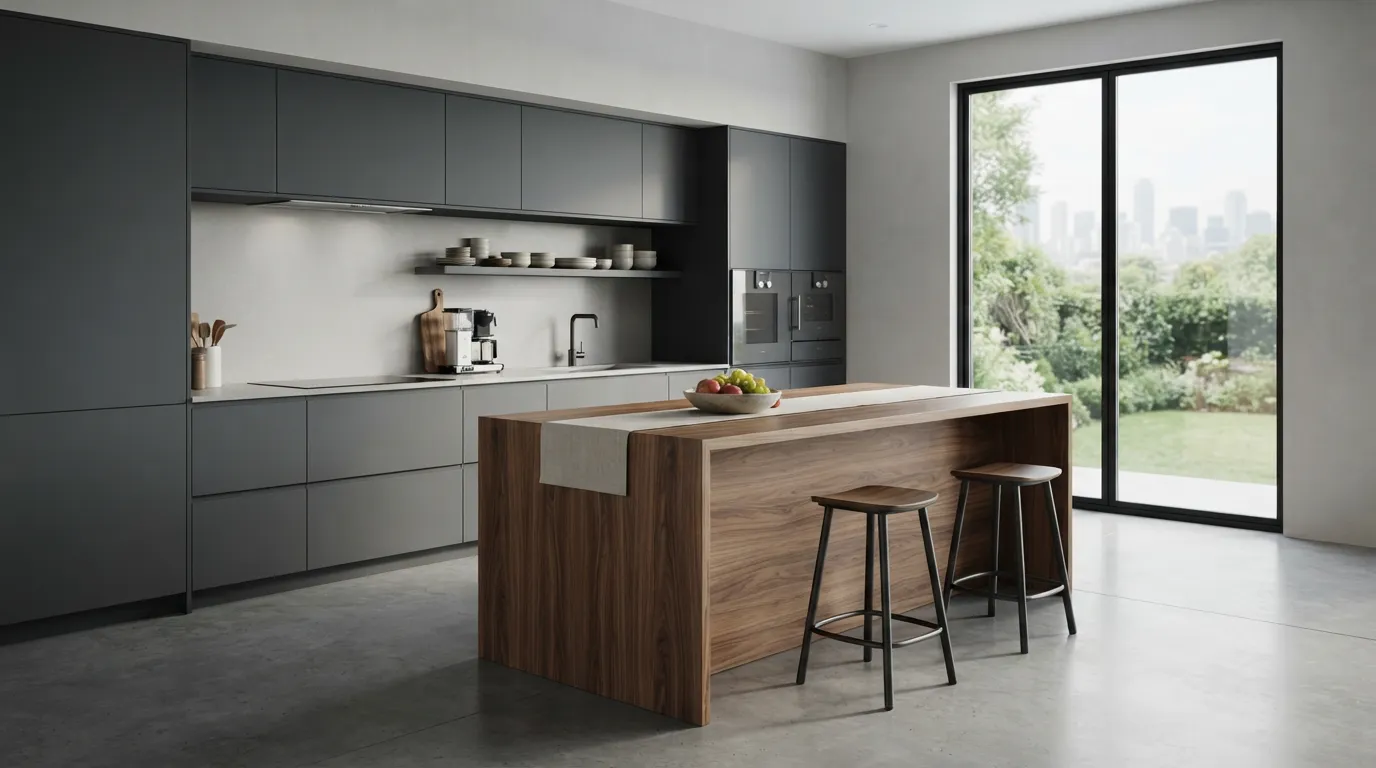
PET is highly versatile, but it truly excels in the matte and Ultra matte PET film categories. Through advanced UV coating and electron beam (EB) curing technologies, manufacturers can produce PET surfaces with extremely low gloss levels. This results in a surface feel that is velvety to the touch, complementing modern minimalist aesthetics perfectly.
Furthermore, PET offers exceptional decorative flexibility. Because it is a highly stable polymer film, it can be engineered in pure solid colors that maintain strict batch-to-batch consistency, or printed with high-fidelity wood grain designs. For furniture panel applications requiring large-format cabinet fronts, this surface consistency ensures that a kitchen island perfectly matches the upper wall cabinets, even if they were cut from different production runs.
The Fingerprint, Scratch, and Cleaning Dilemma in Real Kitchens
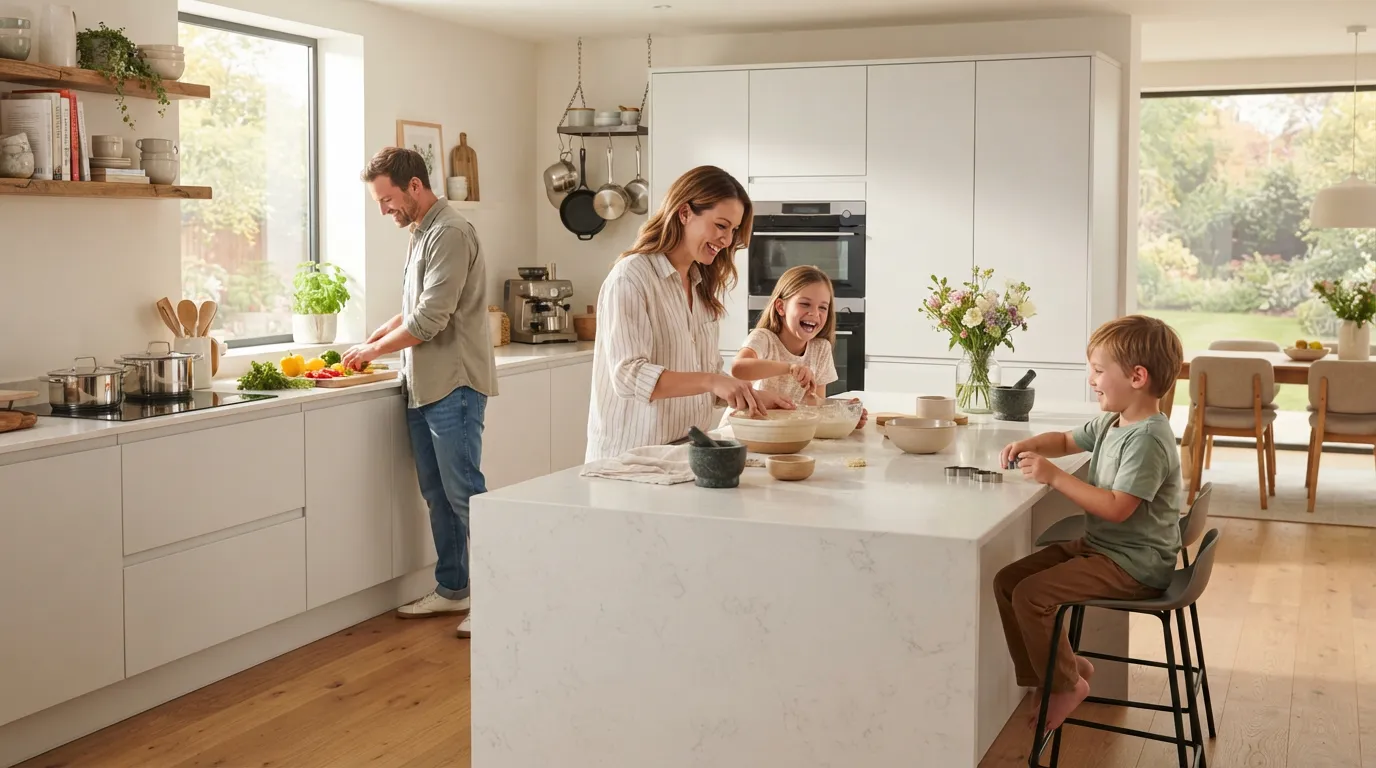
To determine which is better, PET or acrylic cabinets, one must evaluate the actual kitchen environment: frequent opening and closing, cooking oil, steam, abrasive dust, and accidental impacts. The "best" cabinet finish is the one whose surface characteristics match the way the kitchen is actually used.
When buyers ask, "Do acrylic cabinets show fingerprints?" or "Do PET cabinets show fingerprints?", the answer is heavily dependent on the gloss level and surface treatment. By the laws of optics, high-gloss surfaces show fingerprints more easily than matte surfaces. The oils from human skin alter the light reflection on a high-gloss acrylic door, making every touch highly visible, particularly on dark colors. In contrast, an anti-fingerprint PET film disperses light differently. Its micro-structured matte surface prevents skin oils from forming a continuous reflective layer, significantly lowering fingerprint visibility and reducing the need for constant wiping.
Regarding acrylic kitchen cabinets scratch resistance versus PET durability, it is crucial to avoid absolute claims like "100% scratch-proof." Scratch performance depends on the material grade and the test method. While high-quality acrylic has good surface hardness, its mirror finish means that even microscopic abrasion (such as wiping with a dry, dusty cloth) can become visually apparent as swirl marks. PET finishes, particularly those with hardened topcoats, offer excellent chemical resistance and durability. On a Ultra matte PET surface, minor micro-abrasions are far less visually noticeable because the surface does not rely on perfect light reflection.
Maintenance also plays a role. When determining how to clean PET cabinets or acrylic doors, mild soap and a damp microfiber cloth are universally recommended. However, users must be cautious with acrylic regarding chemical exposure and UV stability; inferior acrylics can turn yellow over time if exposed to direct sunlight near windows, whereas PET generally offers strong color stability and UV resistance.
The Edge Treatment: A Make-or-Break Detail for High-End Cabinetry
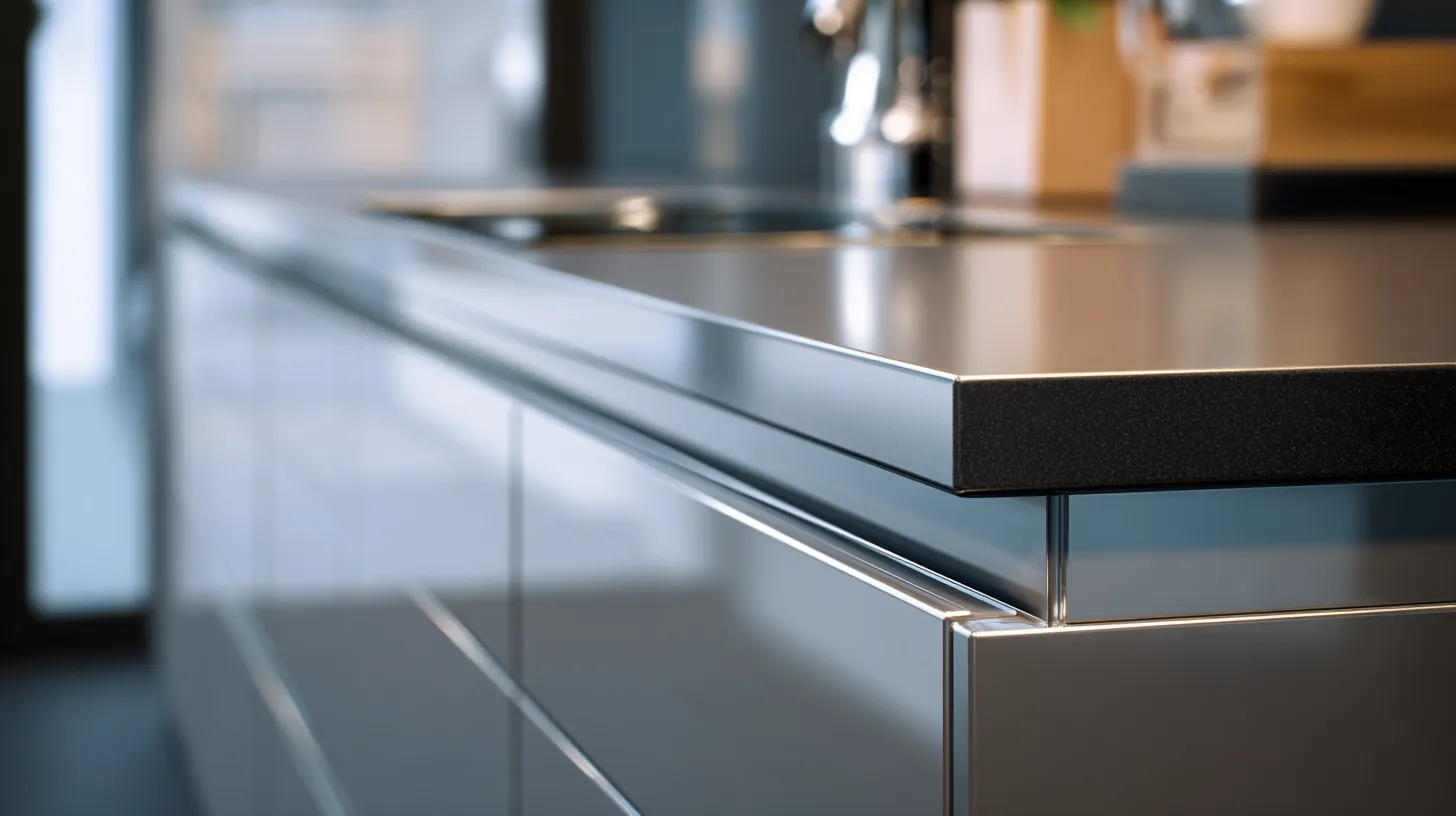
A critical aspect often overlooked in standard material comparisons is that surface material selection should be evaluated together with edge treatment. You are not just buying a flat surface; you are manufacturing a three-dimensional cabinet door.
In modern minimalist kitchens, the visual continuity between the front face and the edge is paramount. The edge banding, color matching, gloss consistency, and joint visibility dictate the perceived quality of the entire installation.
PET decorative films offer a distinct manufacturing advantage here. Because the film is relatively thin (e.g., 0.8mm) and flexible, it cuts cleanly during CNC processing without chipping. Furthermore, many PET systems are supported by perfectly matched ABS or PP edge banding. When processed with zero-joint edge banding technology (using laser or hot air) or precise PUR edge banding, a PET cabinet door achieves a monolithic, seamless look. A thick acrylic sheet, while beautiful on the face, requires meticulous edge processing and a specific radius treatment to ensure the joint line does not disrupt the visual flow of the high-gloss surface.
Comparing Cost: Material Price vs. Finished Door Economics
When analyzing PET vs acrylic kitchen cabinets cost, B2B cabinet manufacturers must look beyond the price per square meter of the raw material. The true metric for profitability is the cost of the finished cabinet door system.
If a manufacturer only compares the raw roll or sheet price, they miss the hidden costs of production. The finished-door economics include the substrate, the lamination process, the adhesive system (PUR hot melt), CNC processing wear, edge banding complexity, and crucially, the production yield and rejection rate.
PET laminate processes highly efficiently on continuous flat lamination lines. Its flexibility allows for smooth handling, and its consistent tension control reduces bubbling or delamination risks. The rejection rate for PET processing is typically very low. Conversely, handling thick, highly reflective acrylic sheets requires rigorous dust control, delicate transportation protection, and slower machining speeds to prevent edge cracking. If a high-gloss acrylic door is scratched during installation, the replacement cost is significant. Therefore, while PET is generally more cost-effective as a raw material, its economic advantage multiplies when factoring in the total production and installation lifecycle.
How to Choose Between PET and Acrylic for Different Kitchen Scenarios
Decision-makers can apply a straightforward, practical logic when specifying materials:
- If the project prioritizes maximum visual depth and mirror-like gloss: Acrylic is likely the appropriate choice. It remains the gold standard for creating highly reflective, visually dramatic statement spaces.
- If the project prioritizes understated luxury, a soft matte appearance, and lower fingerprint visibility: PET is generally more suitable. Its surface feel and visual forgiveness make it ideal for high-traffic, handleless kitchen designs.
- If the project prioritizes large-scale cabinet production and stable yields: Evaluate the lamination process and edge treatment. PET decorative films integrate seamlessly into continuous panel production with excellent finished-door economics.
- If the project prioritizes specific tactile textures: Compare the actual surface construction and coating technology rather than relying purely on the material's chemical name.
Comparison: PET Film vs Acrylic Finish
| Feature | PET Cabinet Finish (Matte / Ultra Matte) | Acrylic Finish (High Gloss) |
|---|---|---|
| Visual Appearance | Soft, understated, minimalist | Strong visual depth, highly reflective |
| Gloss Options | Excels in Ultra matte and matte | Excels in mirror-like high gloss |
| Fingerprint Visibility | Very low (anti-fingerprint technology) | High (due to light reflection) |
| Scratch Visibility | Low (matte diffuses light) | Higher (micro-scratches interrupt reflection) |
| Surface Feel | Velvety, smooth, warm | Hard, glass-like, sleek |
| Edge Integration | Excellent with matched zero-joint banding | Requires meticulous processing for seamless look |
| Production Economics | Highly efficient, low rejection rate | Slower processing, sensitive to dust/handling |
| Typical Application | High-traffic kitchens, handleless cabinets | Luxury showrooms, statement interiors |
Frequently Asked Questions (FAQ)
1. Which is better PET or acrylic cabinets?
Neither is universally better; it depends on your design goals. Acrylic is unmatched for achieving a mirror-like, high-gloss luxury aesthetic with deep visual reflection. PET is superior for modern, super-matte finishes, offering excellent anti-fingerprint properties, a softer tactile feel, and highly efficient manufacturing economics.
2. Is PET more durable than acrylic for kitchen cabinets?
Both are highly durable when specified correctly. PET generally offers better chemical resistance and flexibility, which prevents edge chipping. While acrylic has a hard surface, its high-gloss nature makes micro-scratches and wiping marks more visually apparent over time compared to a matte PET finish.
3. Do PET cabinets show fingerprints?
Because high-gloss surfaces show fingerprints more easily than matte surfaces, Ultra matte PET cabinets are highly resistant to visible fingerprints. Many PET films utilize specific micro-structured surface coatings that disperse light and prevent skin oils from leaving obvious marks, making them ideal for high-contact, handleless kitchens.
4. Do acrylic kitchen cabinets scratch easily?
High-quality acrylic does not necessarily scratch "easily," but its highly reflective surface makes the scratches it does sustain much more visible. Abrasive cleaners or wiping with a dry, dusty cloth can create swirl marks that interrupt the mirror finish, requiring careful daily maintenance.
5. Which costs more, PET or acrylic cabinets?
Acrylic cabinets typically cost more. This is not only due to the cost of the raw acrylic sheets but also the demanding manufacturing requirements. Acrylic requires pristine dust control, slower CNC processing, and careful handling. PET film provides much better finished-door economics due to efficient continuous lamination and lower rejection rates.
Final Takeaway
Choosing between PET and acrylic is not a zero-sum game. Acrylic is not inferior for requiring more maintenance, nor is PET automatically superior just because it is cost-effective. They serve entirely different aesthetic and functional requirements. Ultimately, surface material selection must be evaluated alongside the edge treatment, the actual kitchen usage environment, and the total cost of the finished door system.
For manufacturers evaluating PET decorative film, the same principle applies: the film should be evaluated as an integral part of the finished cabinet system, not simply as an isolated roll of material. When sourcing materials, working with manufacturers like WellP ensures that variables such as gloss consistency, anti-fingerprint performance, and substrate compatibility are engineered to perform flawlessly in the final kitchen environment.
 The Shift Towards Sustainable Engineered Surfaces in 2026: Beyond the "Green" Label