



 Home
HomeUV-Coated High Gloss MDF vs PET High Gloss PUR-Laminated MDF: A Technical Comparison for Cabinet Manufacturers
 11 Sep,2026
Technical Clarification: In this comparison, “UV acrylic” refers to a UV-cured acrylic lacquer/coating system applied over a decorative-paper-faced board, not a conventional acrylic sheet or acrylic-faced cabinet panel.
For cabinet manufacturers, production managers, and B2B material buyers, defining a surface simply as "high gloss" is no longer a complete specification. Two cabinet doors can sit side by side in a showroom, reflecting light with seemingly identical brilliance, yet they may be the product of fundamentally different surface systems and manufacturing logic.
When evaluating the difference between UV coating and PET film, the decision goes far beyond picking a raw material. It is a choice between two distinct engineering routes: creating a surface through liquid coating and curing, versus transferring a pre-engineered film surface via flat lamination.
This technical guide breaks down PET film vs UV coating to help cabinet manufacturers understand how these two systems differ in structure, processing, quality control, and finished-door economics.
1. Architectural Breakdown: What Actually Forms the Surface?
To understand how these panels behave on the CNC router, the edge bander, and in the end-user's kitchen, we must first look at the cross-sectional architecture of both systems.
System A: The UV-Coated High Gloss Board
A high gloss UV melamine board is built upon a layered coating methodology.
- Substrate: Typically a refined MDF or engineered wood core.
- Decorative Layer: A melamine impregnated paper is thermally fused to the substrate, providing the foundational color or woodgrain pattern.
- Surface Formation: The board passes through a specialized coating line where multiple layers of liquid UV-curable acrylic lacquer are applied via roller or curtain coating.
- Curing Mechanism: The liquid lacquer is rapidly cross-linked and hardened into a solid state using intense ultraviolet (UV) light.
System B: The PET High Gloss PUR-Laminated MDF
A PET laminated MDF panel relies on adhesive bonding rather than liquid surface formation.
- Substrate: A precisely calibrated, smooth MDF core.
- Bonding Mechanism: A layer of Polyurethane reactive (PUR) hot melt adhesive is applied to the board or the film.
- Decorative Layer & Surface Formation: A finished, pre-extruded PET high gloss film is applied over the adhesive. The color, pattern, and gloss level are entirely contained within this pre-manufactured plastic film.
- Curing Mechanism: The PUR adhesive undergoes an initial physical cooling to bond the film, followed by a chemical cross-linking reaction with ambient moisture over several days to achieve its final, irreversible strength.
2. Evaluating High-Gloss Visuals: Why Gloss Is a System Outcome
A common assumption in the furniture industry is that the top layer alone dictates the quality of the gloss. In reality, gloss is an outcome of the whole surface system.
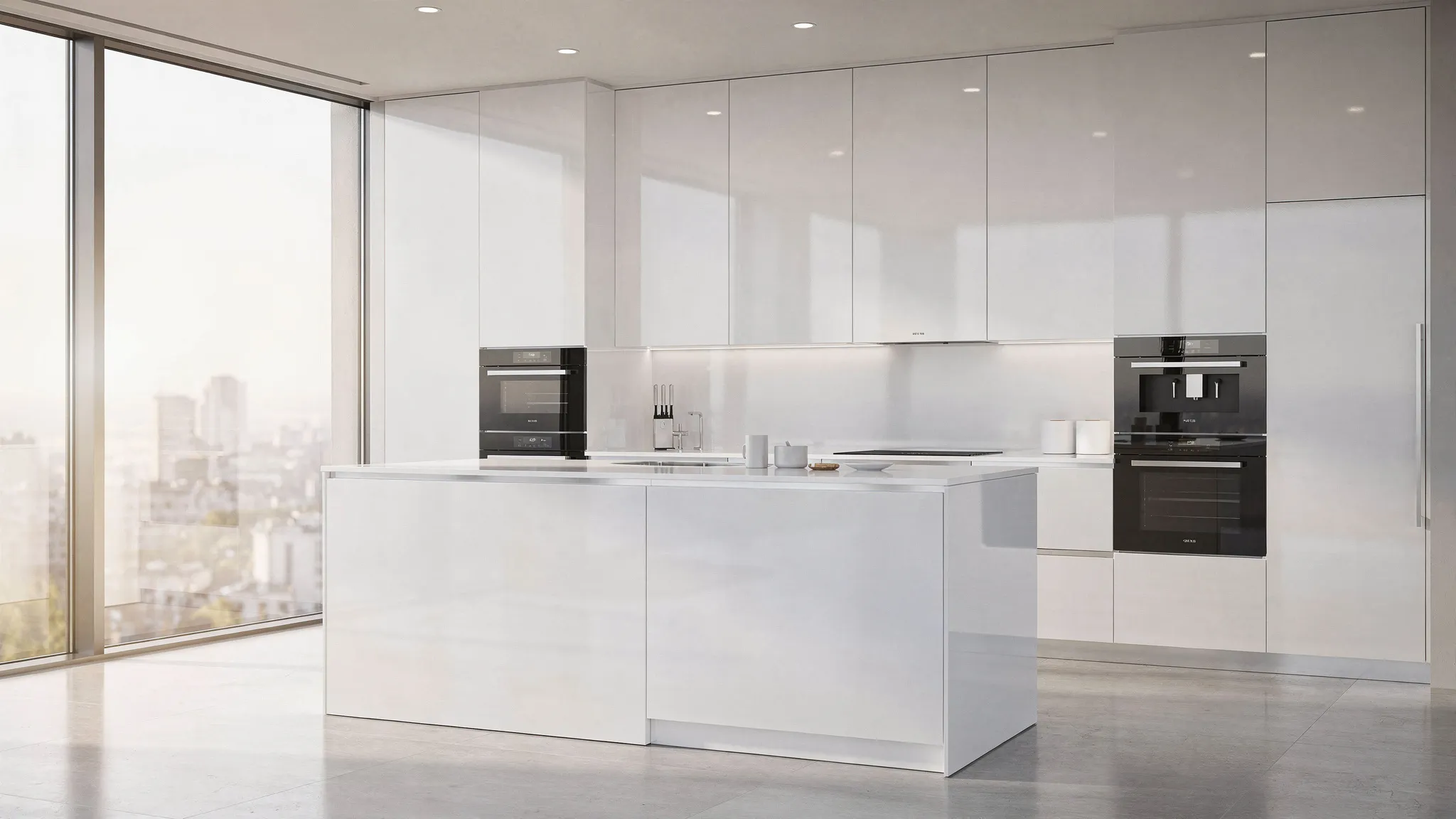
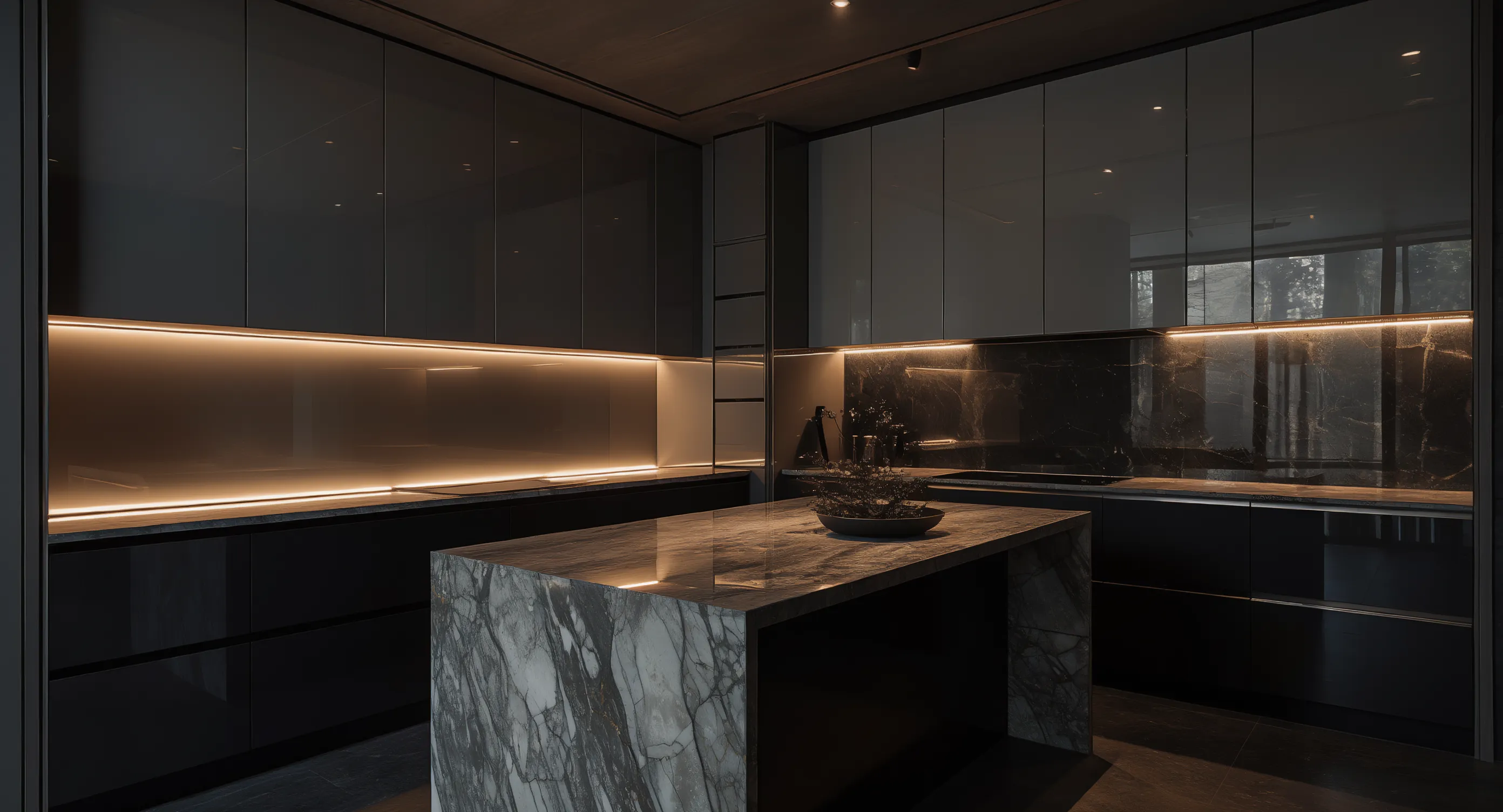
For UV lacquered MDF panels, the high-gloss capability depends on the liquid coating's ability to self-level before the UV lamps freeze it in place. The multiple layers of lacquer must bridge the microscopic textures of the underlying melamine paper. When done in a highly controlled environment with premium formulations, this system creates an exceptionally hard, high-gloss surface with a deep, glass-like visual depth.
Conversely, high gloss PET panels derive their reflectivity from the extrusion and calendering process of the plastic film itself. Because the film is manufactured in a cleanroom environment at the plastics factory, the gloss is already perfect before it ever reaches the board lamination line. However, the final visual outcome of the PET film PUR lamination process heavily depends on substrate calibration. If the MDF substrate has surface chatter or if the PUR adhesive is applied unevenly, those imperfections can telegraph through the film and distort the reflection.
3. The "Orange Peel" Dilemma: Appearance vs Process Control
One of the most persistent pain points in high gloss cabinet door manufacturing is the "orange peel" effect—a slight surface waviness that distorts reflections, resembling the skin of a citrus fruit. Understanding how each system handles this phenomenon is critical when asking: Best high gloss finish: PET or UV Coated?
In a UV coating process for MDF, orange peel is a constant variable to manage. Because the surface is formed from a liquid that must flow, level, and cure over a textured melamine paper, achieving absolute mirror-like flatness is technically challenging. Changes in coating viscosity, ambient factory temperature, line speed, or UV lamp intensity can all introduce subtle rippling.
Because PET is a solid, pre-calendered film, it inherently bypasses the liquid-leveling phase on the panel manufacturing line. When paired with high-quality MDF and precise PUR flat lamination, this system is capable of producing no orange peel high gloss MDF. For modern, handleless kitchen designs that demand unbroken, mirror-like reflections, mirror finish PET cabinet doors often provide a more predictable and consistent aesthetic.
4. Production Logic: PUR Lamination vs UV Painted MDF
The real comparison is not between two materials; it is between two manufacturing workflows.
UV coated cabinet doors require a production environment optimized for chemical handling, liquid application, and intense dust control. A single speck of dust landing on the wet acrylic lacquer before the UV tunnel will become a permanent, cured defect in the board. However, for factories that already have established UV finishing lines, this route offers the flexibility to use a vast array of inexpensive melamine decorative papers and coat them to a high gloss.
The flat lamination process used for PET shifts the quality-control focus away from liquid chemistry and toward tension and adhesive control. PUR laminated MDF relies on a reactive hot-melt adhesive that cross-links with moisture. The parameters—temperature, pressure, coating weight, and line speed—must be finely tuned to the specific film, substrate, and machinery. At WellP, PET surface development is approached as part of a complete furniture-panel system, where film construction, substrate preparation, lamination, surface finish, and edge treatment must work together to ensure process stability.
5. Edge Treatment Changes the Final Comparison
A high-gloss panel is only as good as its finished edge. The performance of UV lacquered vs PET laminated cabinet doors often diverges significantly at the edge bander.
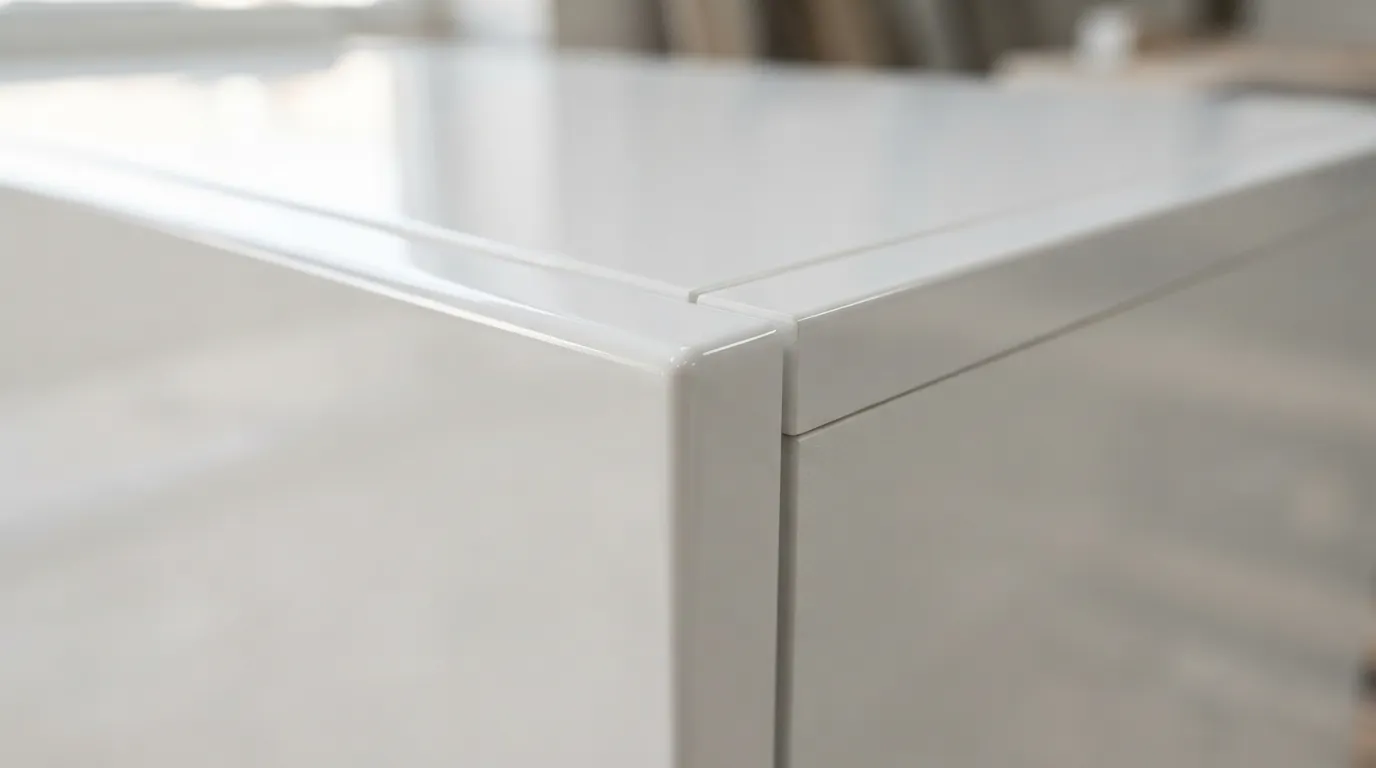
The surface of a UV coated high gloss board is extremely hard due to the cross-linked acrylic lacquer. While this provides excellent surface scratch resistance, it can also make the coating somewhat brittle. If the cutting tools on the CNC router or panel saw are not perfectly sharp, the UV coating is susceptible to micro-chipping along the cut line, which can make a seamless edge-banding joint difficult to achieve.
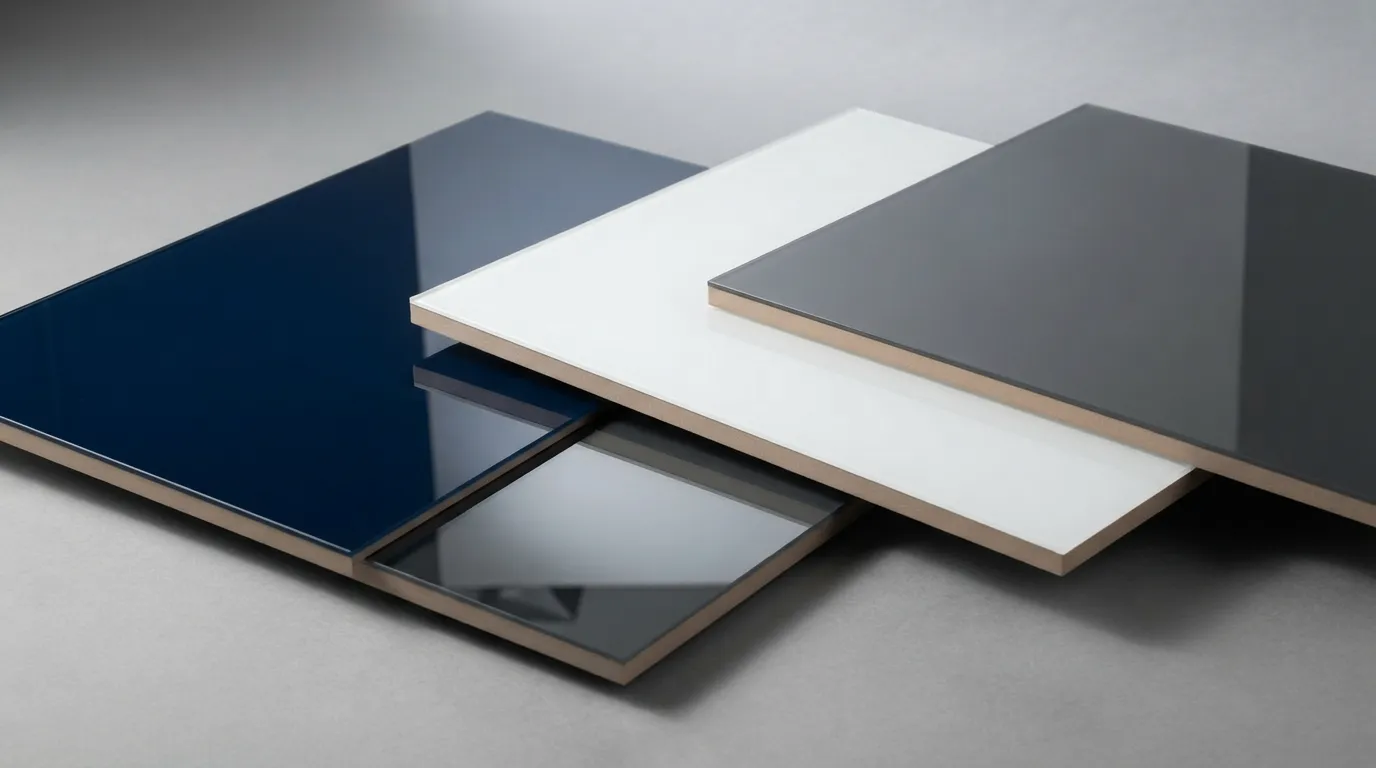
PET film, by its chemical nature, is slightly more flexible and ductile. When machined, it tends to cut cleanly without shattering. Furthermore, the PUR glue edge banding compatibility of PET laminated boards is generally excellent. Because the face of the board is already bonded with PUR adhesive, using a matching PUR adhesive for the edge banding creates a highly moisture-resistant, delamination proof cabinet panel with virtually invisible glue lines.
6. Interpreting Surface Defects and Durability
Cabinet manufacturers must manage defect rates both in the factory and after installation. Surface defects should be interpreted according to the manufacturing system.
- Substrate Moisture Resistance: While both systems use MDF, the PUR adhesive layer in PET laminated panels acts as a continuous, waterproof membrane across the panel face, offering slightly enhanced protection against moisture penetration compared to micro-fissures that can occasionally occur in rigid UV coatings.
- Scratch Resistance: A high-quality UV-curable acrylic lacquer can achieve very high pencil hardness ratings, making it highly resistant to light surface abrasions. A scratch resistant PET laminated board achieves its durability through specialized hard-coatings applied to the film during manufacturing. Both are durable, but they absorb impact differently; UV may chip under heavy impact, while PET may dent without breaking the surface seal.
- Color Consistency: Because PET film is manufactured in massive, color-controlled master batches, the color consistency from one cabinet run to another (even months apart) is highly stable. UV coatings rely on the underlying batch of printed melamine paper, which can occasionally exhibit slight dye-lot variations.
7. Finished-Door Economics: Beyond the Raw Material Price
Material price is not the same as finished-door economics. A purchasing manager evaluating PUR lamination vs UV painted MDF must look at the total cost of ownership.
While a raw UV lacquered MDF panel might sometimes carry a lower initial square-meter price than a premium PET laminated panel, manufacturers must factor in the cost of yield. What is the rejection rate for dust inclusions in the UV finish? How much time is spent reworking chipped edges?
Conversely, while PET film and PUR adhesive represent a higher upfront raw material investment, the predictable consistency, lack of orange peel, clean machinability, and lower defect rates often result in superior economics by the time the cabinet door is packaged and shipped.
8. Technical Comparison Framework
| Feature / Metric | System A: UV-Coated High Gloss MDF | System B: PET High Gloss Laminated MDF |
|---|---|---|
| Surface Formation | Liquid acrylic lacquer, self-leveling | Solid, pre-calendered plastic film |
| Curing / Bonding | UV photopolymerization | Moisture-curing PUR hot-melt adhesive |
| Decorative Layer | Melamine impregnated paper (under coating) | Finished PET decorative film |
| Surface Flatness | Subject to minor orange peel based on paper/coating | High capability for absolute mirror finish |
| Machinability | Hard surface; requires very sharp tooling to prevent edge chipping | Ductile surface; cuts cleanly with minimal shattering |
| Edge Treatment | Requires careful handling to avoid joint visibility | Excellent PUR glue edge banding compatibility |
| Quality Control Focus | Dust prevention, coating viscosity, UV lamp intensity | Substrate calibration, tension control, PUR glue weight |
9. What Cabinet Manufacturers Should Verify Before Choosing
Before committing to either a UV coated high gloss board or a PET laminated MDF system, cabinet manufacturers should evaluate their internal production capabilities:
- Machinery: Do you have precision panel saws and edge banders capable of processing delicate high-gloss surfaces without scratching?
- Environment: If outsourcing panels, what is the supplier's quality control regarding dust inclusions (for UV) or substrate chatter (for PET)?
- Market Demand: Are your clients demanding the absolute flat, modern, handleless mirror look (favoring PET), or are they looking for deep, vibrant colors and woodgrains with a hard, glassy finish (where UV excels)?
Choosing the Surface System, Not Just the Surface
Both UV-coated high-gloss MDF and PET high-gloss PUR-laminated MDF are highly capable materials for modern cabinet manufacturing. However, they achieve their final aesthetics and performance metrics through entirely different engineering pathways.
The decision between a PET film vs UV coating system should not be based merely on a visual sample. The right choice depends on your factory's production route, edge treatment capabilities, required quality consistency, and total finished-door economics. By understanding how the surface is formed, bonded, and processed, manufacturers can align their material specifications with their actual production reality, reducing rework and delivering a superior cabinet door to the final consumer.
 How to Evaluate B2B Surface Suppliers for Large-Scale Projects: A Practical Qualification Guide