



 Home
HomeVirgin vs Recycled Plastic: What Is the Real Impact on Film Performance?
 16 Oct,2026
The Same Specification Does Not Always Mean the Same Film
Imagine a scenario common to technical purchasing teams in the furniture and panel lamination industry: You are evaluating two rolls of decorative film. On a technical data sheet, both materials present identical specifications for thickness, color coordinates, and nominal tensile strength. Yet, when placed on the production line, their behavior diverges sharply. One roll applies smoothly to a medium-density fiberboard (MDF) substrate, yielding a flawless, mirror-like gloss or a uniform super-matte finish. The other exhibits subtle gauge variations, unexpected tension fluctuations during lamination, or microscopic surface inclusions that ruin the aesthetic of a finished cabinet door.
When discrepancies like these occur, buyers often question whether the root cause lies in the choice of virgin vs recycled plastic. However, this is rarely a simple binary issue. The assumption that virgin resin always guarantees perfection—or that recycled resin inevitably compromises quality—oversimplifies the complex reality of polymer science and film extrusion. The true impact of recycled plastic on film properties is determined by a network of variables: feedstock origin, sorting precision, thermal processing history, moisture management, and extrusion controls.
To make informed sourcing decisions, manufacturers and industrial laminators must look beyond simple sustainability claims. Evaluating virgin vs recycled plastic requires understanding exactly what happens to polymer chains during reprocessing, where material differences become visible on the production floor, and how those differences ultimately affect the finished furniture panel.
Before Comparing Performance, Define the Material
To evaluate material impact accurately, it is necessary to establish precise definitions. Plastics used in film extrusion are not categorized simply as "new" or "used." The industry differentiates them based on their origin and processing history.
Virgin resin refers to newly synthesized polymers, polymerized directly from petrochemical or bio-based feedstocks. Because it has never undergone a melt-processing cycle outside of its initial pelletization, virgin resin offers the highest baseline for molecular weight and chemical purity.
Recycled resin is a broad category that requires further distinction. Post-industrial recycled (PIR) material consists of manufacturing scrap—such as edge trim from a film extrusion line—that is immediately reground and fed back into the process. Because its thermal history is short and its composition is known, PIR often behaves very similarly to virgin resin. Conversely, post-consumer recycled (PCR) plastic originates from end-user waste. Virgin vs PCR plastic comparisons are far more complex, as PCR materials have been exposed to varying environmental conditions, potential contamination, and aggressive washing and shredding processes before being re-pelletized.
It is critical to recognize that recycled-content percentage is not equivalent to recycled-material quality. A film containing 30% recycled content from highly controlled, meticulously sorted post-industrial streams will exhibit vastly different mechanical and optical properties than a film containing 30% poorly sorted, heavily degraded post-consumer material. Therefore, comparing virgin resin vs recycled resin requires an understanding of the specific recycling technology and the resin's thermal history.
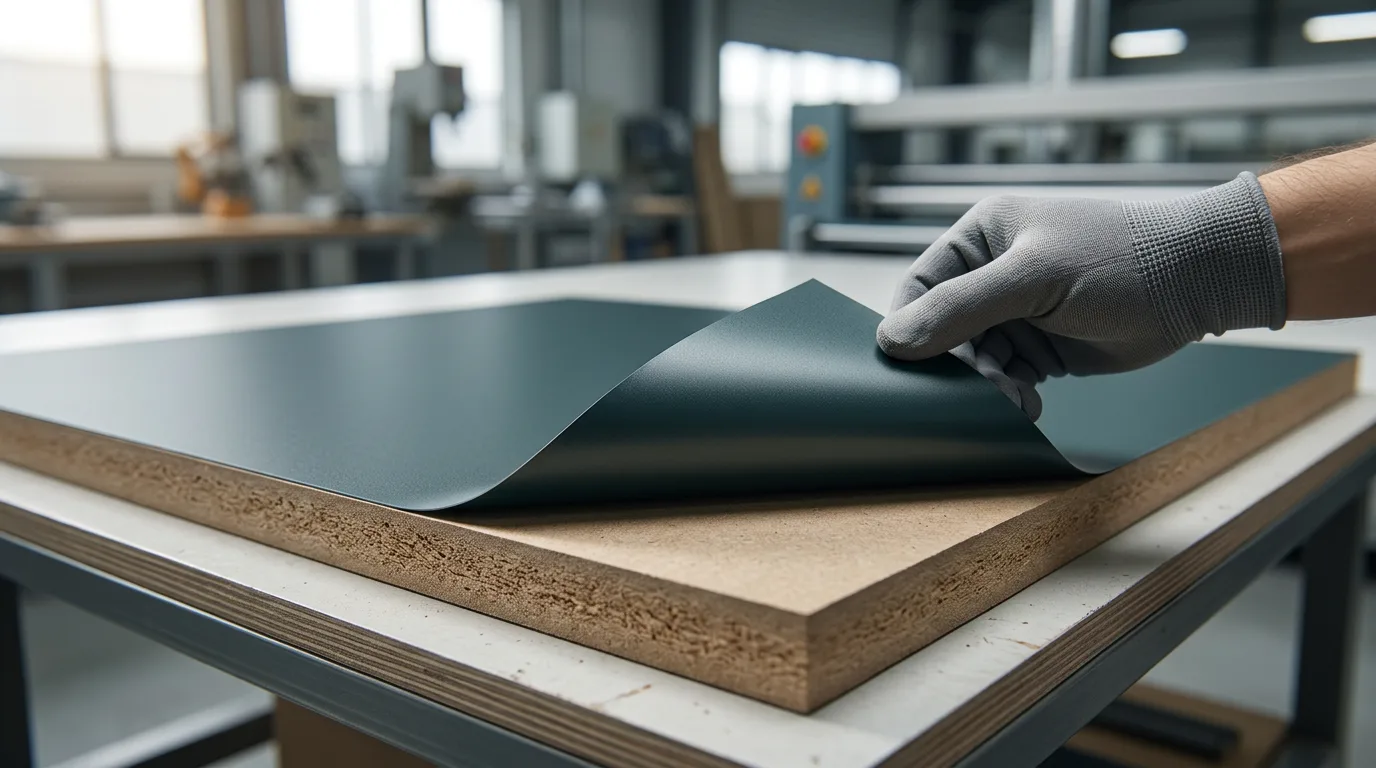
Five Places Where Material Differences May Become Visible
When comparing films produced from different feedstocks, the differences rarely manifest as a complete material failure. Instead, variations emerge at specific checkpoints during processing and end-use application.
Checkpoint 1: Molecular integrity and mechanical behavior
The fundamental difference between a newly synthesized polymer and a reprocessed one lies in the polymer chain length, often measured in polyesters (like PET) as Intrinsic Viscosity (IV). Every time a polymer is subjected to high heat and shear forces during melting, some degree of chain scission occurs. In materials like PET, which are highly susceptible to moisture, any failure to completely dry the recycled flake or pellet prior to extrusion will lead to hydrolytic degradation, severely fracturing the molecular chains.
This reduction in molecular weight directly influences the mechanical properties of recycled plastic film. A film with heavily degraded molecular chains may exhibit lower melt strength, reduced tensile strength, and compromised elongation at break. However, this does not mean recycled plastic inevitably loses its strength. Through advanced solid-state polycondensation (SSP) processes, the intrinsic viscosity of recycled PET can be rebuilt to match or even exceed that of virgin resin. Therefore, the tensile strength of recycled PET film depends entirely on the sophistication of the resin recovery and extrusion processes, rather than the mere presence of recycled content.
Checkpoint 2: Optical quality and visible surface defects
For decorative films used in furniture and interior design, visual perfection is paramount. This is where the distinction in virgin vs recycled PET transparency and surface quality becomes hyper-critical.
Recycled feedstocks, particularly PCR, inherently carry a higher risk of contamination. If a PET recycling stream contains trace amounts of PVC, adhesives, or incompatible polyolefins, these contaminants will carbonize or remain unmelted at PET extrusion temperatures. This results in microscopic black specks or hard gels (unmelted polymer clusters) within the film matrix.
In a textured or heavily printed film, minor optical defects might be camouflaged. However, in uniform solid-color films, high-gloss finishes, or ultra-matte surfaces, a microscopic defect acts as a focal point for light refraction, rendering the surface unacceptable for premium cabinet doors. Additionally, repeated thermal cycling can cause thermal oxidation, leading to a subtle yellowing of the base resin. Achieving recycled PET film color consistency requires stringent colorimetry controls and potentially the use of specialized toners to offset the yellowing effect, challenges that are less prevalent when processing 100% virgin resin.
Checkpoint 3: Extrusion and process consistency
The behavior of the material inside the extruder dictates the dimensional stability of the final film. Film extrusion: virgin vs recycled presents differing challenges in melt rheology. Virgin resins generally possess a highly predictable melt flow index (MFI). Recycled batches, compiled from various sources, may exhibit broader molecular weight distributions, leading to fluctuations in melt pressure.
If an extruder's melt pump and die controls are not calibrated to handle these fluctuations, the resulting film will suffer from gauge bands—areas of inconsistent thickness across the web. While a thickness variance of a few microns might seem negligible, it severely impacts how the film winds onto a core and, more importantly, how it interacts with adhesives during lamination. A highly controlled extrusion process featuring advanced melt filtration and continuous thickness monitoring can mitigate these variables, producing highly consistent recycled plastic film.
Checkpoint 4: Surface finishing and functional performance
A decorative film’s performance is not dictated solely by its base substrate; it heavily relies on surface coatings, such as excimer-cured topcoats or nano-coatings designed for scratch resistance and anti-fingerprint properties.
The application of these functional coatings requires precise surface tension, usually achieved through corona or plasma treatment. If a recycled base film contains uncharacterized additives, slip agents, or contaminants that migrate to the surface, it can interfere with the surface energy, leading to poor coating anchorage. However, assuming the recycled base film is free of migratory contaminants and maintains consistent gauge, the functional performance of the surface finish (scratch, stain, and chemical resistance) will depend on the coating chemistry and curing process, not on whether the underlying resin is virgin or recycled.
Checkpoint 5: From film roll to finished furniture panel
The ultimate test for any decorative material occurs on the lamination line. When applying films to engineered wood substrates (MDF, particleboard, or plywood) using Polyurethane (PUR) hot-melt adhesives, precision is non-negotiable.
If material variability in a recycled film causes slight tension inconsistencies or thickness fluctuations, the PUR adhesive will not transfer evenly from the applicator roller to the film. This uneven adhesive distribution often causes an "orange peel" effect on the finished panel, a defect that is frequently, and sometimes incorrectly, blamed solely on the substrate or the adhesive. Furthermore, if the film's mechanical properties have been compromised by polymer degradation, it may lack the internal cohesive strength required to withstand routing, laser edge-banding, or temperature fluctuations in the final installation environment. Distinguishing raw-material-related defects from lamination-process errors requires careful diagnostic testing of both the unlaminated film roll and the finished panel.
Why Recycled Content Percentage Is Not a Quality Score
Procurement discussions often fixate on a specific target, such as "we require 30% recycled content." However, establishing a percentage does not establish a quality standard. Two films, both containing 50% recycled PET, can perform entirely differently.
Material A might utilize highly traceable, post-industrial edge-trim that is systematically reground and blended with virgin resin under strict rheological monitoring. Material B might utilize a heavily degraded, poorly filtered post-consumer flake with fluctuating intrinsic viscosity. Both meet the "50% recycled" metric, yet Material A will laminate flawlessly, while Material B may suffer from gels, color shifts, and edge lifting.
Therefore, evaluating the impact of recycled plastic on film properties requires looking beyond the label. The reliability of a material is rooted in feedstock traceability, the rigor of contamination control (such as optical sorting and fine-mesh melt filtration), and batch-to-batch repeatability. A properly engineered formulation containing recycled content can absolutely meet the rigorous demands of interior surfacing, provided it is manufactured with uncompromising process controls.
A Practical Evaluation Method for Film Buyers
To effectively manage the variables associated with different resin sources, purchasing and technical teams should adopt a systematic evaluation process:
- Define visual and functional tolerances: Establish clear limits for haze, color deviation (Delta E), and acceptable defect sizes for the specific application (e.g., solid super-matte vs. woodgrain print).
- Request traceability: Ask suppliers for technical data detailing the source of any recycled content and the quality control metrics (like IV stability and filtration screens) used during extrusion.
- Conduct incoming visual and dimensional inspection: Before running a trial, verify roll profile, gauge consistency, and the absence of visible specks or yellowing.
- Execute a representative lamination trial: Apply the film using the exact substrate, PUR adhesive, line speed, and tension settings intended for mass production.
- Evaluate the finished panel: Inspect for orange peel, telegraphing of substrate fibers, coating adhesion, and dimensional stability after curing.
- Verify batch consistency: A single successful trial roll is insufficient. Demand consistency data across multiple production batches to ensure the resin stream remains stable over time.
What This Means for Furniture Surface Materials
In the decorative surface industry, the margin for error is exceptionally narrow. A single microscopic defect or a slight shift in color consistency can render a finished wardrobe, cabinet, or wall panel commercially unacceptable.
This reality dictates how material selection must be approached. At WellP, our focus in manufacturing premium PET and PP decorative films is rooted in the demand for absolute processing stability. To guarantee the optical clarity, color consistency, and mechanical integrity required for high-end interior surfaces, WellP utilizes 100% virgin raw materials sourced directly from SK Chemicals (South Korea). As one of SK Chemicals' official partners in China, this highly controlled, direct supply chain ensures that the baseline polymer remains entirely free from the thermal degradation, moisture issues, and contamination risks associated with unverified recycled streams.
By eliminating raw material variability at the source, the subsequent extrusion, coating, and surface finishing processes can be precisely calibrated. Ultimately, the fundamental objective is to eliminate variables for the buyer: delivering a decorative surface that laminates reliably, processes consistently, and meets the exact visual standards of the interior design market—ensuring that furniture manufacturers face zero unexpected surprises on the lamination line.
The Better Question Is Whether Performance Can Be Repeated
The debate over virgin vs recycled plastic often asks the wrong question. It is not inherently true that recycled plastic loses its strength or that virgin resin is the only path to aesthetic perfection. The impact of the raw material is deeply intertwined with thermal history, moisture control, and the sophistication of the extrusion process.
For B2B buyers, the most meaningful metric is not simply what the film is made of, but whether its critical properties—thickness consistency, surface energy, optical purity, and mechanical integrity—can be repeated flawlessly from roll to roll, and from batch to batch.
 The Thickness Decision Usually Starts in the Factory, Not in the Catalogue