


 Home
HomeCross-Climatic Material Performance: Weatherability Testing of Engineered Panels in Extreme Environments (Dubai vs. Moscow)
 12 May,2026
Why Climate-Specific Testing Matters
In the globalized supply chain of architectural surfacing and furniture manufacturing, specifying materials based strictly on indoor ambient baseline data is an engineering liability. A decorative panel laminated for a luxury hospitality project in Dubai is subjected to entirely different thermomechanical stressors than a panel installed in a commercial high-rise in Moscow.
Evaluating extreme environment durability requires understanding that polymer films, adhesives, and wood-based substrates possess different coefficients of thermal expansion and hygroscopic behaviors. When these materials are combined into a composite panel, environmental extremes amplify shear stress at the bond line. Understanding cross-climatic material performance is critical for architects, procurement managers, and panel producers to prevent premature catastrophic material failure in the field.
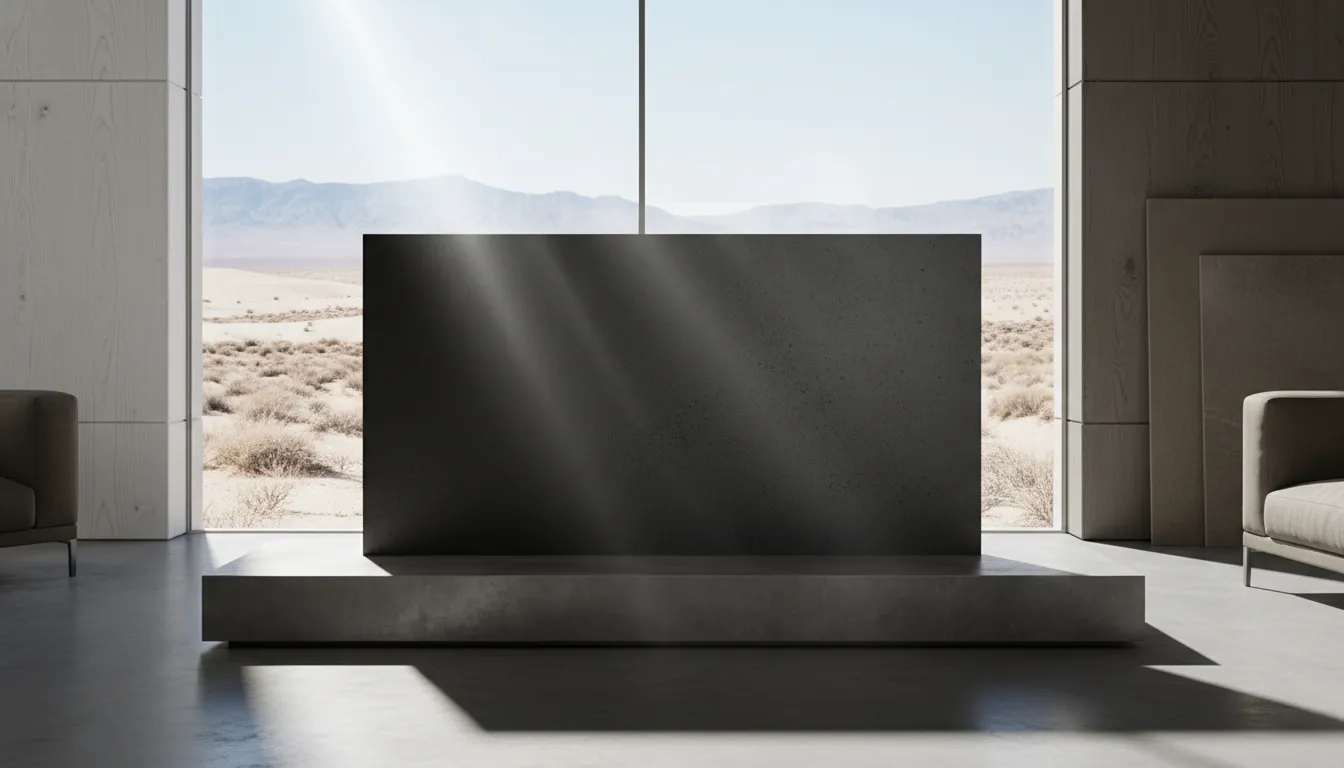
Dubai Environment: High Heat, UV & Dry Abrasion
The Arabian Peninsula presents a harsh, arid testing ground that accelerates polymer breakdown. Weather resistance in engineered boards deployed in this region must account for three primary environmental vectors:
- High-UV Exposure & High Irradiance Conditions: Solar radiation in Dubai frequently exceeds 1,000 W/m². Ultraviolet (UV) photons carry sufficient energy to break the covalent bonds in many polymer matrices (chain scission), leading directly to surface embrittlement and gloss loss.
- Thermal-Oxidative Aging & Thermal Degradation: Ambient temperatures routinely exceed 45°C (113°F), with dark-colored panel surfaces reaching up to 70°C (158°F) via solar heat gain. This sustained heat accelerates oxidation rates, causing plasticizer migration in inferior laminates and triggering thermal degradation of the core substrate.
- Sand Abrasion Resistance: Windborne particulate matter acts as a continuous abrasive medium, mechanically weathering the panel's micro-texture and compromising the protective topcoat.
Moscow Environment: Freeze-Thaw & Moisture Fatigue
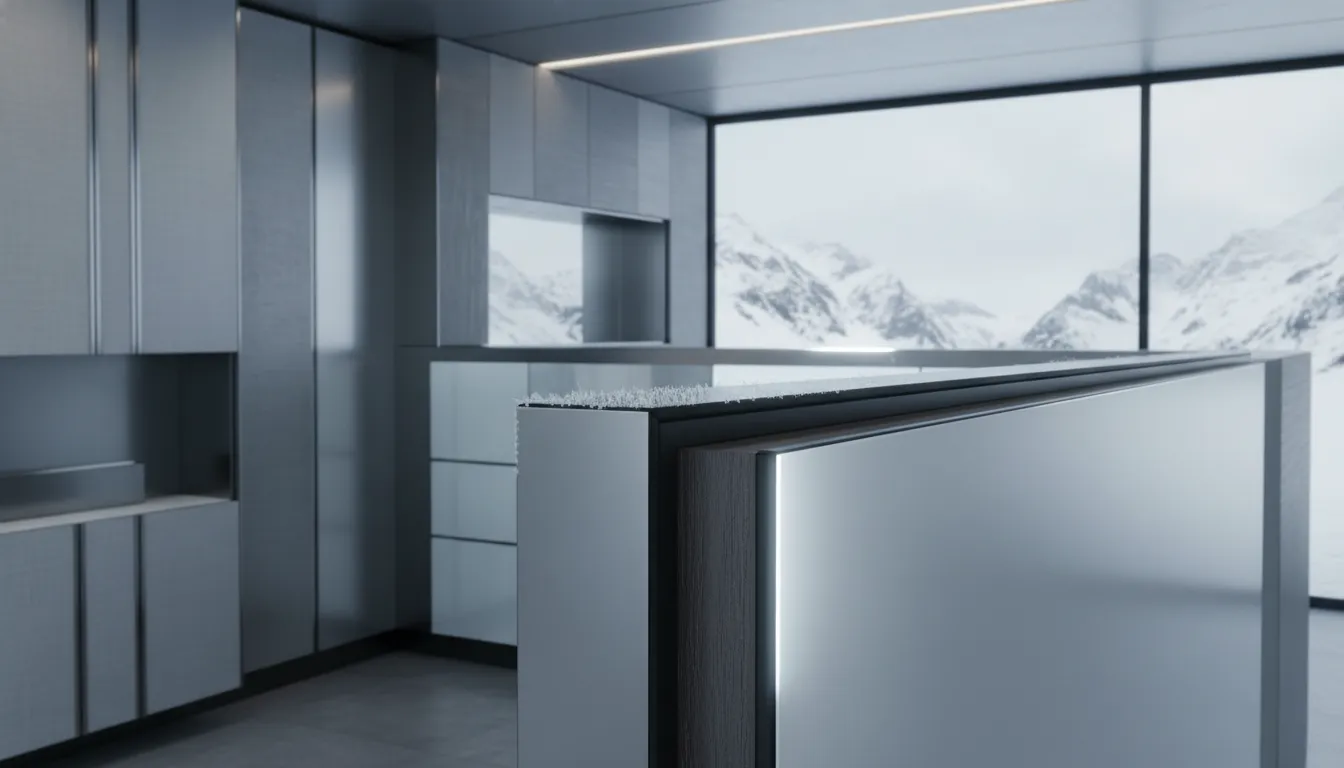
Conversely, the subarctic climate of Moscow introduces failure mechanisms driven by phase changes and cyclical temperature fluctuations.
- Freeze-Thaw Cycles (FTC): When moisture penetrates micro-fissures in a panel's edge banding or surface, it expands by approximately 9% upon freezing. The repeated expansion and contraction during seasonal transitions create severe mechanical stress within the substrate core.
- Subzero Temperature Fluctuations & Cold Cracking Resistance: As ambient temperatures drop below -20°C (-4°F), polymer films and adhesive layers approach or pass their glass transition temperature (Tg). The materials transition from a ductile state to a brittle, glassy state, severely reducing cold cracking resistance under mechanical impact.
- Moisture Condensation Fatigue: The stark temperature differential between heated building interiors and freezing exterior environments drives vapor transmission. If the decorative film does not provide an adequate vapor barrier, moisture accumulation at the substrate-adhesive interface leads to chronic fatigue.
Material Failure Mechanisms Across Climates
Climate-specific material degradation manifests differently depending on the dominant environmental stressor. Analyzing these failures is the core of panel weatherability testing.
- UV-Induced Polymer Discoloration: In high-irradiance zones like Dubai, photo-oxidation alters the chromophores within the polymer structure. This manifests as yellowing or fading, quantified by ΔE (color shift) measurements.
- Adhesive Embrittlement & Peel Strength Retention: In both extreme heat and extreme cold, the adhesive layer (often EVA or standard PUR) can lose its elastomeric properties. As the substrate expands or contracts, an embrittled adhesive cannot absorb the shear stress, resulting in plummeting peel strength retention.
- Substrate Swelling & Delamination Resistance: In Moscow's moisture-heavy environment, inadequate edge sealing allows water ingress. The hygroscopic wood fibers in MDF or particleboard swell, exerting outward pressure that overpowers the adhesive bond, destroying the panel's delamination resistance.
- Dimensional Instability: Extreme thermal cycling causes differential expansion between the rigid core and the flexible decorative film, leading to panel warping or bowing.
Decorative Surface Material Comparison
When engineering panels for extreme climates, the choice of the thermoplastic overlay is the most critical variable.
- PVC (Polyvinyl Chloride): Historically common, but heavily reliant on plasticizers. In Dubai's heat, these plasticizers migrate to the surface, causing tackiness and rapid embrittlement. In Moscow's cold, PVC struggles with cold cracking.
- PP (Polypropylene): Offers good flexibility and chemical resistance. However, achieving advanced aesthetic finishes requires complex top-coating, and its dimensional stability under extreme thermal cycling can be challenging without specialized balancing layers.
- PET (Polyethylene Terephthalate): Currently the dominant engineering choice for high-end applications. PET exhibits a highly stable polymer chain with superior PET decorative film durability. It inherently resists plasticizer migration (as it does not require them), maintaining exceptional ultra matte finish stability even under abrasive desert winds. Furthermore, its moisture barrier properties protect edge banding integrity in freeze-thaw zones, ensuring long-term surface material longevity.
Testing Methodologies Used by Engineers
To predict cross-climatic material performance, testing laboratories utilize a combination of simulated and real-world exposures.
- Accelerated Weathering Test: Conducted in controlled environmental chambers to simulate years of damage in weeks.
- Xenon Arc Exposure (e.g., ISO 4892-2): The gold standard for simulating full-spectrum sunlight. Filters are used to match the solar irradiance found in high-UV regions, measuring anti-yellowing performance and gloss retention.
- QUV Environmental Simulation (e.g., ASTM G154): Utilizes fluorescent UV lamps combined with heated water condensation cycles to simulate the devastating synergy of UV radiation and moisture fatigue.
- Natural Outdoor Aging: Panels are mounted on exposure racks at specific angles (e.g., 5° facing south in Florida or Arizona) to validate the accelerated data against real-world natural outdoor aging.
- Peel Strength and Dimensional Stability Testing: Panels undergo cyclic climatic testing (e.g., cycling from -20°C to +60°C with variable humidity) followed by mechanical pull-tests to quantify adhesive degradation and core warping.
Engineering Strategies for Climate-Adaptive Panels
Producing a decorative panel that survives both the Persian Gulf and the Russian winter requires a systems-engineering approach to engineered board laminations.
- Select Thermally Stable Films: Specify PET films for their superior thermal stability and lack of volatile plasticizers.
- Optimize Adhesive Systems: Utilize cross-linking Polyurethane (PUR) adhesives. Unlike standard hot melts, moisture-curing PUR forms an irreversible chemical bond that maintains elastomeric flexibility at -30°C and resists reactivation at 80°C.
- Engineered Edge Sealing: Implement co-extruded edge banding applied with PUR or laser-welding technology to create a seamless, zero-joint moisture barrier, critical for delamination resistance in freeze-thaw climates.
- Substrate Matching: Select moisture-resistant (MR) or exterior-grade MDF/HDF substrates with low thickness swelling coefficients to minimize internal stresses during high humidity exposure.
Why PET Decorative Surfaces Are Increasingly Preferred
As the industry shifts toward higher technical standards, PET has outpaced other polymers as the mainstream focus for high-performance laminations. Its molecular structure inherently provides superior dimensional stability, minimizing the shrink-back often seen in lesser films after prolonged heat exposure.
Furthermore, PET delivers unparalleled anti-yellowing performance—a critical metric for maintaining the visual fidelity of light-colored and Ultra Matte architectural panels subjected to intense solar radiation. Its dense surface structure also acts as a robust barrier, protecting the underlying substrate from moisture vapor transmission in cold, damp climates.
Sourcing Reliable Industrial Film Solutions
Specifying materials for global projects requires partnering with a decorative surface materials supplier that understands the physics of polymer degradation. As a specialized PET film manufacturer for engineered panels, WellP engineers weather-resistant decorative laminates designed specifically for the rigorous demands of international architectural and furniture applications. By focusing on advanced PET formulations, WellP provides industrial decorative film solutions that guarantee stable, long-term performance, whether installed in a sun-baked Dubai high-rise or a cold-weather commercial build in Moscow.
Technical FAQ
Q: At what ΔE value does UV-induced polymer discoloration become unacceptable for commercial projects?
A: In architectural and premium furniture applications, a ΔE of >2.0 is generally considered the threshold where color shift becomes perceptible to the human eye. High-performance PET films are engineered to maintain a ΔE of <1.5 even after 1,000 hours of Xenon arc exposure.
Q: Can standard EVA hot melt adhesives be used for panels exported to extreme climates?
A: It is highly discouraged. Standard EVA adhesives are thermoplastic and can reactivate at high temperatures (causing delamination in Dubai) and become critically brittle at low temperatures (failing in Moscow). Cross-linking PUR adhesives are required for extreme environment durability.
Q: Why do Ultra Matte finishes often fail faster than high-gloss finishes in desert climates?
A: Ultra Matte surfaces rely on microscopic surface texturing to scatter light. In desert climates, high heat combined with fine sand abrasion can "polish" or physically degrade this micro-texture, leading to inconsistent gloss spots. Advanced PET films utilize electron-beam (E-beam) curing or specialized excimer technology to physically lock in the Ultra Matte finish stability against mechanical and thermal wear.
 How Embossed Decorative Films Influence Indoor Light Reflection and Spatial Perception