


 Home
HomeMiddle East Hotel Construction: Why Metallic Texture Interior Design Dominates Luxury Hospitality Spaces
 25 Apr,2026
The landscape of Middle East hotel construction is undergoing an unprecedented expansion, driven by mega-developments like Saudi Arabia's Vision 2030 and the relentless evolution of Dubai hospitality design. In this high-stakes environment, developers, architects, and procurement teams face a rigorous challenge: selecting commercial interior finishes that deliver uncompromising visual impact while meeting strict engineering, budget, and operational constraints.
At WellP, our experience operating as a dedicated B2B interior surface material supplier and metallic PET film supplier has given us direct insight into the sourcing strategies of top-tier contractors. One dominant shift in hospitality design trends is the pervasive specification of metallic surfaces. This report outlines the project logic behind why these materials are specified, the performance requirements they must meet, and strategic alternatives to traditional metal that are transforming large-scale procurement.
The Strategic Value of Metallic Finishes in Hospitality
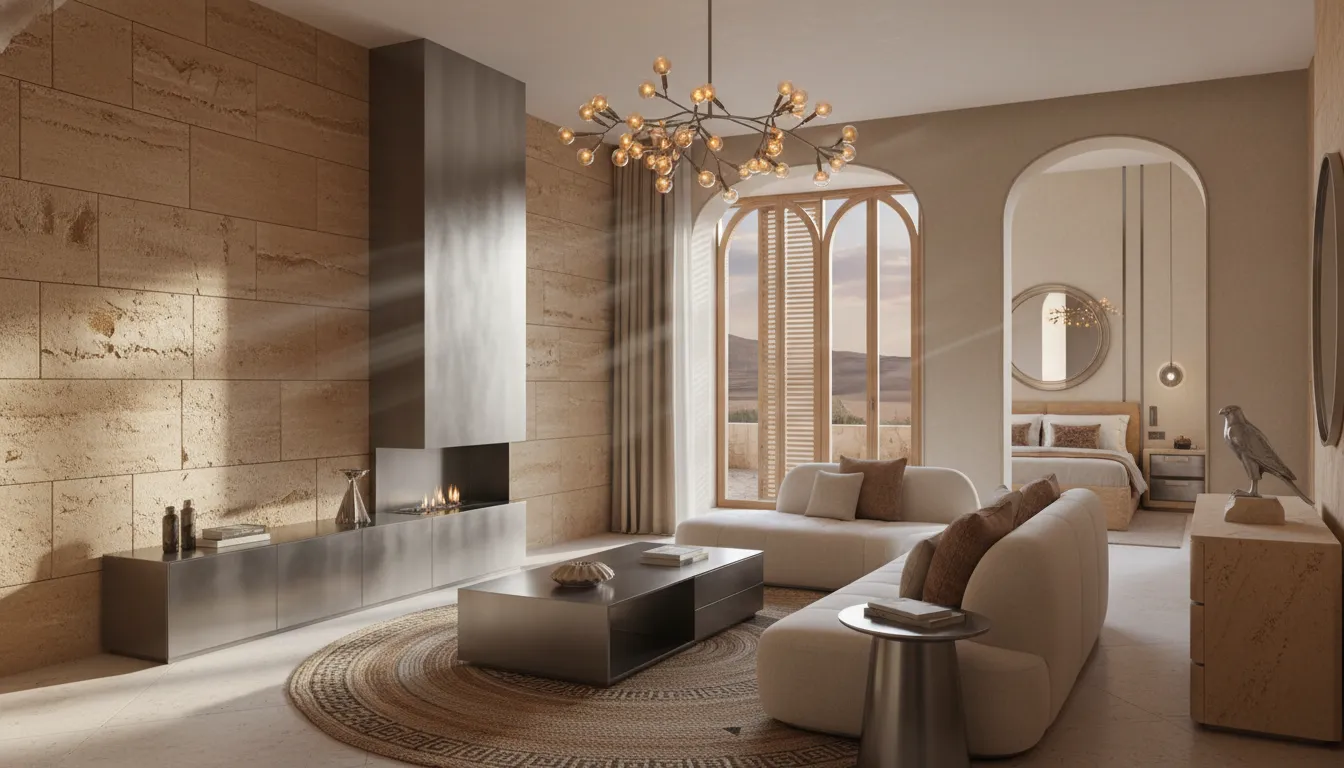
The question of why metallic finishes are popular in hotel interiors comes down to the intersection of regional aesthetic expectations and psychological design principles. Luxury hotel interior design in the Middle East demands an elevated sensory experience.
- Visual Impact & Luxury Perception: Metallic surfaces—whether brushed brass, matte champagne, or polished titanium—instantly convey opulence. They serve as visual anchors in expansive spaces, reflecting light to create dynamic, high-end environments.
- Cultural & Climatic Synergy: In regions characterized by intense sunlight and heat, metallic textures offer a psychological cooling effect while beautifully interacting with both natural desert light and complex interior architectural lighting.
- Brand Differentiation: Premium metallic finishes allow hotel operators to establish distinct brand identities, shifting away from standard woodgrains to more modern, bespoke aesthetics.
Performance Requirements for Hotel Project Materials
Securing premium materials for hospitality requires looking far beyond the initial aesthetic. The materials used in luxury hotel projects Middle East must survive rigorous environments.
- High-Traffic Durability: Hotel wall panel finishes and corridor surfaces must resist constant abrasion from luggage, housekeeping carts, and high foot traffic. Durable surface materials for hotel interiors are a non-negotiable baseline.
- Maintenance & Cleanability: In large-scale operations, surfaces that require specialized chemical cleaning or frequent polishing escalate operational expenditures (OpEx). Materials must be fingerprint-resistant and easily maintained.
- Batch Consistency: For massive Saudi Arabia hotel projects featuring thousands of guest rooms, achieving absolute color and texture consistency across distinct manufacturing batches is critical. Traditional anodic or plated metals often struggle with this at scale.
Application Scenarios & Material Typologies
When specifying luxury building materials UAE and broader regional projects, designers deploy metallic textures across highly specific touchpoints to maximize ROI on visual impact.
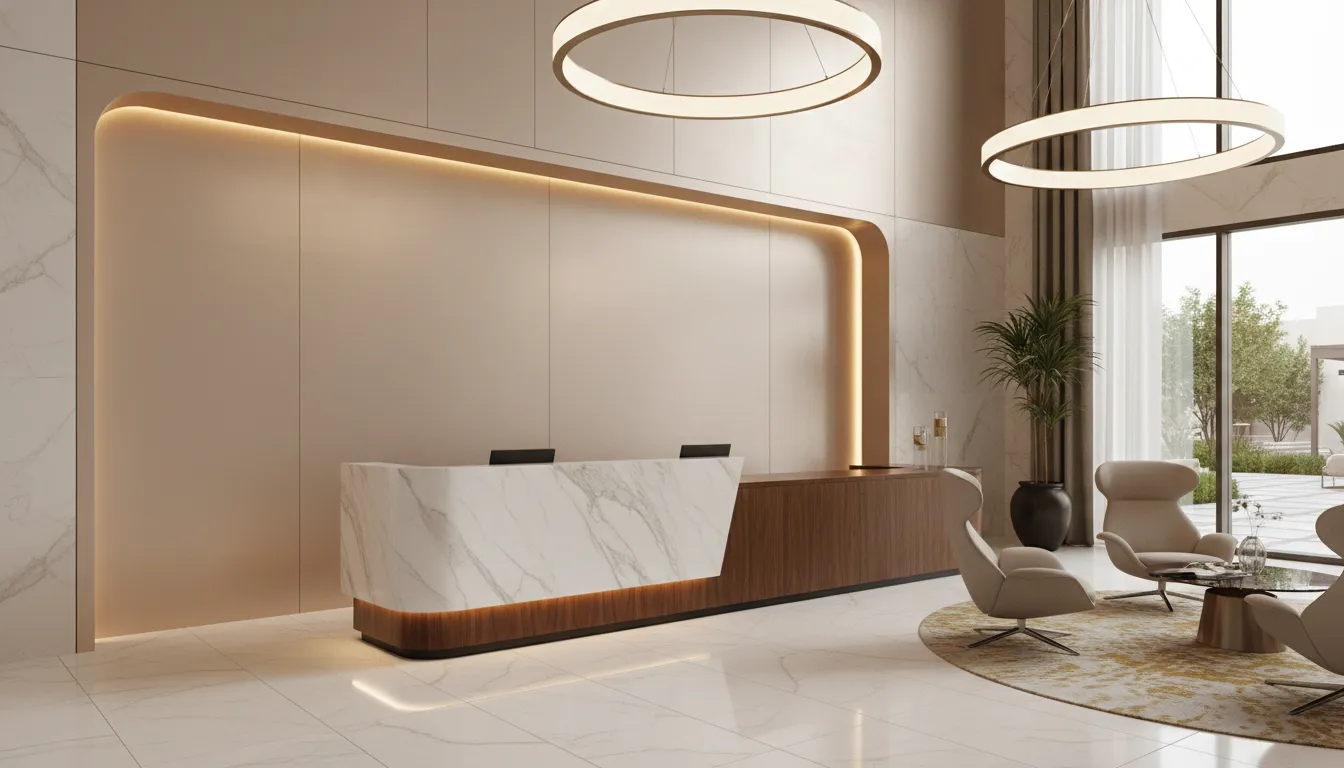
- Lobby Feature Walls & Reception: Large-scale applications requiring dramatic, seamless vertical spans.
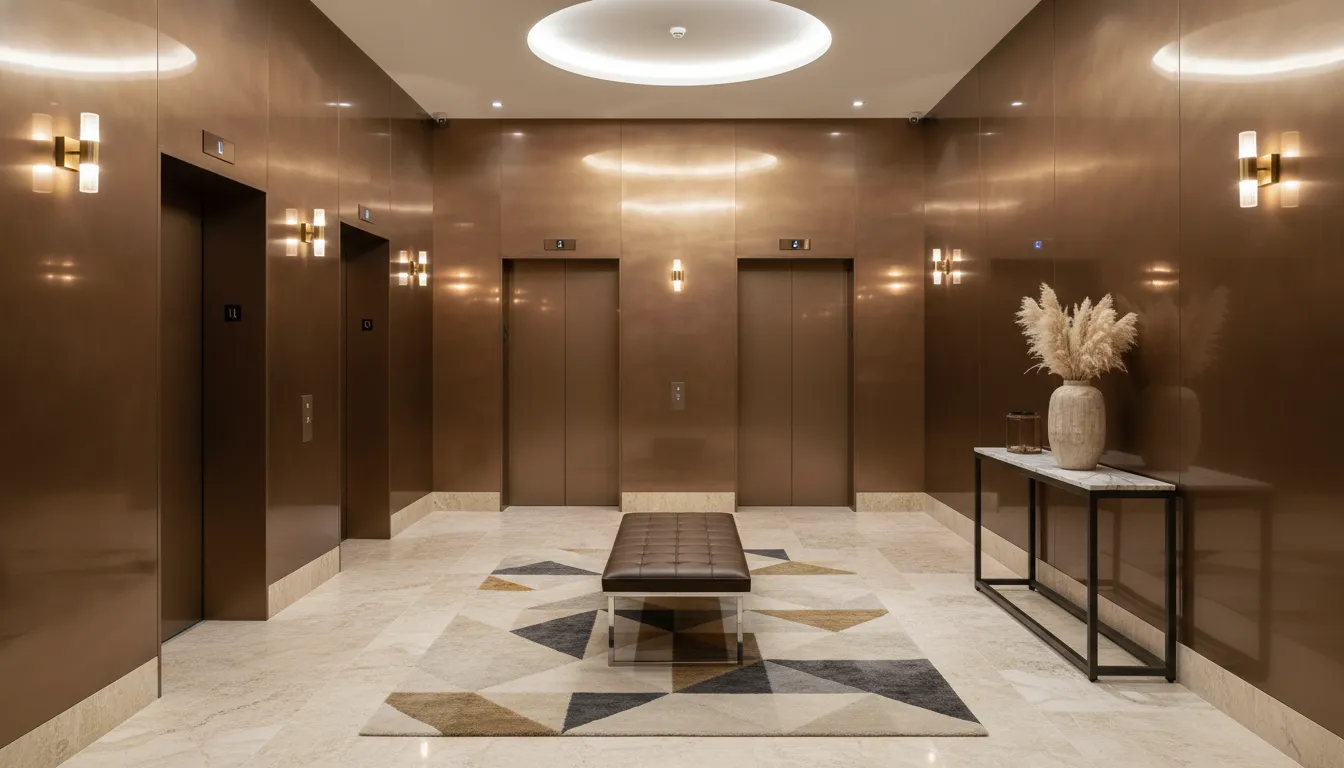
- Elevator Cabs & Lobbies: High-impact, low-square-footage areas where metallic surfaces communicate engineering precision.
- Guest Room Furniture & Casegoods: Wardrobes, minibar cabinets, and headboard accents. This is where metallic decorative film for hotel furniture has become an industry standard due to its application flexibility.
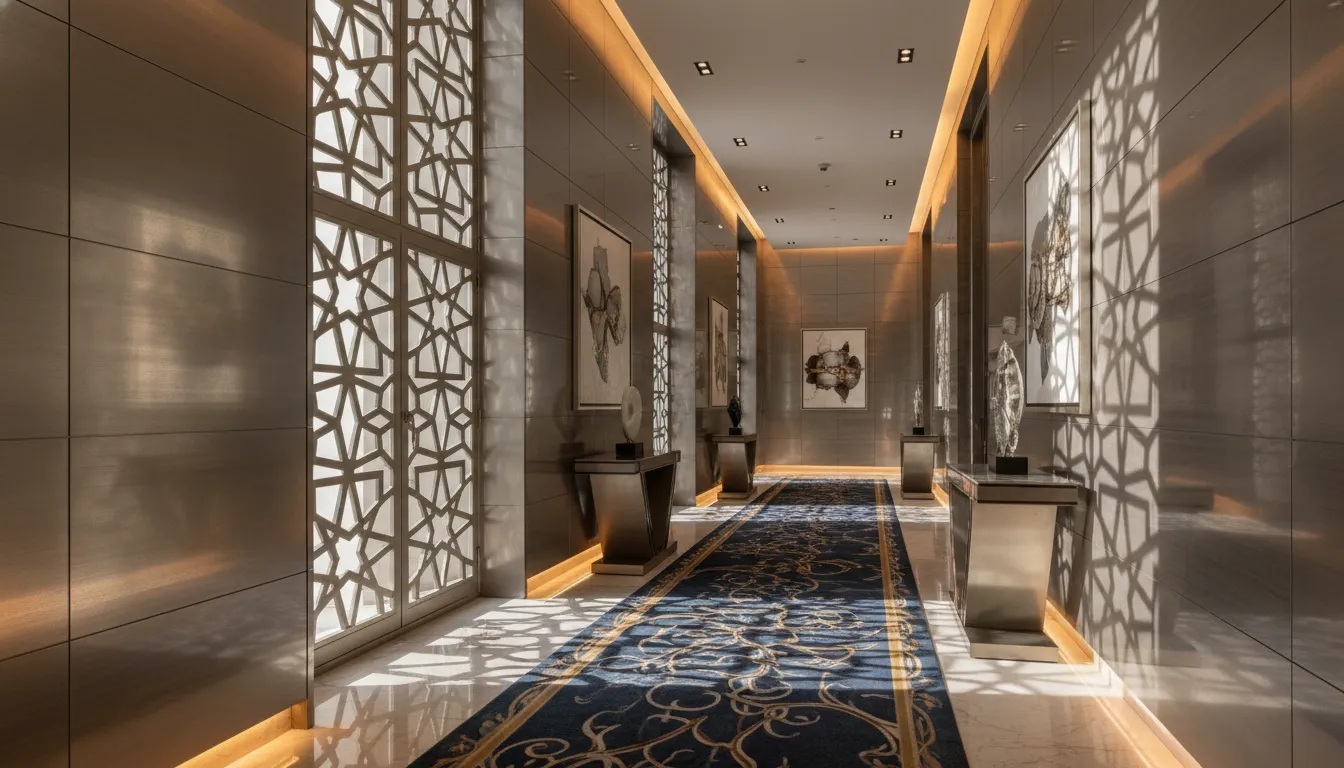
- Architectural Corridors: Wainscoting and transition zones requiring robust, scratch-resistant metal effect decorative surfaces.
To achieve these designs, contractors typically choose between traditional decorative metal panels (stainless steel, aluminum) or advanced metal-effect finishes (such as PET/PP decorative films applied to MDF or fire-rated substrates).
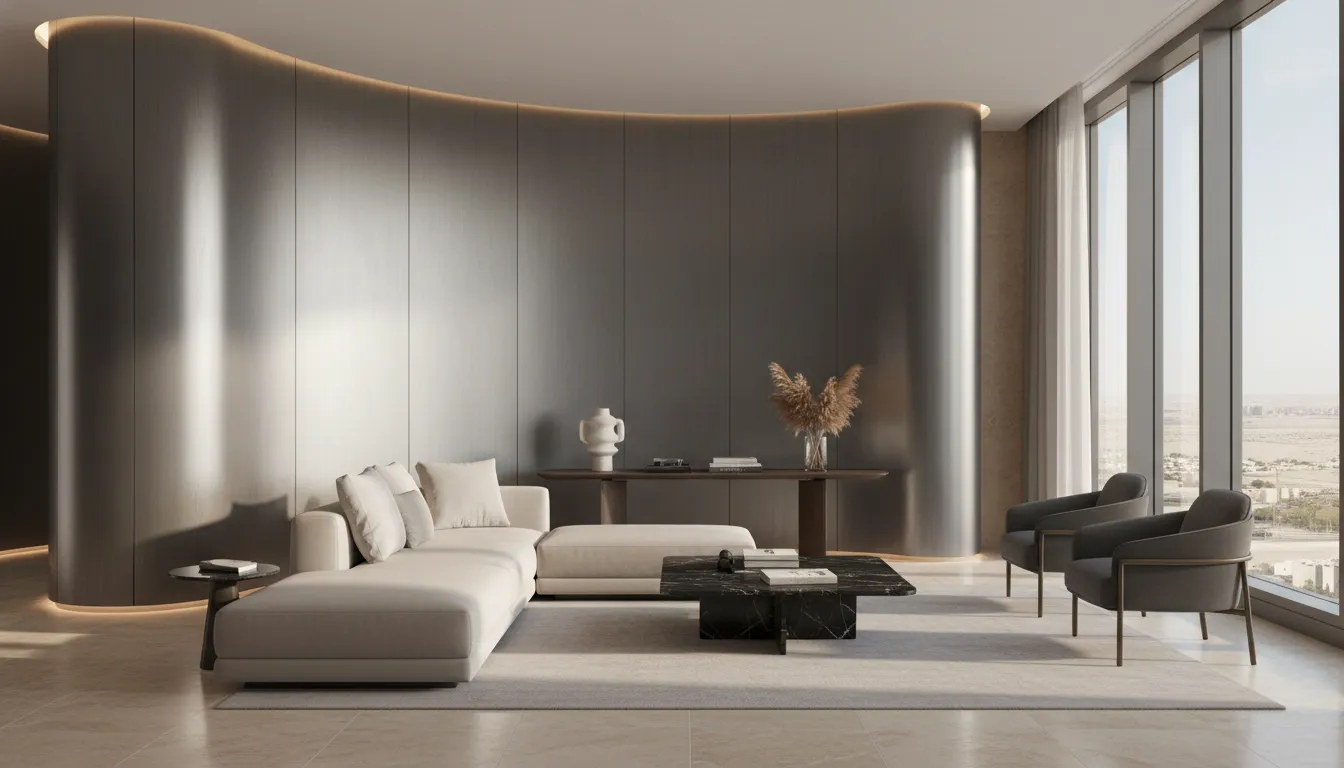
Project Insight: Real Metal Panels vs. Metal-Effect Decorative Film
For procurement teams and value engineering (VE) consultants determining the best materials for luxury hotel interiors, the choice between solid metal and decorative film solutions dramatically impacts the project timeline and budget.
| Evaluation Metric | Traditional Decorative Metal Panels | Metallic PET Decorative Film (WellP Solutions) | Project Impact |
| Material & Fabrication Cost | Very High. Requires specialized metallurgical fabrication and cutting. | Highly Cost-Effective. Applied to standard, economical substrates (MDF, HDF, Aluminum honeycomb). | Significant CapEx reduction, allowing budget reallocation to other design features. |
| Weight & Structural Load | Heavy. Requires reinforced sub-structures and specialized mechanical fasteners. | Lightweight. Adds virtually zero weight to the base substrate. | Reduces structural requirements and logistics/shipping costs to Middle East sites. |
| Installation Velocity | Slow. Demands specialized metalworkers; difficult to modify on-site. | Fast. Millwork can be prefabricated or laminated efficiently; easily adjusted by standard carpenters. | Accelerates the critical path of the construction schedule, enabling faster hotel opening. |
| Design Flexibility | Rigid. Limited radius bending without specialized equipment or visible seams. | High. Can seamlessly wrap complex curves, fluted panels, and edge profiles without cracking. | Enables designers to execute complex, curved metallic texture interior design flawlessly. |
| Batch Consistency | Variable. Plating and anodizing can yield slight color variations across large orders. | Absolute. Advanced roll-to-roll printing and extrusion ensure perfect color matching across thousands of meters. | Ensures visual uniformity across mega-projects with thousands of identical guest rooms. |
How WellP Decorative Solutions Meet Project Requirements
As a specialized metallic decorative film manufacturer, our internal engineering and production teams at WellP focus on bridging the gap between high-end design intent and construction feasibility. We understand that contractors are not just buying a finish; they are buying efficiency, compliance, and reliability.
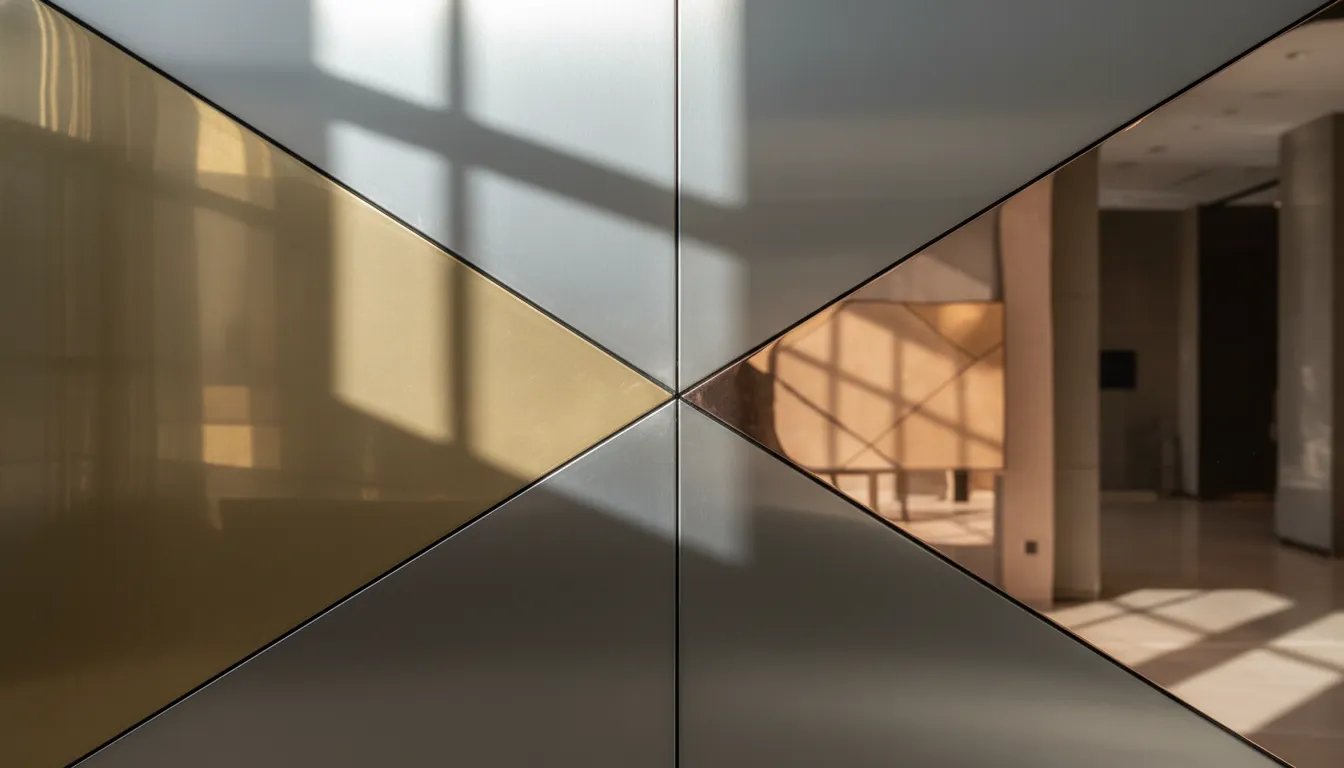
Our PET-based decorative film for commercial interiors provides an engineered alternative to heavy metals. By utilizing advanced coating technologies, we achieve authentic brushed, matte, and pearlescent metallic visuals with superior anti-scratch and anti-fingerprint properties. For hotel project materials, our films are laminated onto fire-rated base boards, ensuring compliance with strict Middle East civil defense regulations while delivering the exact aesthetic of premium architectural metals. Whether you are surfacing lobby columns or outfitting 500 guest room wardrobes, our custom decorative film for hospitality projects ensures rapid deployment and uncompromising quality.
How to Choose Materials for Middle East Hotel Projects
For procurement teams and architects finalizing their specifications, we recommend the following strategic approach:
- Assess the Application Plane: Use heavy, authentic metal only where structural integrity or localized thermal resistance is required. For vertical cladding, ceiling baffles, and casegoods, transition to high-quality metal effect decorative surfaces to control costs and weight.
- Evaluate Substrate Compatibility: Ensure the metallic finish you choose can bond securely with the necessary fire-rated substrates required by UAE and Saudi building codes.
- Prioritize Edge Treatment: When using laminates or films, examine the edge-banding technology. The mark of premium millwork is a seamless edge that perfectly matches the face texture.
- Request Large-Scale Mockups: Never approve a metallic finish based on an A4 sample. Request a full-scale mock-up of a wall panel or wardrobe door to observe how the metallic texture reacts to the specific lighting temperature (Kelvin) planned for the hotel.
FAQ: Sourcing Metallic Finishes for Hospitality
Q: Are metal-effect decorative films durable enough for high-traffic commercial hotel environments?
A: Yes. High-grade PET metallic films feature specialized UV-cured topcoats that provide excellent scratch and abrasion resistance, making them highly suitable for commercial environments, including corridors and guest room furniture, outperforming many traditional lacquers and veneers.
Q: Can decorative metallic films be customized for specific hotel brand guidelines?
A: Absolutely. As a direct manufacturer, WellP frequently collaborates with design teams to develop custom colorways, gloss levels, and brushed textures to match exact brand specifications, ensuring a unique identity for major Middle East projects.
Q: How does the cost of metallic decorative film compare to real stainless steel or aluminum panels?
A: While the exact ratio depends on the substrate used, deploying metallic PET film over an engineered board typically results in a 40% to 60% reduction in finished panel costs compared to architectural-grade stainless steel, alongside massive savings in installation labor and structural support requirements.
 Beyond the Surface: Why Antibacterial PET Decorative Films Are Becoming Essential in Public Space Projects