



 Home
HomeSame-Color Edge Banding Systems: Achieving 100% Visual Integration
 08 Jun,2026
Why Modern Furniture Buyers Notice Edges More Than Ever
Walk a buyer through a high-end European kitchen showroom, and their hands will invariably do the inspecting before their eyes do. They trace the transition from the front face of a cabinet door to its side. That 90-degree corner—the edge—is the ultimate barometer of manufacturing quality.
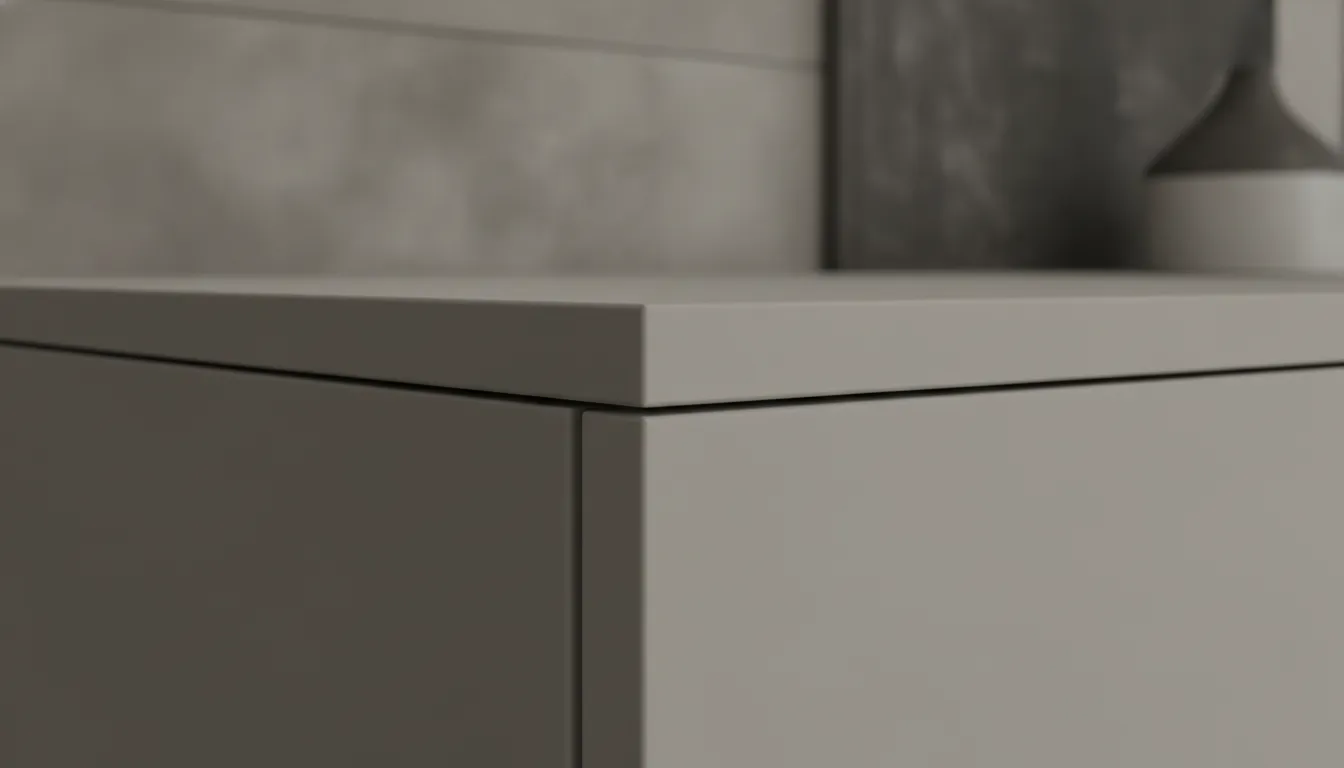
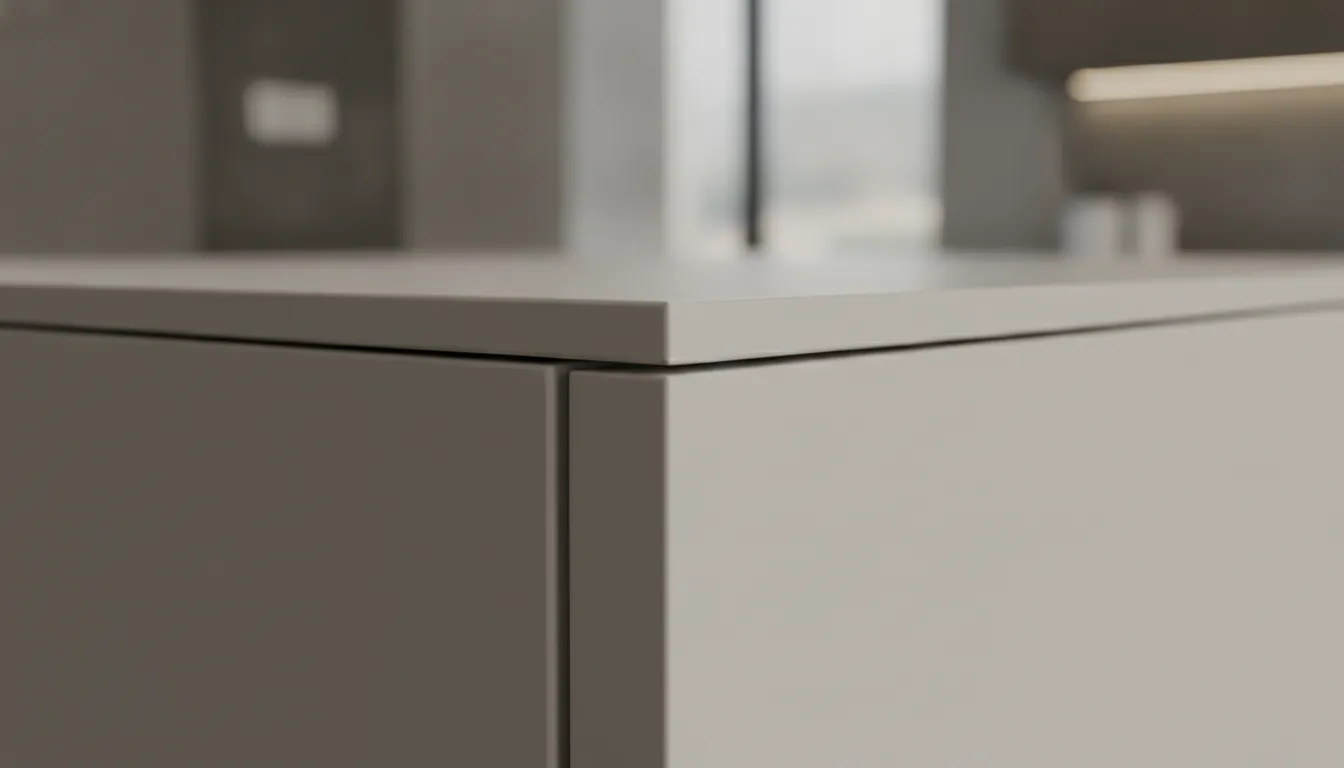
The industry has shifted decisively toward minimalist, handleless architecture. When hardware is removed from the equation, the surface material becomes the sole focal point. This aesthetic demands seamless minimalist cabinetry where the transition between the board face and its edge is imperceptible. Buyers are no longer satisfied with functional edge protection; they expect an integrated surface design.
When interior designers specify a monolithic panel design, any visible joint breaks the illusion of a solid block of material. The standard for premium cabinetry has evolved from "matching colors" to achieving 100% visual and tactile continuity. If a manufacturer cannot deliver this, their product is immediately categorized as lower-tier, regardless of the core material's quality.
The Hidden Cost of Poor Edge Matching
Factory floors routinely deal with the fallout of poorly matched edges. A batch of custom cabinet doors might look fine under standard factory lighting, but once installed under 4000K residential LED strips, the discrepancies become glaringly obvious.
The most common failure points are color deviation, gloss variance, and visible glue lines. These issues frequently stem from sourcing surface films and edge tapes from disconnected supply chains. For example, applying standard PVC tape to premium PET decorative panels often results in a mismatched chemical aging process. Six months after installation, the edge tape yellows while the PET face remains colorfast.
Furthermore, gloss level matching is notoriously unforgiving. High-gloss surfaces are generally much more prone to showing fingerprints and micro-scratches than matte surfaces, and they amplify the slightest gloss variance between the panel face and the edge. If the board face has a 90-degree gloss level but the edge band sits at 85 degrees, the edge will always look like a framed border rather than a natural continuation of the material. This edge banding color matching system failure instantly degrades the perceived value of the final furniture piece.
What Makes a True Same-Color Edge Banding System
Many cabinet makers mistakenly view edge treatment as an isolated final step. In reality, an integrated edge banding system must be engineered long before the board reaches the edgebander.
A true same color edge banding solution requires aligning the entire material stack. It begins with the decorative film. When manufacturers prioritize sourcing premium PET decorative film in continuous roll materials, they can tightly control the color masterbatch. By sharing these precise photometric data points with the edge band manufacturer, the face and the edge share the identical DNA.
When executing matching edge banding for MDF boards, the substrate's calibration also matters. Even with perfect color matched edge banding, microscopic variations in MDF thickness can lead to uneven milling and visible glue lines. Achieving a true zero-line aesthetic requires combining perfectly matched PET edge banding with advanced PUR (Polyurethane) or laser application technologies. Traditional EVA hot-melt glues leave a thick, visible glue line that darkens over time and traps dirt, destroying the monolithic illusion regardless of how well the tape matches the surface.
PET Decorative Panels and the Rise of Seamless Design
The explosion of PET cabinet doors in the North American and European markets has raised the stakes for furniture edge finishing. PET (Polyethylene Terephthalate) is highly valued for its non-toxic nature, exceptional color clarity, and high-end tactile feel—particularly in trending anti-fingerprint matte finishes.
Because PET surfaces possess a distinct, almost velvety light-absorption quality, they demand a highly specific PET film and edge banding match. Attempting to pair a sophisticated matte PET face with a cheaper ABS or PVC edge band introduces a jarring textural clash. The best edge banding solution for PET furniture panels is utilizing an edge band extruded from the exact same PET resin grade. This ensures that the edge not only matches the face visually but also shares the same moisture resistance, UV stability, and tactile warmth.
During seamless cabinet doors manufacturing, the cutting and milling of PET-laminated boards require precision tooling to prevent micro-chipping, ensuring the edge band sits perfectly flush against the decorative surface layer.
How Furniture Factories Evaluate Edge Banding Compatibility
For sourcing managers and production engineers, evaluating decorative panel edge treatment goes beyond a quick visual check. Factory-level evaluation requires a rigorous protocol to ensure long-term performance and aesthetic integration.
Below is the technical matrix used by top-tier furniture manufacturers to evaluate high-end decorative panels edge finishing:
| Evaluation Metric | Standard Edge Banding | Integrated Same-Color Edge System |
| Color Synchronization | Visual check under standard factory lighting. Prone to metamerism (color shifting under different light sources). | Spectrophotometer verified (Delta E < 1.0). Maintains color consistency across natural daylight and varying LED color temperatures. |
| Gloss Alignment | General categorical matching (e.g., "Matte" or "High Gloss"). Often shows a 5-10 degree gloss variance. | Precision matched gloss levels. Tactile synchronization ensures the edge feels identical to the anti-fingerprint panel face. |
| Joint Visibility | Relies on heavy EVA glue application. Results in a visible 0.15mm - 0.2mm adhesive line. | Designed for PUR or Laser application. Achieves a microscopic <0.05mm joint, creating an invisible joint edge banding effect. |
| Aging & UV Stability | Mismatched materials (e.g., PET face, PVC edge) age at different rates, leading to long-term color separation. | Unified material composition (PET on PET) ensures parallel aging, maintaining same color edge banding integrity for decades. |
When establishing your procurement checklist, prioritize suppliers who can provide joint testing data for both the roll material and the edge tape simultaneously.
Future Trends: From Edge Banding to Complete Surface Integration
The trajectory of the custom furniture market is clear: the tolerance for visible joints is disappearing. We are rapidly moving past traditional edge concealment toward true seamless edge banding solutions.
The industry standard is elevating to zero joint edge banding and zero line edge banding. As laser edgebanders and hot-air technologies become more accessible to mid-sized cabinet makers, the bottleneck is no longer the machinery—it is the material compatibility.
Future developments will center on smart color-matching systems and co-extruded edge bands that perfectly mimic the intricate textures of the panel face. For factories producing same color edge banding for modern minimalist furniture, the competitive advantage will belong to those who treat the panel, the adhesive layer, and the edge band not as separate commodities, but as a single, unified architectural element.
FAQ: Mastering Edge Banding Integration
Q: How to achieve seamless cabinet design?
A: To achieve a seamless cabinet design, manufacturers must combine perfectly color-matched edge bands (ideally of the same material as the panel face, such as PET) with zero-joint application technologies like PUR adhesives or laser edge banding. This eliminates visible glue lines and ensures the edge and face reflect light uniformly.
Q: What is the best edge banding solution for PET furniture panels?
A: The optimal solution is using dedicated PET edge banding paired with PUR adhesive. Using PET edge tape on a PET panel guarantees that both surfaces share the same gloss level, tactile feel, and UV aging characteristics, preventing color mismatch over the furniture's lifespan.
Q: How to create invisible joints in cabinet production?
A: Creating invisible joints requires tight calibration of three elements: perfectly dimensioned core boards (like MDF), identical color and texture matching between the surface film and edge tape, and the use of PUR or laser edge banding technology to reduce the adhesive line to less than 0.05mm.
Q: Why does matching edge banding matter for high-gloss versus matte panels?
A: High-gloss surfaces are highly reflective and prone to highlighting fingerprints and micro-inconsistencies. Any variance in gloss or color between a high-gloss panel face and its edge band will be immediately visible. Matte finishes, while slightly more forgiving with light reflection, require strict tactile matching to maintain an integrated sensory experience.
 WellP South Asia Market Expansion: A Success Story in Decorative Surface Materials