



 Home
HomeThe Architecture of Reflection: Specifying Standardized Metallic Textures for Commercial Interiors
 20 Aug,2026
Specifying metallic surfaces for large-scale commercial interiors traditionally presents a profound conflict for designers and material procurement teams. Real metal—whether brass, stainless steel, or anodized aluminum—delivers undeniable visual weight and sophistication. Yet, integrating heavy, rigid sheet metals into complex millwork, acoustic paneling, and modular commercial furniture introduces cascading challenges in fabrication, cost, weight, and batch-to-batch visual consistency.
The alternative is no longer restricted to rudimentary painted finishes or brittle high-pressure laminates (HPL). The emergence of advanced polymer sciences has shifted the industry toward engineered flexible surfaces. Today, standardizing a metallic aesthetic across a sprawling hotel or corporate headquarters relies heavily on specifying the correct PET metal texture film.
However, standardizing a metallic finish is not simply about imitating a sheet of metal at a lower cost. It is about treating metallic texture as a controlled, repeatable material language that bridges the gap between architectural intent and industrial manufacturability.
Beyond Imitation: Metal as a Lighting Material
In commercial interior design, a metallic surface is rarely specified just for its base color; it is specified for how it behaves under light.
Unlike solid pigmented surfaces, metallic textures contain micro-structures or metallic pigments that scatter, reflect, and absorb light dynamically. A matte gray metallic interior foil applied to an office feature wall will look entirely different under crisp 4000K overhead architectural lighting than it will under the angled, warm 2700K ambient wash of a hotel lobby.
This reflectivity alters how occupants perceive space. Metallic finishes act as visual tools to establish spatial hierarchy, guide wayfinding, and create rhythm across long corridors. When designers utilize an eco-friendly metallic interior film, they are essentially applying a lighting modifier to a substrate.
While traditional industrial aesthetics often relied heavily on a highly directional brushed metal finish or brushed metal texture, contemporary commercial spaces are increasingly shifting toward omnidirectional, standard metallic finishes. Standard, non-directional textures (such as a smooth silver metal texture decorative film or a fine-grain champagne metallic finish) eliminate the fabrication headache of aligning grain directions across multiple intersecting cabinet doors and wall panels. They provide a softer, more ambient glow that diffuses light evenly, offering a highly sophisticated visual effect without the aggressive glare of polished sheet metal.
The Paradox of Standardization: Driving Design Freedom
There is a persistent misconception that standardizing materials limits design creativity. In the realm of large-scale commercial fit-outs, the exact opposite is true.
When a design firm develops a material palette for a global retail rollout or a multinational corporate campus, unpredictability is the enemy. A unique, artisanal oxidized brass panel may look stunning in a standalone boutique, but it is a procurement nightmare to replicate identically across 300 locations.
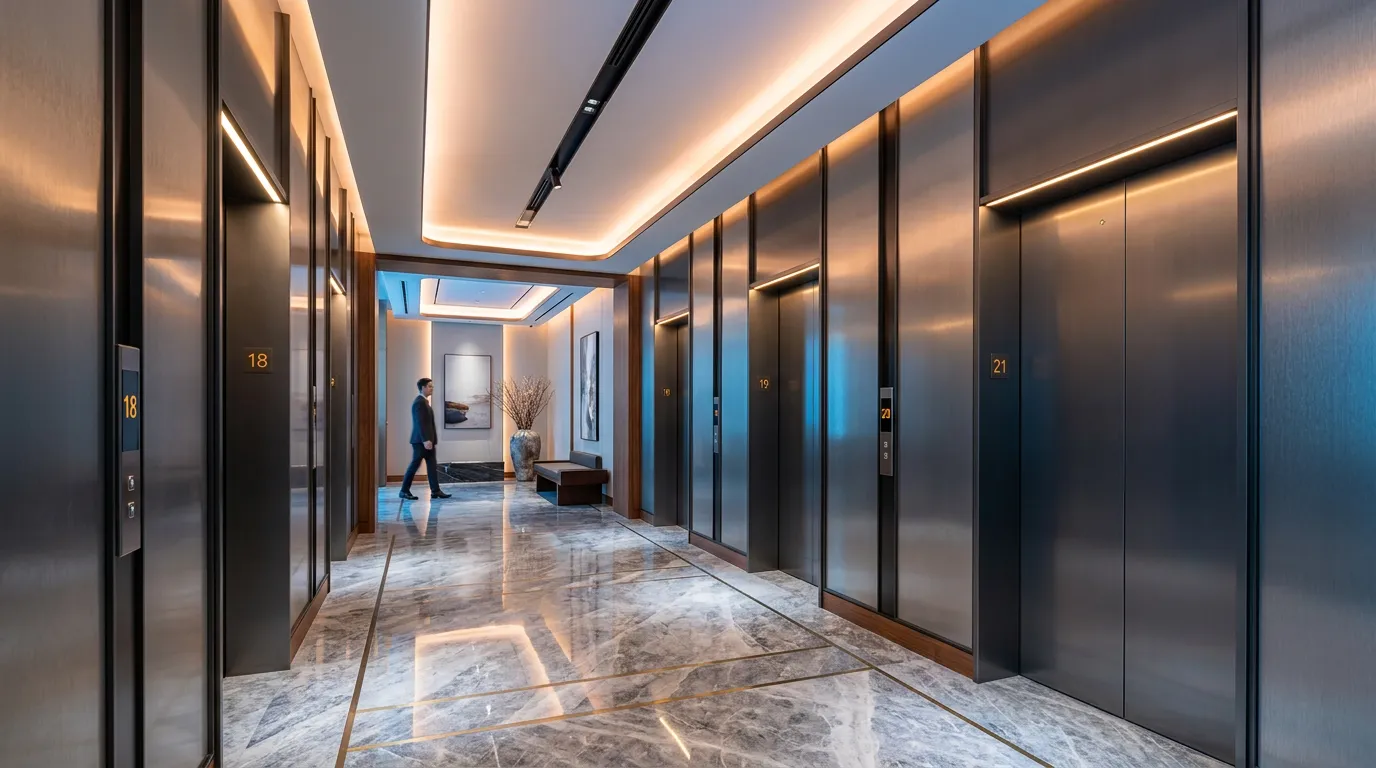
Standardization provides a controlled “base vocabulary.” By specifying a standard metal texture foil roll, interior architects establish a predictable baseline. This allows the exact same bronze metallic finish to be applied to a reception desk in New York, the elevator lobbies in London, and the boardroom wall cladding in Tokyo.
Because a PETG decorative film roll is manufactured under strictly controlled extrusion and coating parameters, the ∆E (color difference) between batches remains exceptionally tight. This gives designers the freedom to scale their concepts aggressively, knowing the material will execute identically whether it is laminated onto a 10-foot architectural panel or a small drawer front.
Material Systems Compared: Real Metal vs. Laminate vs. Engineered Foil
To understand where metallic decorative foil for furniture fits into the specification landscape, procurement teams must objectively evaluate the operational realities of the available material systems.
| Specification Metric | Real Metal (Sheet) | Metallic Laminate (HPL) | Engineered Foil (PET/PETG) |
|---|---|---|---|
| Weight & Substrate | Heavy; requires structural backing and specialized hardware. | Moderate; requires MDF/plywood substrate and balancing paper. | Very lightweight; relies entirely on the structural integrity of the substrate. |
| Edge Treatment | Requires welding, grinding, or specialized metal trims. | Distinct dark line at the edge; requires separate edge banding. | Seamless continuous wrapping (via profile wrapping or vacuum forming). |
| Design Flexibility | Difficult to form around complex 3D profiles. | Strictly limited to flat surfaces or very gentle 2D curves. | High; conforms to deep routing, 3D contours, and sharp angles. |
| Batch Repeatability | Variable due to natural oxidation and manual finishing. | Generally consistent, though metallic fleck distribution can vary. | Highly precise color and texture matching via masterbatch controls. |
| Fabrication Scale | Low to medium volume; artisanal or heavy-machinery focus. | Medium to high volume; standard woodworking machinery. | High volume; optimized for continuous flat lamination and wrapping lines. |
While real metal holds an undisputed premium status, a metallic finish PET foil is uniquely equipped for large-scale furniture production and interior surface fabrication where weight, cost, and seamless edge wrapping are critical requirements.
Manufacturing Translation: From Roll to Commercial Fit-Out
The true value of a metallic PET film is realized on the production floor. The transition from a master roll to a finished commercial interior component relies on three primary manufacturing processes, each demanding specific material properties.
Flat Lamination for Architectural Panels
For large-scale wall cladding, retail fixtures, and standard desk surfaces, fabricators utilize a flat lamination metallic film. In this process, the foil is adhered to engineered wood panels (typically MDF or particleboard) using continuous roller presses and PUR (polyurethane) hot-melt adhesive.
The critical factor here is hiding the substrate. Because metallic surfaces reflect light, any imperfection in the MDF—known as substrate telegraphing—will become glaringly obvious. Specifying a premium metallic foil for MDF panels involves selecting a film with the correct thickness and opacity to bridge these micro-imperfections, ensuring the final metallic decorative panels look like solid metal slabs rather than laminated wood.
Profile Wrapping for Continuous Geometries
Commercial interiors require extensive linear elements: skirting boards, door frames, acoustic ceiling baffles, and architectural trim. A profile wrapping decorative foil is engineered to bend around complex geometric profiles without cracking or stress-whitening. The flexibility of a PETG decorative film manufacturer's formulation is tested rigorously here. If the film is too brittle, the metallic visual effect will fracture at a 90-degree bend; if it is too soft, it will stretch and distort the texture pattern.
Vacuum Forming for Seamless Furniture
For routed cabinet doors, hospitality headboards, and reception millwork, fabricators rely on a vacuum forming metallic PET film. Utilizing a membrane press and heat, the film is drawn down over a 3D-routed MDF core. This creates a monolithic, seamless component with no visible edge banding—a massive advantage over HPL when creating moisture-resistant cabinet wrapping metal texture film applications for commercial bathrooms or high-traffic hotel rooms.
Surface Chemistry and Commercial Durability
In high-traffic commercial environments, aesthetic appeal means very little if the surface cannot withstand daily abuse. Cleanability, scratch resistance, and color stability are non-negotiable. However, it is vital to understand that performance is not inherent to the word "PET"—it is a result of advanced surface coatings and curing technologies.
For example, achieving a truly scratch-resistant metallic PET film often requires nanophotolithography or excimer curing technology. An excimer treated PET decorative film utilizes ultra-short wavelength UV light in a nitrogen-filled chamber to create a micro-folded surface structure on a nanometer scale. This treatment dramatically increases surface hardness, lowering the gloss level to create a highly sophisticated, ultra-matte gunmetal finish or satin metal effect.
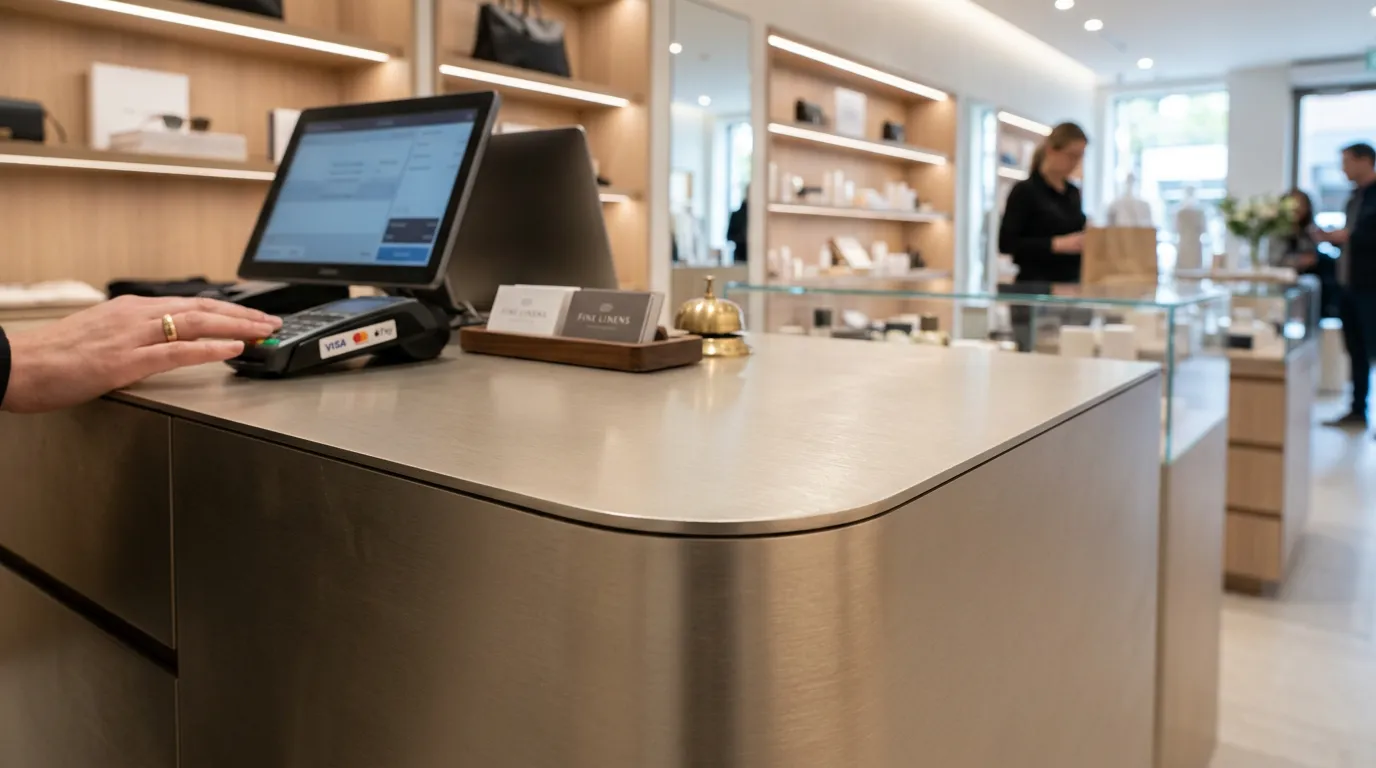
Furthermore, this specific surface morphology inherently disperses skin oils, creating an anti-fingerprint metallic PET film—a critical requirement for high-touch areas like elevator lobbies or retail display counters.
Chemical stability is equally important. A high-quality stain-resistant metallic foil roll must withstand aggressive commercial cleaning agents without degrading. Similarly, an anti-yellowing metal texture foil relies on high-grade UV inhibitors within both the coating and the core PET resin to ensure that a gold metallic PET film roll installed near a sunlit glass facade looks exactly the same five years later as it did on installation day. Manufacturers working with coordinated surface solutions, such as WellP, engineer their PET and PETG films specifically to balance these complex chemical tolerances, ensuring the foil performs reliably across flat, wrapped, and thermoformed applications.
The Procurement Perspective: Specifying for Scale
For B2B sourcing managers and commercial interior material distributors, specifying commercial interior surface materials goes far beyond selecting a color from a catalog. The specification must bridge design intent with manufacturing reality.
When ordering a metallic PET decorative film for a large project, procurement teams must ensure that the film is compatible with the fabricator's specific adhesive systems (usually PUR) and machinery. Furthermore, they must establish clear tolerances for gloss levels and color consistency. A metallic gray finish can shift dramatically in appearance if the extrusion tension during manufacturing is not perfectly maintained. Therefore, aligning with a PET film supplier who controls the base material, the metallic pigmentation, and the functional topcoat is essential for mitigating risk on multi-million-dollar fit-outs.
The Commercial Specification Checklist
Before finalizing the material schedule for a commercial interior project, specifiers and fabricators should evaluate the engineered metallic film against the following criteria:
- Substrate Compatibility: Is the film thickness sufficient to prevent MDF/particleboard telegraphing on flat lamination lines?
- Thermoformability: Can the film withstand the heat and stretching of vacuum forming without the metallic effect "washing out" or thinning on deep profiles?
- Edge Treatment Strategy: Will the design utilize profile wrapping for seamless edges, or flat lamination with matching edge banding?
- Surface Tension (Dyne Level): Does the back of the film feature a functional primer coating to guarantee a strong, permanent bond with PUR adhesives?
- Light Environment Assessment: Has the metallic texture been approved under the exact color temperature (Kelvin) and lighting angles planned for the final installation?
- Commercial Durability: Does the surface coating specify resistance to standard commercial cleaning solvents and long-term UV exposure (anti-yellowing)?
- Batch Tolerance: What is the manufacturer's guaranteed ∆E tolerance for color and gloss matching across multiple roll orders over time?
Final Perspectives on Metallic Integration
Metallic texture is becoming less about imitating a heavy sheet of raw metal and more about controlling how a surface interacts with light, furniture geometry, and the wider material palette of a room.
 The Architecture of Reflection: Specifying Standardized Metallic Textures for Commercial Interiors