



 Home
HomeUltra Matte Wardrobes: A New Standard in Luxury Interiors
 18 Jul,2026
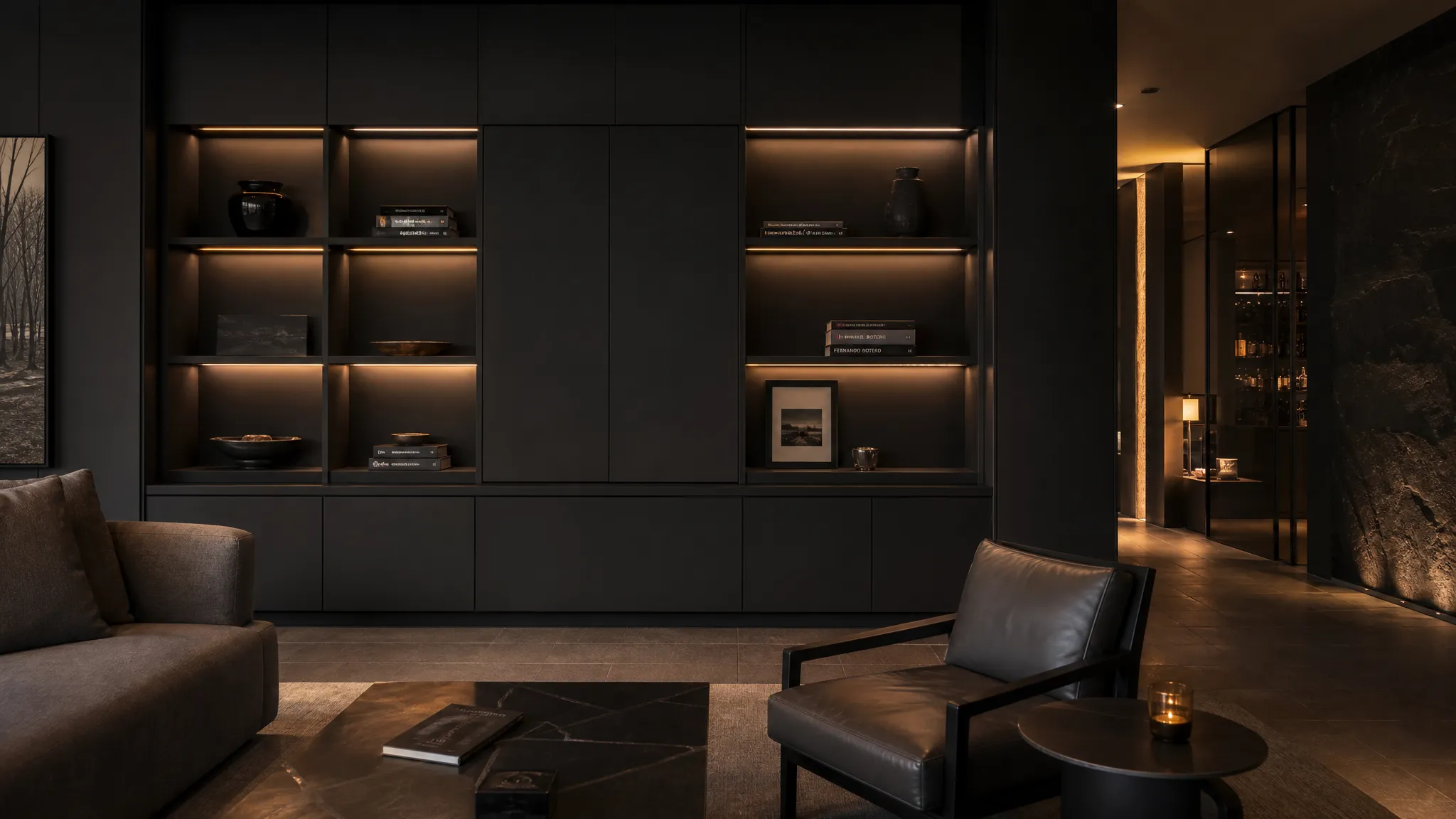
The global architectural millwork and custom cabinetry sector is undergoing a profound material shift. Across high-end residential developments in Europe, the Middle East, and North America, the stark, highly reflective surfaces that once defined modern luxury are being systematically replaced. The new benchmark for premium customized furniture cabinet door panels—specifically wardrobes, bespoke walk-in closets, and display cabinets—is unequivocally the ultra matte finish.
Driven by the broader "Quiet Luxury" movement, modern interior design now favors understated elegance, tactile richness, and environments that absorb rather than reflect light. Ultra matte wardrobes sit at the precise intersection of this design philosophy and advanced surface technology. For wardrobe manufacturers, interior architects, and global B2B buyers, understanding the material science and production economics behind this trend—particularly the rise of PET decorative film—is no longer optional; it is essential for competing in the premium segment.
From Design Trend to Manufacturing Reality
The preference for ultra matte surfaces did not emerge in a vacuum. Interior designers are increasingly specifying large, floor-to-ceiling wardrobes and monochromatic interiors that require expansive, uninterrupted planes of color. Traditional painted finishes or basic melamine often fail to deliver the absolute light absorption required for these monolithic designs, particularly in natural light.
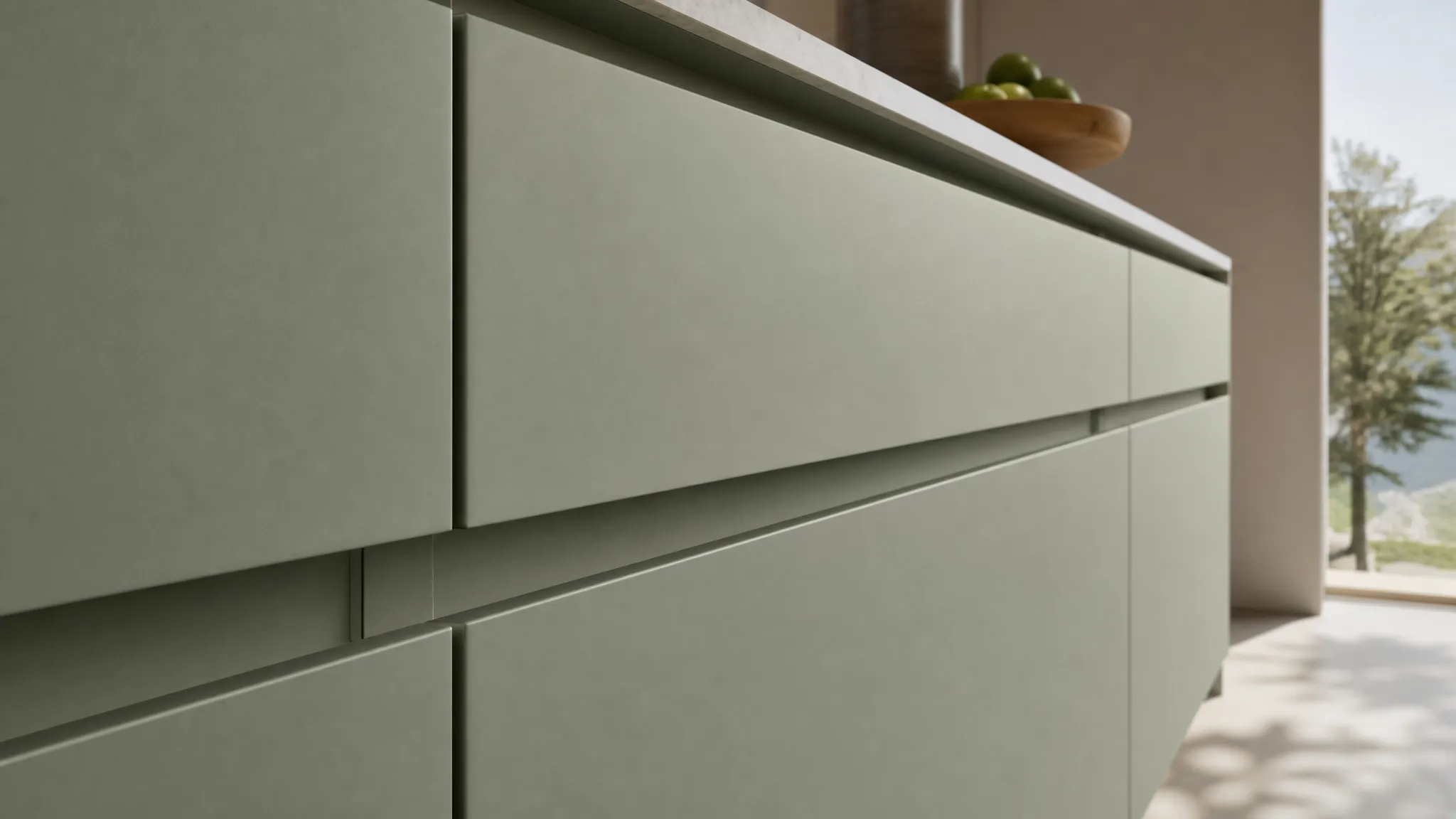
Furthermore, the surge in popularity of the handleless matte wardrobe has fundamentally changed how users interact with custom cabinetry. Built-in wardrobe systems are now push-to-open or utilize concealed hardware, meaning human hands constantly touch the door surfaces. This design evolution created a manufacturing mandate: the industry needed a surface that was visually flat, exceptionally durable, and completely impervious to fingerprints.
This is where the transition from traditional laminates to premium interior surface materials becomes critical. Furniture factories and cabinet manufacturers are increasingly bypassing lacquered processes in favor of PET decorative film. The shift is practical: achieving a flawless super matte nano surface via traditional spray painting is labor-intensive, environmentally taxing, and prone to batch-to-batch color inconsistencies. Flat lamination using PET offers a stabilized, highly repeatable manufacturing reality that directly serves the aesthetic demands of modern wardrobe design.
What Makes Ultra Matte PET Different?
Not all matte surfaces perform equally. The distinction between a standard matte melamine and an Ultra Matte PET Film lies in the microscopic topography of the material and its polymer composition.
Optical Performance and Light Reflection
True ultra matte PET achieves a gloss level of under 3% (measured at a 60-degree angle). It diffuses light evenly across the wardrobe panel materials, eliminating glare and preventing the surface from looking plastic or artificial. This color consistency remains stable whether the panels are viewed under warm ambient bedroom lighting or harsh daylight.
Anti-Fingerprint Technology
The most critical functional upgrade in luxury wardrobe design is the anti-fingerprint capability. Premium anti-fingerprint cabinets utilize a specialized soft-touch PET finish. The surface is engineered with micro-structures that minimize the contact area between the finger and the panel, while specialized coatings reduce the surface tension, preventing oils and sweat from adhering. For a handleless wardrobe, this means the bespoke aesthetic is never compromised by daily use.
Tactile Experience (Soft-Touch)
Quiet luxury is as much about feel as it is about sight. Super matte PET provides a distinct, velvety tactile sensation—often described as a "baby skin" or soft-touch surface. This sensory feedback elevates the perceived value of the customized cabinet door panels.
Scratch Resistance and Durability
While older generations of matte foils were notorious for burnishing and scratching, modern ultra matte PET film features highly cross-linked surface layers. This advanced cabinet surface technology ensures robust scratch resistance against the daily friction of rings, watches, and cleaning cloths, maintaining the pristine look of luxury wardrobes for years.
Why Manufacturers Are Switching to PET Decorative Film
For cabinet manufacturers and furniture brands, adopting a new surface material is heavily dependent on production efficiency and yield optimization. The industry-wide pivot to PET laminated panels is driven by specific manufacturing advantages.
PUR Flat Lamination Mastery
The application of PET decorative film for wardrobes relies heavily on PUR flat lamination technology. Unlike EVA hot melt, PUR adhesive creates a cross-linked chemical bond with both the PET film and the substrate. This results in a panel that is highly resistant to heat, moisture, and delamination.
Substrate Versatility
PET film performs exceptionally well across various core materials. Whether a factory is pressing PET laminated MDF for precision routing, PET laminated particle board for cost-effective luxury projects, or PET laminated plywood for environments requiring higher structural integrity and moisture resistance, the film adapts without telegraphing core imperfections—provided the flat lamination line is properly calibrated.
Yield Rate and Panel Consistency
Unlike batch-painted doors where dust contamination can ruin a finish, rolling PET laminated wardrobe panels in a controlled clean-room environment yields a near-perfect success rate. The color consistency from the first panel to the ten-thousandth panel is identical, effectively eliminating the matching issues that plague modular custom furniture installations.
Design Details That Define Luxury
In the premium segment, executing an ultra matte finish requires obsessive attention to the final fabrication details. A high-quality PET surface can be entirely undermined by poor secondary processing.
Edge Banding Matching and Zero-Joint Appearance
The hallmark of a truly seamless wardrobe design is the edge. High-end manufacturers utilize laser or hot-air edge banding machines combined with exact-match ultra matte edge bands. This zero-joint appearance eliminates the visible glue line, making the PET laminated panels look like solid blocks of material rather than edge-banded boards.
Texture Consistency in Monochromatic Schemes
Luxury interiors currently favor monochromatic, muted palettes over high-contrast woods or the outdated, highly specific textured lines of the past. Designers demand perfect color coordination between the wardrobe doors, the internal cabinetry, and the surrounding architectural millwork. Using PET decorative film allows factories to offer exact matching across different thicknesses and applications within the same room.
Choosing the Right Ultra Matte Surface for Different Projects
Specification requirements change drastically depending on the end-use environment. Furniture importers and building material distributors must align the specific properties of the PET panels with the project scope.
- Premium Residential Projects & Walk-in Closets: Focus heavily on soft-touch aesthetics and anti-fingerprint properties. Homeowners interact with these customized cabinet door panels daily, making tactile quality and ease of maintenance the primary selling points.
- Boutique Hotels & Hospitality: Durability takes precedence. While the ultra matte visual is required, the specification must lean toward ultra-high scratch resistance and robust PUR lamination over moisture-resistant MDF or plywood substrates to withstand commercial wear and tear.
- Architectural Millwork & Built-in Displays: Large-scale commercial installations require absolute color consistency across massive production runs. PET laminated particle board is often the go-to here, providing the necessary aesthetic and structural stability over expansive wall spans.
Industry Perspective: The Global Sourcing Shift
From the vantage point of international B2B procurement, the conversation has fundamentally shifted. Global B2B buyers are no longer simply asking for "matte panels." They are rigorously evaluating the surface durability and demanding verifiable anti-fingerprint performance.
Furthermore, sustainable furniture manufacturing is no longer a fringe benefit; it is a baseline requirement. European and North American buyers are acutely aware of environmental regulations. PET (Polyethylene Terephthalate) is a highly sustainable decorative surface material. It is fully recyclable, non-toxic, and does not emit harmful VOCs during manufacturing or its lifecycle, standing in stark contrast to traditional PVC foils or solvent-heavy lacquers. This eco-friendly profile makes PET the definitive choice for forward-looking furniture brands.
Conclusion
The ascendancy of ultra matte wardrobes is not a fleeting interior trend; it is the new operational standard for luxury interiors. By bridging the gap between sophisticated design aesthetics and high-efficiency manufacturing, ultra matte PET has proven itself to be the ultimate material for modern custom cabinetry.
For wardrobe manufacturers and material distributors aiming to capture the premium market, securing a reliable supply chain for high-grade, anti-fingerprint PET decorative film is the most critical step. As design preferences continue to favor seamless, handleless, and sensory-rich environments, those who master the production and application of PET laminated panels will define the future of the global custom furniture industry.
FAQ
- Is ultra matte better than gloss for wardrobes?
- Yes, for contemporary luxury designs, ultra matte is widely considered superior. While high gloss reflects light and highlights surface imperfections, an ultra matte finish absorbs light, creating a sophisticated, quiet aesthetic. Additionally, modern ultra matte surfaces equipped with anti-fingerprint technology are significantly easier to maintain, as they do not show smudges and watermarks as readily as gloss finishes.
- What is Ultra Matte PET Film?
- Ultra Matte PET (Polyethylene Terephthalate) Film is an advanced decorative surface material used in furniture manufacturing. It is an eco-friendly, highly durable polymer sheet applied to substrates like MDF or particle board. It is specifically engineered to have extremely low gloss levels (under 3%), a soft-touch tactile feel, and exceptional color consistency.
- Are anti-fingerprint wardrobe panels durable?
- Absolutely. Premium anti-fingerprint wardrobe panels, particularly those made with PET decorative film, are highly durable. They are manufactured with advanced cross-linked surface coatings that not only repel the oils from human skin but also provide excellent scratch, chemical, and UV resistance, ensuring long-term performance in high-use applications like custom closets.
- Is PET decorative film eco-friendly?
- Yes, PET is recognized as one of the most eco-friendly wardrobe materials available today. Unlike PVC, PET is 100% recyclable, completely non-toxic, and does not release harmful volatile organic compounds (VOCs) or plasticizers into the indoor environment, making it ideal for sustainable furniture manufacturing and green building projects.
- What is the best material for luxury wardrobe doors?
- Currently, PET laminated MDF or particle board is considered the premier choice for luxury customized cabinet door panels. It offers the perfect combination of a flawless ultra matte aesthetic, soft-touch feel, anti-fingerprint functionality, and dimensional stability, outperforming traditional painted surfaces in both durability and manufacturing consistency.
- How do manufacturers achieve seamless wardrobe finishes?
- Manufacturers achieve a seamless wardrobe design by combining premium ultra matte PET laminated panels with advanced edge banding technology. By using PUR adhesive or laser edge banding machines alongside perfectly color-matched, ultra matte edge bands, factories can eliminate visible glue lines, creating a zero-joint appearance that mimics a solid block of material.
 The Future of Interior Doors: Why PET Film Is Gaining Popularity