


 Home
HomeCommon PET Lamination Problems & Solutions: A Technical Guide
 17 Mar,2026
Achieving a flawless surface in panel production requires strict mechanical and environmental control. When processing highly reflective or Ultra Matte materials, the manufacturing window is incredibly narrow. Because polyethylene terephthalate is rigid and non-porous, any substrate imperfection, adhesive inconsistency, or mechanical misalignment immediately telegraphs to the surface of the finished board.
For engineers and production managers, minimizing scrap rates and ensuring consistent panel output requires an analytical approach to machine parameters and material behavior. This comprehensive PET film lamination troubleshooting guide breaks down the root causes of common surface defects and provides practical process optimization strategies for modern lamination lines.
Overview of PET Film Lamination in Panel Production
Integrating these films onto wood-based panels relies predominantly on two continuous web processes.
Flat lamination, or roll lamination, is the industry standard for high-volume decorative board production. This method utilizes a heated roller system to apply Polyurethane Reactive (PUR) hot melt adhesive directly to the board (or less commonly, the film web). A series of nip rollers then compress the film onto the substrate, relying on uniform pressure to create an instant green bond.
Alternatively, PET thermal lamination is utilized for specialized applications or thinner substrates. This process involves films pre-coated with heat-activated EVA or polyolefin adhesives. Heated nip rollers activate the glue line at the exact moment of compression. Both methods demand absolute precision regarding tension, temperature, and cleanliness to avoid decorative film lamination problems.
Common PET Lamination Problems
Identifying the visual signature of a defect is the first step in effective PET lamination troubleshooting. Below are the most frequent issues encountered on the factory floor and their physical characteristics.
Bubbles in PET Film Lamination
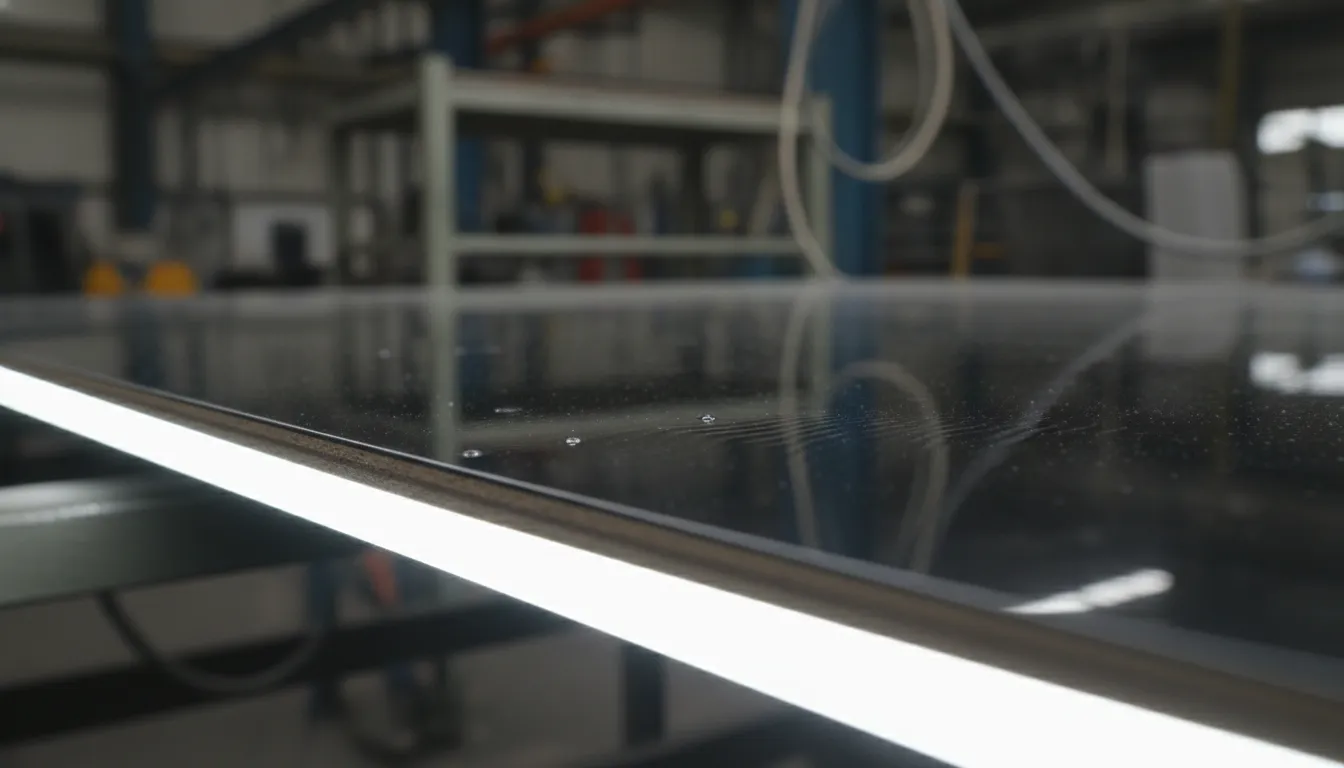
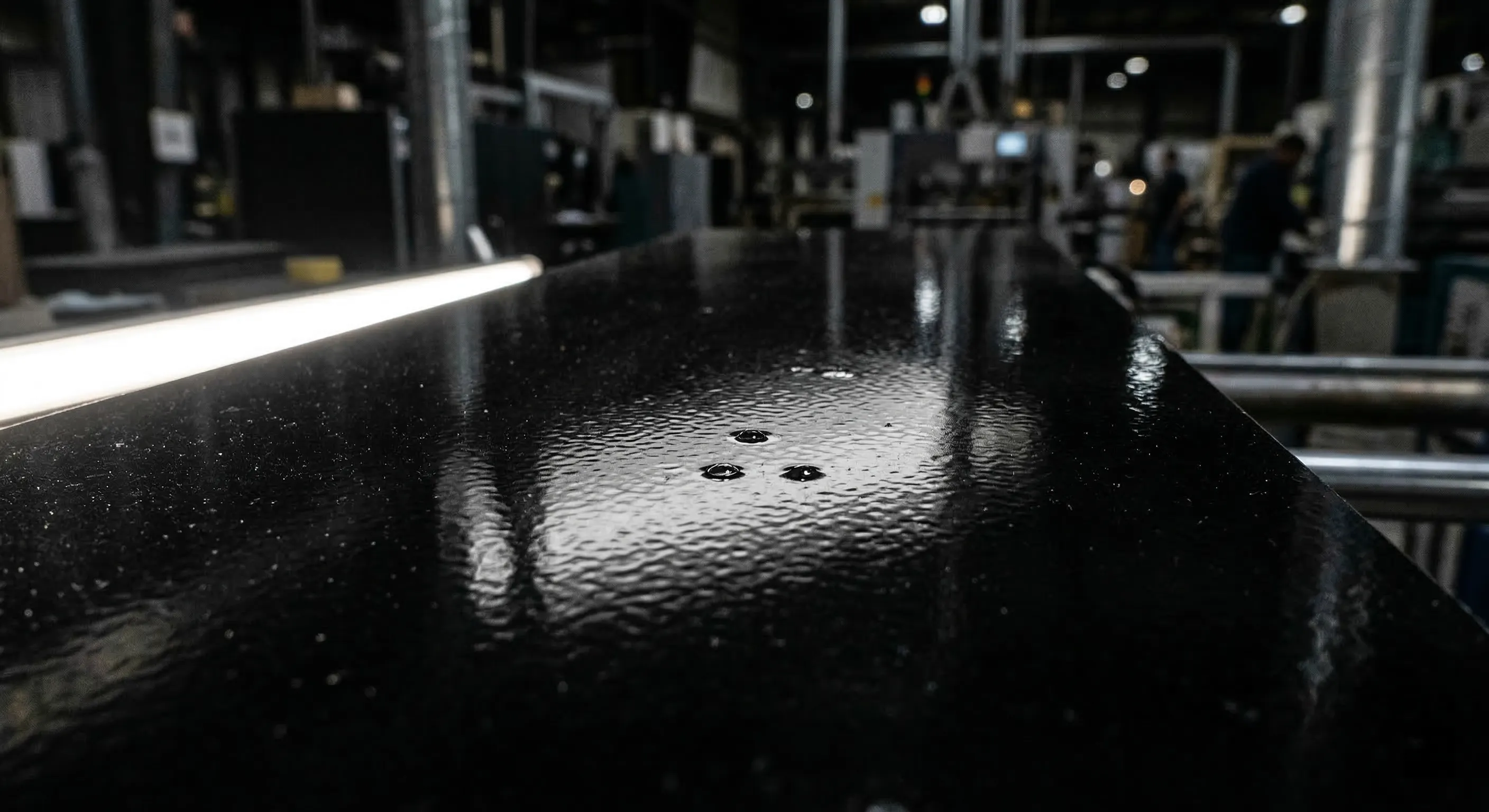
Air entrapment presents as localized, raised blisters on the finished panel surface. Knowing how to fix PET lamination bubbles requires identifying their exact origin. Micro-bubbles evenly distributed across the panel often indicate off-gassing—moisture trapped inside the wood substrate expanding rapidly under the heat of the adhesive roller. Conversely, larger, isolated bubbles generally point to particulate contamination, such as trapped sawdust, or a starved glue line where the adhesive spreader failed to provide uniform coverage.
PET Film Delamination
A complete failure of the bond, where the film peels away cleanly from the substrate after the adhesive has cured, destroys panel integrity. PET film delamination causes are fundamentally linked to chemical incompatibility or surface tension degradation. Because the material is chemically inert, the reverse side of the roll must undergo corona treatment to accept liquid adhesives. If this treatment fades, mechanical bonding becomes impossible. False bonding also occurs if the PUR adhesive cools below its open-time threshold before reaching the nip rollers.
Wrinkles or Uneven Surfaces
Wrinkling that runs parallel to the machine direction points to web handling failures. If the unwind stand applies uneven tension across the width of the roll, the film will skew and fold as it enters the compression zone. A distinct defect is the "orange peel" effect—a wavy, textured appearance on high-gloss panels. This is rarely a film defect; it is almost always caused by excessive adhesive coat weight or a substrate that is too rough, preventing the adhesive from leveling out prior to curing.
Poor Adhesion on MDF or Particle Board
Operators occasionally find that the adhesive pulls away the top layer of wood fibers, or fails to penetrate the board entirely. When laminating PET film onto highly porous panels, the substrate can absorb the liquid PUR too quickly, leaving a dry interface that cannot grip the film. Cold ambient factory conditions exacerbate this by shocking the hot melt, causing it to solidify at the surface before it can mechanically anchor into the wood fibers.
Main Causes Behind PET Lamination Defects
Effectively eliminating PET film lamination issues requires isolating the variables that disrupt the chemical and mechanical bonding phases.
Substrate calibration plays a massive role. Panels must be sanded to remove the glazed factory layer, opening the pores to accept adhesive. However, if the sanding grit is too aggressive, the resulting deep scratches will telegraph through the rigid surface. Moisture content is equally critical. Wood substrates must maintain a moisture level between 6% and 8%. High moisture interferes with the cross-linking phase of reactive adhesives, generating carbon dioxide bubbles that push against the film.
Adhesive chemistry cannot be ignored. Finding the best adhesive for PET film lamination depends entirely on the end-use environment. While EVA hot melts are cost-effective, they lack the heat and moisture resistance required for kitchen and bathroom cabinetry. PUR hot melt is mandatory for high-end decorative panel production due to its irreversible cross-linking cure.
Process Optimization Tips
Building a stable production environment requires standardized operating procedures for all line operators.
Optimal PET lamination temperature settings must balance adhesive flow with thermal protection for the film. For standard PUR flat lamination, the application roller is generally maintained between 120°C and 140°C. The critical metric is the interface temperature exactly where the film meets the board. Installing IR pre-heating lamps to warm incoming boards to 35°C–45°C prevents thermal shock, allows the PUR to wet out smoothly, and eliminates orange peel textures.
PET lamination pressure settings dictate the mechanical compression at the nip rollers. Pneumatic or hydraulic pressure must remain uniform across the entire panel width. Setting the line pressure between 2 to 4 bar is typical, though this fluctuates based on roller durometer and board density. Insufficient pressure allows air entrapment; excessive pressure crushes MDF edges and forces adhesive squeeze-out, which quickly contaminates the machinery.
PET Lamination for MDF and Decorative Panels
The underlying core material dictates the exact lamination parameters.
PET lamination for MDF panels is highly favored due to the material's homogeneous core and smooth, predictable surface geometry. A pass through a wide-belt sander using 180 to 220 grit abrasive is usually sufficient preparation. Dust extraction must be absolute, utilizing both rotary brushes and high-velocity vacuum hoods before the adhesive spreader.
Executing PET film lamination on particle board introduces unique challenges. Raw chipboard possesses a coarse, uneven surface. Applying rigid, high-gloss materials directly to raw particle board guarantees severe telegraphing and an unacceptable finish. To bypass this, panel producers utilize melamine-faced particle board (MFPB) as the base substrate. The smooth melamine layer acts as a bridge, allowing the PUR adhesive to sit uniformly and providing a glass-like finish for the final decorative layer.

Working with Reliable Material Suppliers
Consistent manufacturing is impossible if your raw materials fluctuate from batch to batch. When sourcing materials, selecting a proven PET film roll manufacturer directly impacts your daily scrap rate.
Partnering with an expert PET decorative film supplier like WellP ensures that critical variables remain locked in. WellP engineers its decorative films with strict thickness tolerances, preventing the micro-fluctuations that disrupt nip roller pressure settings. Furthermore, guaranteeing consistent dyne levels (surface energy) across every roll eliminates the most common delamination failures. By sourcing your wholesale PET lamination film from a manufacturer that understands the chemistry of the lamination line, production managers can focus on machine optimization rather than fighting defective raw materials.
FAQ Section
1. How do I verify if the PET film surface energy is still sufficient for bonding?
Line operators should utilize a dyne pen or dyne ink solution rated for 38 to 40 dynes/cm. Swipe the ink across the corona-treated (back) side of the film. If the liquid forms a continuous film for at least three seconds without beading up, the surface energy is adequate for PUR adhesive. If it immediately shrinks into droplets, the treatment has degraded, and the roll should not be used.
2. What is the correct adhesive coat weight for PUR flat lamination?
While it varies based on substrate porosity, a standard PUR coat weight for MDF panels falls between 50 g/m² and 70 g/m². Weights exceeding 80 g/m² risk heavy squeeze-out and severe orange peel textures, while going below 40 g/m² often results in starved glue lines and edge peeling.
3. Why does edge lifting occur several days after the panel is laminated?
PET materials have an inherent physical memory and want to return to their coiled state. While PUR hot melt provides strong initial green tack, it requires ambient moisture and 3 to 7 days to fully cross-link and cure. If panels are routed, cut, or edgebanded before the adhesive has achieved its final thermoset bond, the film's internal tension will overpower the uncured glue line, resulting in edge lifting.
 How to Test Scratch Resistance of Decorative Film