



 Home
HomeAnti-Fingerprint PET Film: Surface Tech & Coating Explained
 14 Mar,2026
The architectural and interior design sectors have undergone a distinct shift toward dark, ultra-matte, and highly tactile surfaces. While visually striking, these finishes expose a critical vulnerability in traditional panel manufacturing: susceptibility to human sebum. Standard laminates and foils readily absorb and highlight the oils left by human touch, degrading the aesthetic value of high-end interiors.
To resolve this, material engineers developed the Anti-Fingerprint PET Film. By altering the microscopic topography and chemical surface energy of polyethylene terephthalate, manufacturers can now produce panels that actively repel lipid-based smudges. This article breaks down the surface science, coating methodologies, and manufacturing considerations behind this specialized PET Furniture Film.
Why Fingerprints Are a Challenge for Furniture Panels
Fingerprints are not merely a cosmetic nuisance; they represent a persistent physical interaction between human biology and interior materials. In both residential and commercial environments, high-touch zones dictate the lifespan and perceived quality of the installation.
Kitchen cabinetry, wardrobe doors, and modern handleless drawer systems require constant physical contact. When users interact with these surfaces, they transfer a complex mixture of sweat and sebum. On a standard laminate, these oils alter the local refractive index of the surface. Light hits the smudged area differently than the surrounding clean area, creating a highly visible, glossy contrast against a matte background. For manufacturers, producing a reliable Anti-Fingerprint Kitchen Cabinet Film requires engineering a surface that either prevents this oil transfer entirely or masks its optical effects.
Surface Science: Why Fingerprints Stick to Materials
To understand how fingerprint resistance is engineered, we must examine the mechanics of adhesion at the molecular level. Human sebum is primarily composed of triglycerides, wax esters, and squalene. When these lipids contact a solid panel, their behavior is governed by thermodynamics, specifically surface energy.
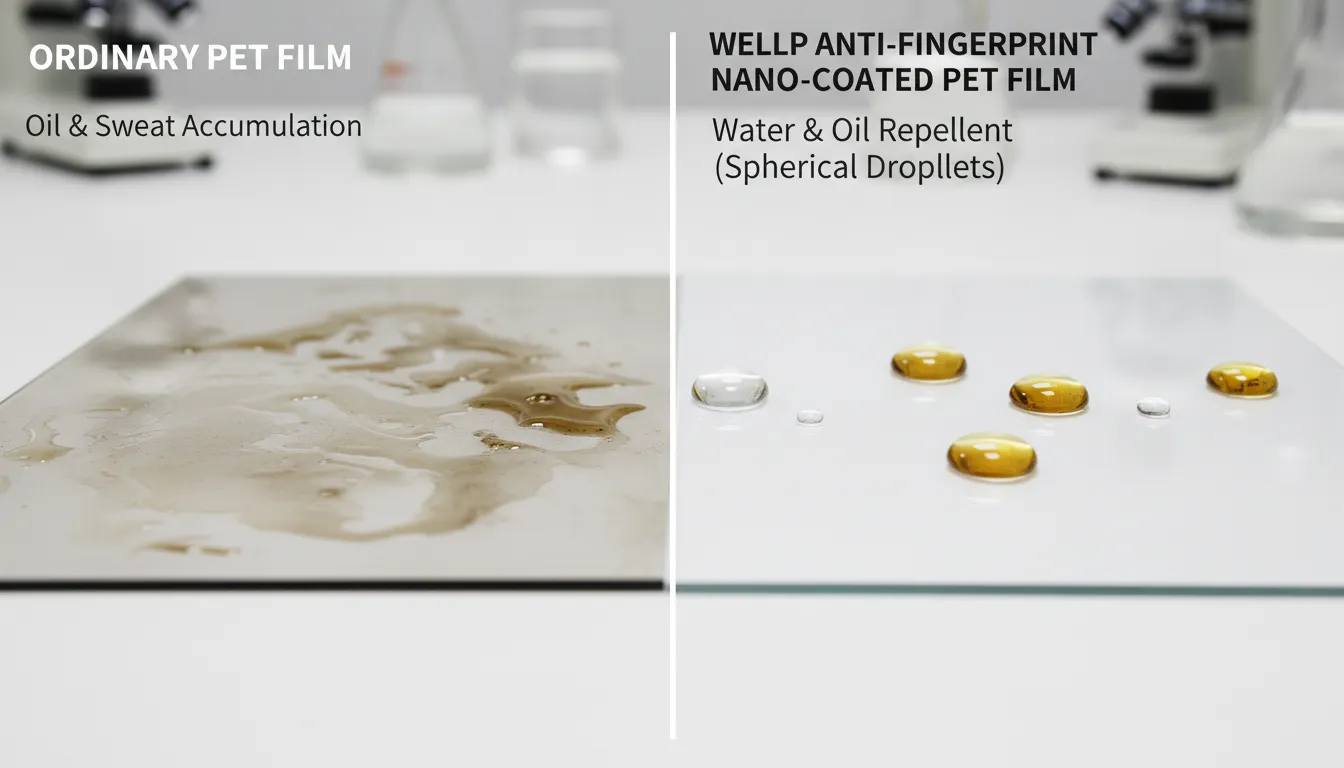
When the surface energy of a solid is higher than the surface tension of a liquid (in this case, sebum), the liquid will "wet" or spread across the surface to lower the overall energy state of the system. Traditional PVC foils, standard melamine, and untreated PET possess relatively high surface energies. Consequently, when a finger touches them, the oils immediately spread outward, clinging to microscopic imperfections and forming a thin, highly visible film.
Conversely, if the solid has a significantly lower surface energy than the liquid, the liquid is forced to bead up, minimizing its contact area. This physical principle is the foundation of modern fingerprint resistance.
How Anti-Fingerprint PET Film Works
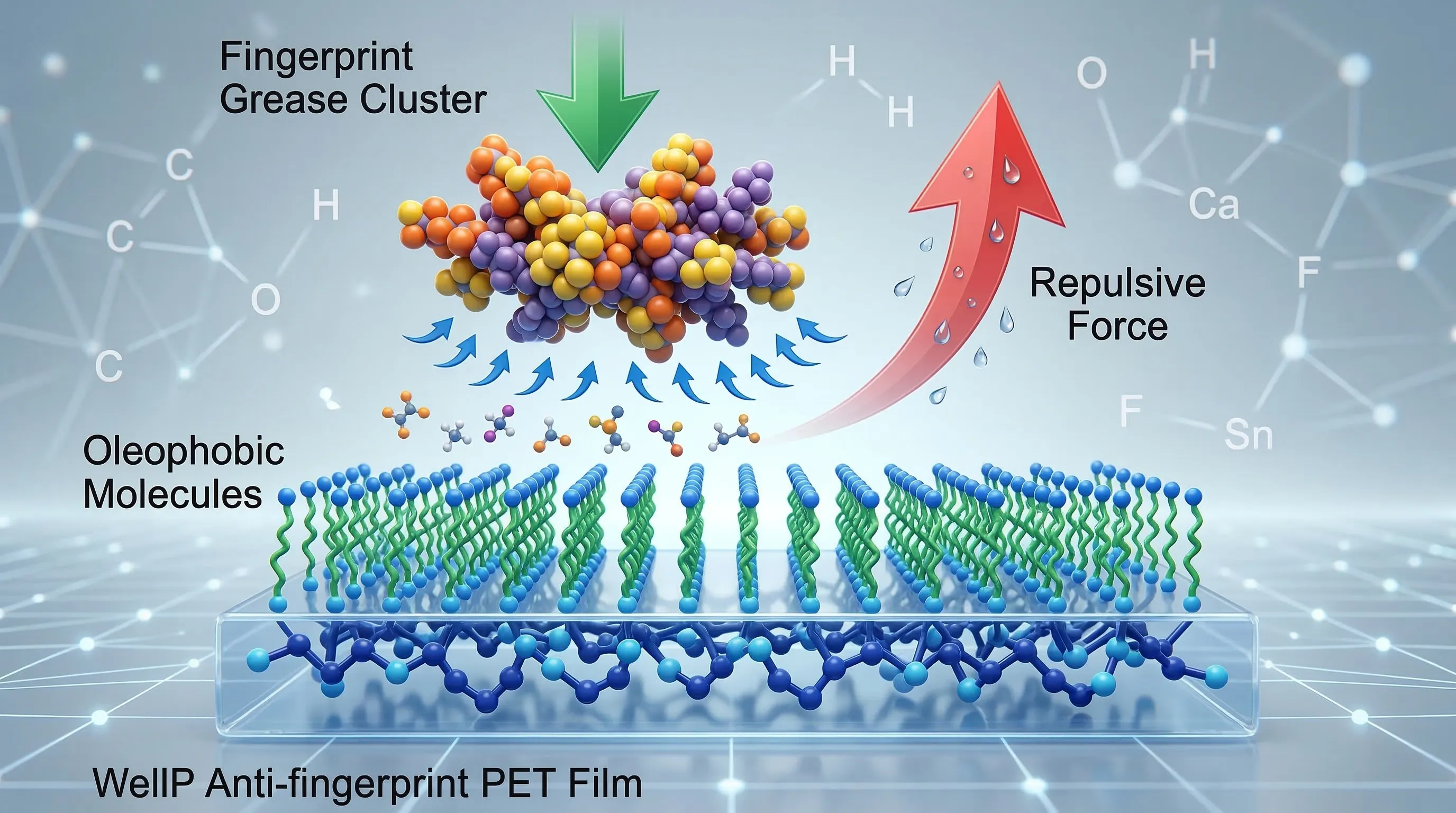
Achieving a true anti-smudge surface requires altering the chemical composition of the film's top layer. This is primarily accomplished through nano coating PET film technology.
During the manufacturing process, a microscopic layer of fluoropolymers or advanced silane compounds is applied to the PET substrate. These chemical groups are highly stable and exhibit remarkably low surface energy. When oils from a fingerprint attempt to transfer onto a nano coating anti fingerprint PET film technology treated surface, the oleophobic (oil-repelling) nature of the coating prevents the lipids from spreading.
Instead of forming a continuous, visible smudge, the oils remain in discrete, microscopic droplets. Because these droplets do not flatten out and alter the surface's overall refractive index, the fingerprint remains virtually invisible to the naked eye.
Surface Finish Technologies
While chemical coatings provide the oleophobic barrier, the physical topography of the film plays an equally critical role in optical masking and tactile feedback.
Excimer Curing and Micro-Folding
The most advanced Matte PET Film products are manufactured using excimer laser technology. In a specialized curing chamber, monochromatic ultraviolet light is directed at the wet UV-curable lacquer applied to the PET base. Because this specific wavelength only penetrates the very top nanometers of the lacquer, it causes immediate polymerization and shrinkage at the extreme surface, while the underlying lacquer remains liquid.
As the deeper layers eventually cure under standard UV lamps, the pre-cured surface skin is forced to wrinkle, creating a microscopic, tightly controlled folded topography. This micro-texture diffuses reflecting light uniformly in all directions, resulting in an ultra-low gloss level.
Achieving the Tactile Experience
This combination of low surface energy and micro-folded topography results in Soft-Touch PET Film. The microscopic peaks reduce the actual contact area between the user's finger and the panel, creating a smooth, velvety sensation.
Performance Advantages for Furniture Panels
Incorporating advanced surface treatments enhances the mechanical integrity of the material. The highly cross-linked polymer structures created during the UV curing of the topcoat yield exceptional Scratch-Resistant PET Lamination.
Standard handling during board pressing, edge-banding, and transit often subjects panels to micro-abrasions. A scratch resistant PET decorative film for furniture panels withstands these mechanical stresses, maintaining a pristine finish from the factory floor to the final installation. The films withstand prolonged exposure to household cleaners and food acids without degrading, establishing them as highly durable anti fingerprint decorative surfaces for furniture.
Applications and Substrate Compatibility
The physical properties of PET make it an ideal thermoplastic for flat lamination. When selecting a PET Film for MDF/OSB Boards, manufacturers must consider the substrate's surface quality. Medium-Density Fiberboard (MDF) provides a highly uniform, smooth substrate, which is critical because ultra-matte films can suffer from "telegraphing"—where the microscopic texture of the underlying board reflects through the thin film.
High-quality anti fingerprint PET film for MDF lamination requires precision sanding of the board and the use of reactive polyurethane (PUR) hot-melt adhesives. This is where integrated manufacturers provide a distinct advantage. Companies like WellP, which produce both the foundational engineering boards (MDF, OSB, plywood, particleboard) and the highly specialized PET decorative films, can ensure perfect compatibility between the substrate's density and the film's tension, eliminating delamination or telegraphing risks for furniture manufacturers.


Choosing a Reliable Supplier
For panel pressers and cabinet makers, the stability of the production line is directly tied to the consistency of the raw materials. When evaluating a PET Film Roll Manufacturer, procurement teams should look beyond just the surface aesthetic.
Partnering with established Wholesale anti-fingerprint PET film suppliers requires verifying their quality control metrics. Integrated suppliers like WellP adhere to strict manufacturing tolerances that furniture factories demand:
- Batch-to-Batch Color Consistency: Matte surfaces are highly sensitive to color shifts. Automated spectrophotometer monitoring guarantees a tight Delta E (ΔE) tolerance across different production runs.
- Supply Chain Stability: Sourcing from a supplier that understands the entire panel lifecycle—from the raw particleboard base to the final anti-fingerprint coating—drastically reduces troubleshooting time on the factory floor.

FAQ: Practical Considerations for Furniture Manufacturers
1. Does anti-fingerprint PET film require specialized edge-banding?
No, but matching the edge-band is crucial for high-end aesthetics. Most cabinet manufacturers use standard ABS or PMMA edge-banding matched to the exact color and gloss level of the PET film. For a seamless look on premium anti fingerprint kitchen cabinet film applications, laser edge-banding or zero-joint edge-banding technologies are highly recommended to prevent dirt buildup at the seams.
2. Can this film be applied directly to standard rough particleboard?
While possible, it is not recommended for ultra-matte, soft-touch finishes. Standard particleboard has a rough surface topography that will "telegraph" through the thin PET film, ruining the smooth aesthetic. It is highly advised to use premium, finely sanded MDF as the core substrate, or source a complete, pre-laminated solution from a supplier that engineers both the board and the film specifically to work together.
3. How do we ensure color consistency across large, multi-phase commercial projects?
Color shifting is a common challenge with inferior matte films. To ensure consistency for large-scale interior projects, partner with a manufacturer that utilizes continuous spectrophotometer monitoring during the roll extrusion and coating process. Always request production from a single master batch for large, unified installations (like a 300-unit apartment building's cabinetry).
4. How should end-users clean these nano-coated surfaces?
Because the oleophobic layer prevents oils and liquids from penetrating the surface, harsh chemical solvents are entirely unnecessary and should be avoided. A simple wipe with a soft microfiber cloth and a mild soap-and-water solution is sufficient to maintain the pristine look of Eco-Friendly Decorative Surfaces.
Conclusion
The integration of low-surface-energy chemistry and excimer-cured micro-topography has solved one of the most persistent issues in modern interior design. Anti-fingerprint PET film represents a significant leap in material science, offering furniture manufacturers a reliable, sustainable, and highly durable surface solution. By understanding the mechanics of oleophobic coatings and partnering with suppliers capable of delivering both precision films and optimized substrates, panel producers can successfully meet the growing global demand for flawless, ultra-matte interior spaces.
 Common PET Lamination Problems & Solutions: A Technical Guide