



 Home
HomeThe Chemistry Behind Soft Touch PET Film & Anti-Fingerprint Mechanisms
 14 Apr,2026
In modern interior design and furniture manufacturing, tactile experience dictates material selection as heavily as visual aesthetics. Soft touch PET film has become a structural standard for premium kitchen cabinets, wardrobes, and architectural wall panels. However, moving beyond basic product specifications requires understanding the material science at play.
How exactly do these surfaces interact with human skin, light, and contaminants? By examining the surface coating chemistry PET film utilizes, panel producers and sourcing managers can better evaluate durability, machinability, and long-term aesthetic stability.
Sensory Perception vs. Surface Physics
To understand why soft touch film feels smooth, one must look past human sensory perception and analyze contact mechanics. It is a common misconception that a smooth feel requires a perfectly flat surface. In reality, a completely flat polymer surface yields a high contact area with the skin, resulting in a high friction coefficient and a "sticky" or plastic tactile response.
A high-quality soft touch laminating film engineered for decorative panels relies on precisely controlled nano-scale roughness. This microscopic topography intentionally reduces the actual contact area between the human finger and the film substrate. By minimizing contact points and engineering a low friction coefficient, the finger glides across the surface. When combined with the specific elastic modulus of the topcoat, this friction profile translates to the brain as a warm, velvety texture.
Coating Layer Structure and Chemical Composition
So, what is soft touch coating made of? The foundational substrate is biaxially oriented polyethylene terephthalate (PET). PET is chosen over PVC or PP for flat lamination and profile wrapping due to its superior dimensional stability, lack of plasticizer migration, and excellent receptivity to adhesives used on MDF and particleboard.
However, PET itself is rigid and glossy. The sensory and optical properties are entirely governed by the coating layer structure.
The industry standard for achieving a premium tactile response is a highly cross-linked polyurethane (PU) coating, often paired with advanced UV coating technology (excimer or traditional UV curing).
- Elastomeric Properties: The polyurethane coating soft touch film utilizes aliphatic PU dispersions. The polymer chains in these coatings act as microscopic springs. They possess enough elasticity to deform slightly under the microscopic pressure of a fingertip and instantly recover, providing a tactile "give."
- Curing Density: UV curing establishes a dense, cross-linked polymer network. This addresses a critical engineering challenge: creating a surface that is physically soft to the touch but chemically and mechanically hard enough to withstand machining, edge-banding, and daily wear.
Soft Touch vs. Standard Matte Surfaces
It is critical to distinguish soft touch decorative film from standard matte PET. A standard matte surface is typically achieved by embedding inorganic matting agents (like silica nanoparticles) into a hard acrylic or polyurethane resin. These particles protrude, scattering light to reduce gloss. While visually matte, they feel abrasive or dry. Soft touch technology relies less on large matting agents and more on the inherent micro-folding of the polymer matrix itself during the curing process, resulting in a significantly lower friction coefficient.
The Anti-Fingerprint Coating Mechanism
One of the primary drivers for specifying these materials in high-traffic environments (like kitchen cabinetry) is their resistance to smudging. But what makes soft touch PET film anti-fingerprint? It is a synchronized application of surface energy modification and optical physics.
Surface Energy and Wetting Behavior
Human sebum (fingerprint oil) and sweat readily spread out (wet) on high-energy surfaces. To prevent this, the anti-fingerprint coating mechanism involves modifying the top layer to achieve ultra-low surface energy.
By incorporating specific fluorinated or silicone-based additives into the polymer matrix, the surface becomes simultaneously a hydrophobic surface (water-repelling) and an oleophobic coating (oil-repelling). When sebum contacts this nano coating PET film, the low surface energy forces the liquid to bead up with a high contact angle, rather than spreading into a continuous, visible film.
Optical Manipulation of Sebum
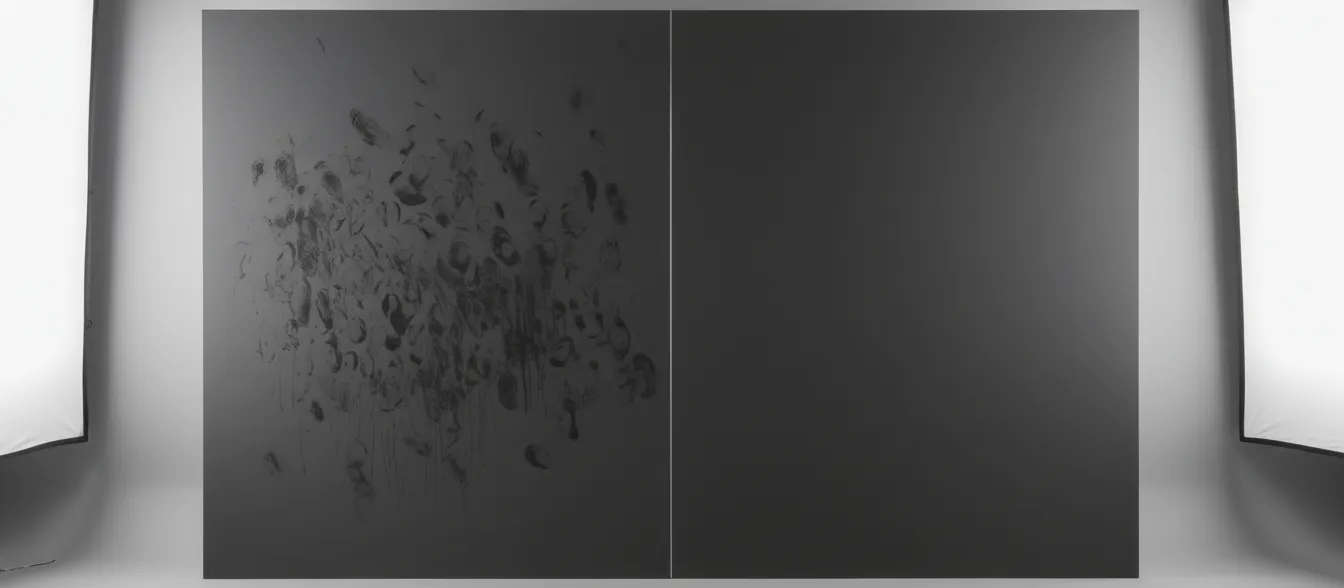
Sebum has a refractive index of approximately 1.46. When a fingerprint transfers onto a standard matte surface, the oil fills in the microscopic valleys of the texture. This effectively flattens the surface locally, altering the light scattering profile and creating a distinct, high-gloss spot.
Because the micro-texture surface of a soft-touch film is highly oleophobic, the oil cannot easily penetrate and fill these micro-valleys. The engineered topography continues to diffuse ambient light uniformly, ensuring that even if a microscopic amount of lipid transfer occurs, the visual appearance (typically below 5 gloss units) remains undisturbed. This is the core physics behind how does soft touch coating work in practical applications.
Performance Tolerances in Furniture Manufacturing
A recurring technical question during B2B material qualification is: is soft touch PET film scratch resistant?
Historically, highly elastic coatings were susceptible to micro-scratching and marring. Today, the integration of electron beam (EB) or advanced UV-curable resins creates an interpenetrating polymer network (IPN). This allows the surface to absorb impact energy and resist scratching (often achieving >2H pencil hardness) while maintaining flexibility.
For a soft touch PET film manufacturer like WellP, engineering the exact ratio of flexibility to hardness is paramount. If the coating is too rigid, it loses its tactile appeal and may crack during panel pressing; if too soft, it fails standard furniture scratch testing (such as the Martindale test). High-performance B2B soft touch surface solutions must guarantee that the anti-fingerprint and tactile properties survive the heat and pressure of hot-melt PUR lamination onto wood-based panels.
| Surface Feature | Effect on Tactile Perception (Touch) | Effect on Contaminants (Fingerprints) | Effect on Material Durability |
| Nano-Scale Roughness | Reduces finger-to-surface contact area, lowering friction. | Scatters light uniformly; prevents localized gloss spots from oil. | Masks micro-abrasions and minor scuffs from daily use. |
| PU Elastomeric Matrix | Provides a microscopic "give" and warm, velvety feel. | Maintains structural integrity so micro-valleys aren't easily flattened. | Absorbs low-level impact energy to prevent coating fracture. |
| Low Surface Energy | Contributes to a smooth glide (low coefficient of friction). | Forces sebum and water to bead up (oleophobic/hydrophobic). | Resists chemical staining from household cleaners. |
| High Cross-Link Density | Ensures the "soft" feel does not translate to a "sticky" feel. | Prevents oil molecules from migrating deep into the polymer layer. | Delivers high scratch resistance and stability during MDF lamination. |
Strategic Sourcing for Panel Producers
Procuring reliable surface materials requires looking beyond the initial aesthetic sample. Inconsistent coating thickness, improper UV curing, or poor resin formulation can lead to panels that look matte but attract heavy fingerprints, or films that delaminate during the edge-banding process.
For facilities seeking soft touch PET film wholesale, evaluating the supplier's coating technology is critical. Partnering with a specialized soft touch decorative film factory or a dedicated anti-fingerprint PET film supplier ensures that the chemical mechanisms detailed above are precisely controlled batch after batch, protecting the final furniture product's market value.


Technical FAQ
1. Does the anti-fingerprint effect degrade over time?
In lower-quality films where oleophobic properties are achieved via a temporary topical spray, the effect wears off with wiping. In premium PET films, the low-surface-energy additives are chemically cross-linked into the bulk PU/UV coating layer, ensuring the anti-fingerprint mechanism lasts for the lifespan of the furniture panel.
2. How does soft touch PET film behave with PUR adhesives during MDF lamination?
PET has excellent inherent tensile strength. However, the backside of the film must be properly corona-treated or coated with a primer to ensure high dyne levels for optimal adhesion. The soft-touch topcoat is chemically stable and will not degrade under the standard heat parameters of flat lamination.
3. Can thermal healing be applied to soft touch PET coatings?
Yes. Some advanced polyurethane structures feature "self-healing" properties. Because the polymer chains are elastic rather than brittle, applying a specific amount of thermal energy (via friction or a heat gun) can cause the polymer memory to reflow, repairing micro-scratches that haven't breached the primer layer.
 Minimalist Cream Style 2.0: The Evolution from Color to Texture in Interiors