


 Home
HomeThe Complete Guide to PET Decorative Film in 2026
 28 Feb,2026
As environmental regulations tighten and consumer demand for premium, sustainable interiors grows, the furniture and panel manufacturing industry is undergoing a significant material shift. Historically dominated by PVC and melamine, the market has rapidly pivoted toward Polyethylene Terephthalate (PET).
For MDF factories, OEM furniture manufacturers, and kitchen cabinet producers, understanding the technical specifications, lamination processes, and sourcing strategies for PET decorative film is no longer optional—it is a critical requirement for remaining competitive in 2026.
As a leading manufacturer of eco-friendly surface materials, WellP has engineered this guide to provide procurement managers, production engineers, and factory owners with a comprehensive, technical overview of PET decorative film.
What is PET Decorative Film? A Technical Overview
PET (Polyethylene Terephthalate) is a highly durable, thermoplastic polymer resin of the polyester family. While commonly recognized in the food and beverage industry for packaging, extrusion technology has evolved to produce highly refined, architectural-grade PET films designed explicitly for surface lamination on wood-based panels like MDF, OSB, plywood, and particle board.
The Chemical and Physical Composition
Unlike PVC (Polyvinyl Chloride), PET contains no chlorine, phthalates, or heavy metals. Its molecular chain is highly stable, which translates to several physical advantages in a manufacturing environment:
- Plasticizer-Free: PET does not require plasticizers for flexibility. This eliminates the risk of plasticizer migration, which often causes PVC films to become brittle or shrink over time.
- Inert Nature: The material is chemically inert, meaning it does not off-gas Volatile Organic Compounds (VOCs) such as formaldehyde.
- Optical Clarity: Virgin PET resin offers superior optical clarity, allowing for high-fidelity printing of woodgrains and stone patterns beneath the protective topcoat.
Sustainability and the Shift Toward Eco-Friendly Surface Materials
In 2026, global green building certifications (such as LEED v4.1 and BREEAM) strictly limit the use of halogenated plastics in interior fit-outs. PET decorative film is fully recyclable and burns cleanly, releasing only carbon dioxide and water without emitting toxic dioxins. For interior material distributors and OEM factories, transitioning to PET film provides an immediate compliance upgrade for eco-conscious market sectors.
Key Surface Effects and Finishes
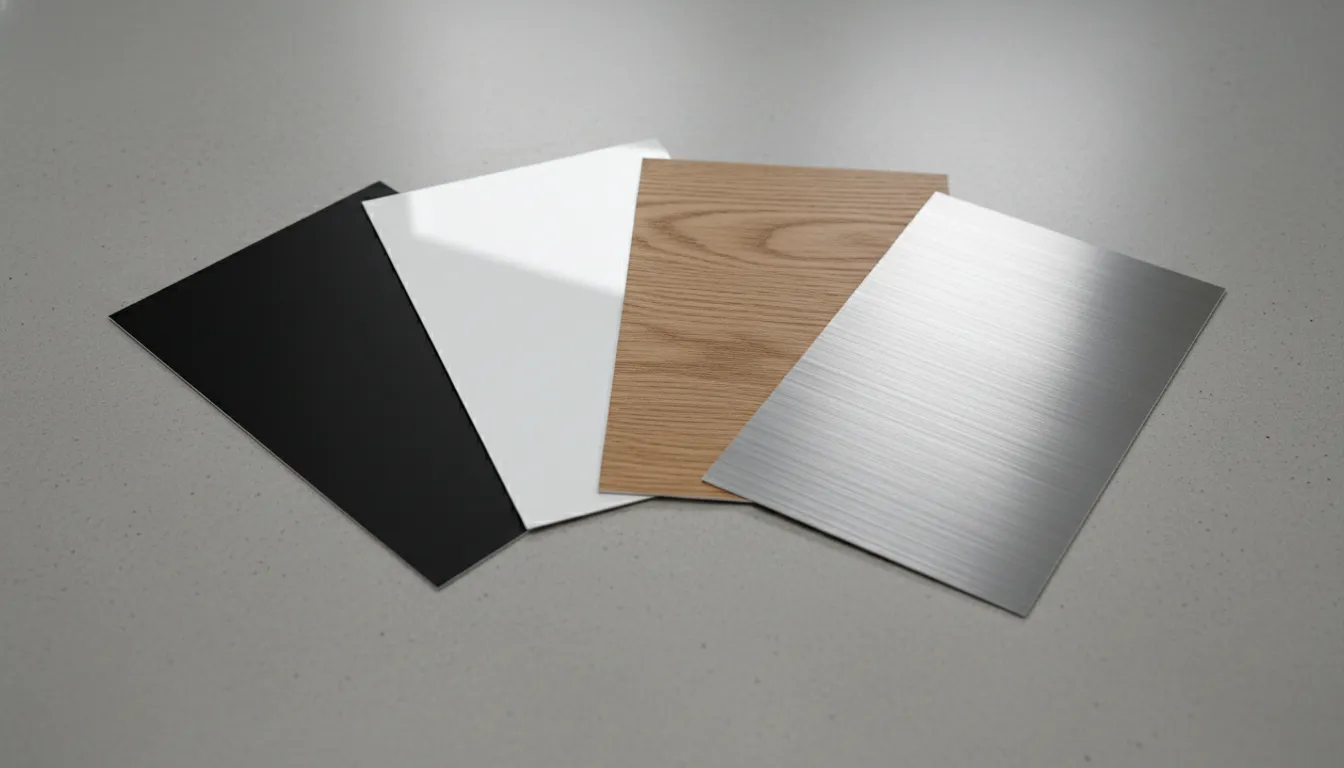
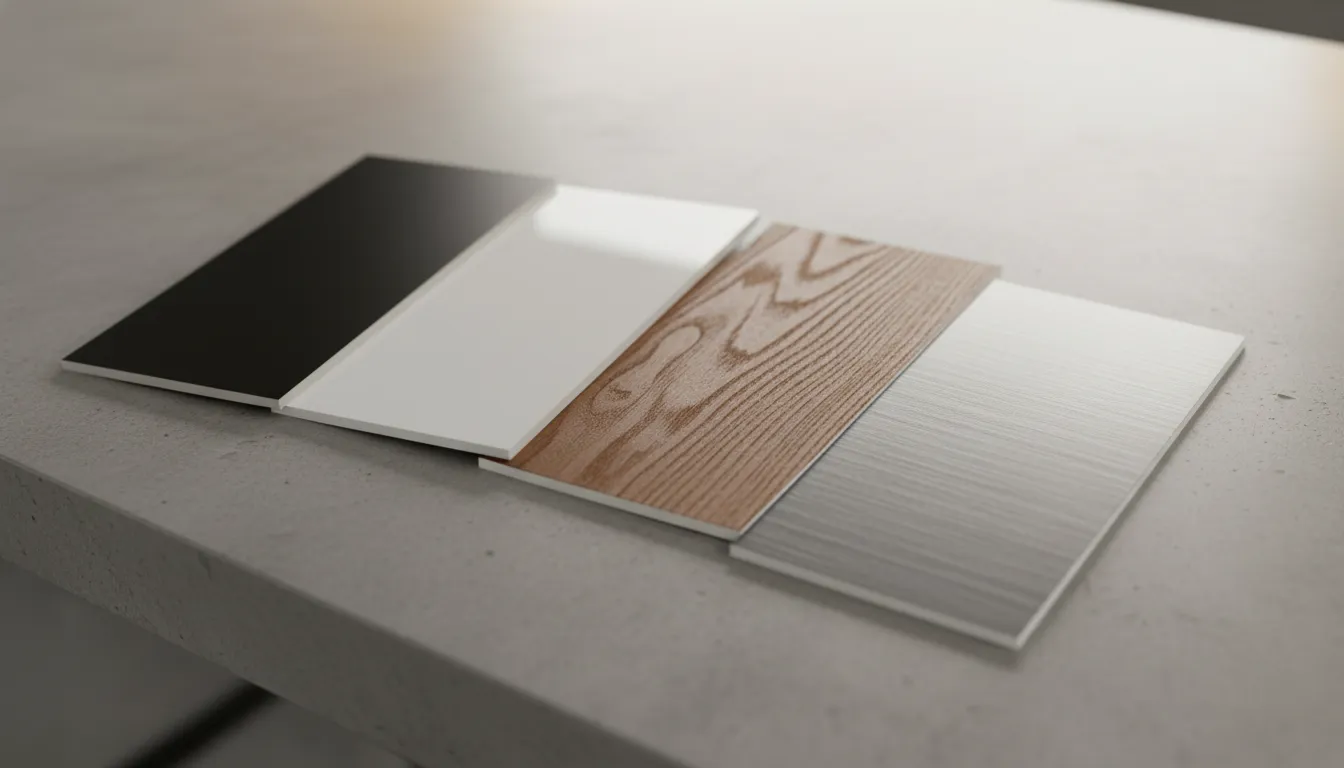
The aesthetic versatility of PET film is driven by advanced surface treatment technologies. WellP utilizes state-of-the-art coating and curing lines to achieve a variety of surface effects that meet modern interior design demands.
Super Matte and Anti-Fingerprint Technology
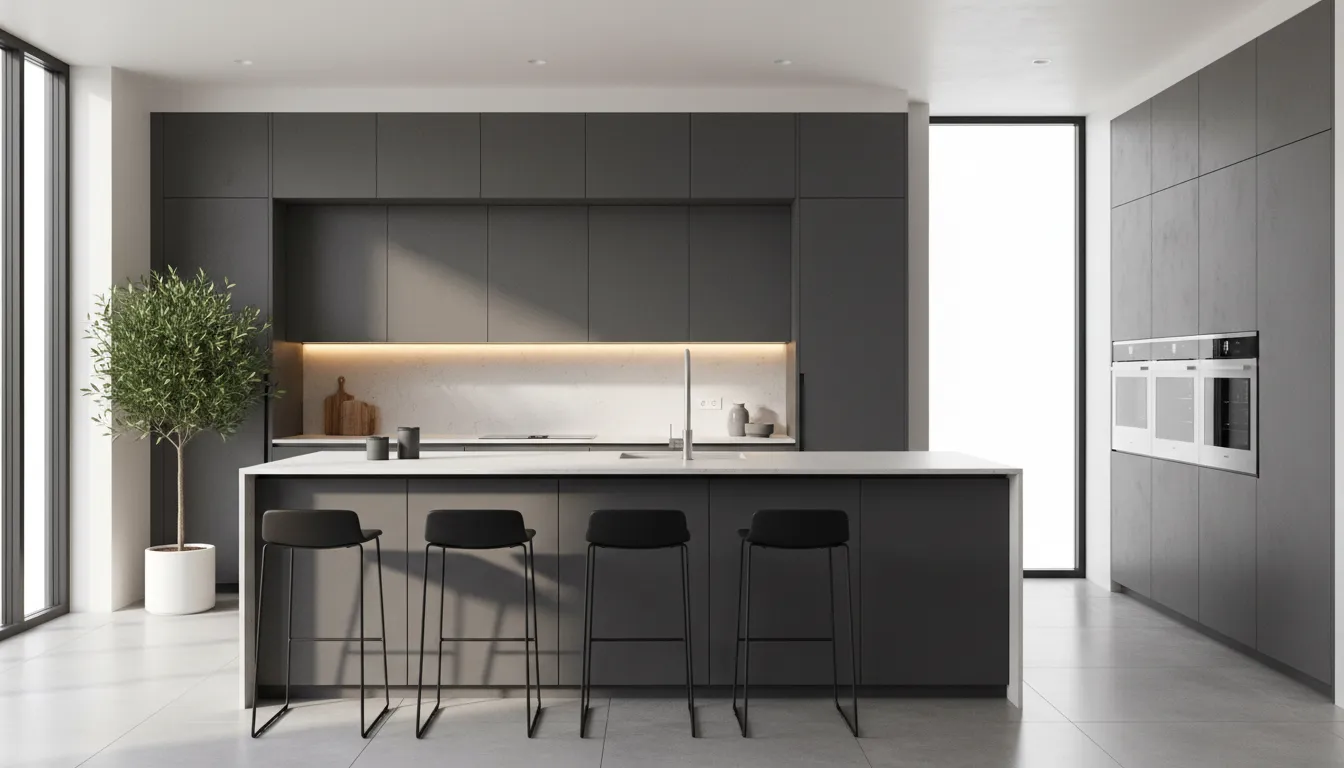
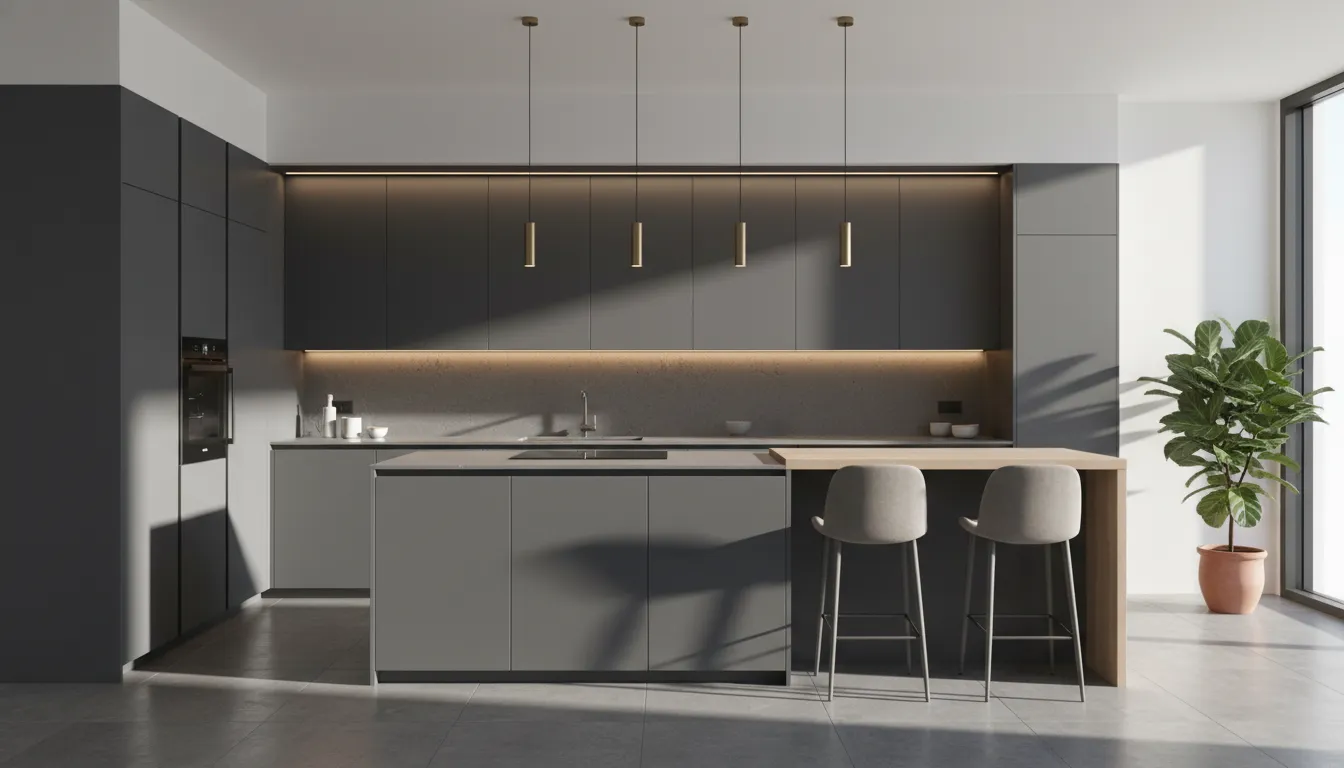
The dominant trend in modern kitchen cabinets and wardrobes is the "Ultra matte" or "soft-touch" finish. Achieving a gloss level below 3 GU (Gloss Units) requires specialized processing.
In premium PET films, this is achieved using Excimer laser curing technology. The excimer process micro-folds the surface coating at a nanometer level in an oxygen-free (nitrogen-inerted) environment. This creates a highly durable, ultra-matte surface that diffuses light perfectly.
- Benefit: Exceptional anti-fingerprint properties, thermal healing of micro-scratches, and a silky tactile feel.
High Gloss Finishes
High gloss PET films offer a mirror-like finish with gloss levels exceeding 90 GU. Unlike acrylic, which can be brittle and difficult to machine, or high-gloss PVC, which often suffers from "orange peel" textures, PET film maintains exceptional flatness. The surface is typically hardened with a UV-cured topcoat, providing superior scratch and chemical resistance against household cleaners.
Synchronized Pores and Textured Woodgrains
Advancements in embossed-in-register (EIR) technology allow PET films to replicate the exact tactile sensation of natural wood veneers. By synchronizing the physical embossing roller with the printed woodgrain pattern during extrusion, manufacturers can produce deep-textured panels that are virtually indistinguishable from real timber, but with the durability of a synthetic polymer.
Metallic and Stone Finishes
Through vacuum metallization and advanced rotogravure printing, PET films can accurately simulate brushed aluminum, copper, marble, and concrete. These finishes are highly sought after for commercial furniture, retail fixtures, and modern wall panels, offering significant weight and cost savings compared to the raw materials.
Industry Applications for PET Film
The superior physical properties of PET make it an ideal surface solution across multiple B2B manufacturing sectors.
Kitchen Cabinets and Wardrobes
Kitchen and bathroom environments demand surfaces that can withstand high humidity, temperature fluctuations, and frequent cleaning. 0.3mm to 0.5mm PET films laminated onto moisture-resistant MDF are the industry standard for flat-panel cabinet doors. The material's edge-banding compatibility ensures a seamless, moisture-proof seal.
Commercial and Residential Furniture
For office desks, hotel case goods, and residential furniture, durability is paramount. PET's high impact resistance and color-fastness (anti-yellowing) ensure that furniture exposed to natural sunlight through office windows will not degrade or change color over a 10-year lifecycle.
Wall Panels and Interior Doors
Architectural wall panels require lightweight, stable materials. 0.15mm to 0.18mm PET films are increasingly used for wrapping wall panel profiles and interior doors. The film's dimensional stability ensures that it will not shrink and expose the substrate edges over time.
Lamination Process Insights: Applying PET to MDF, OSB, and Plywood
Achieving a flawless finish requires not only premium PET film from a supplier like WellP but also precise execution during the lamination process.
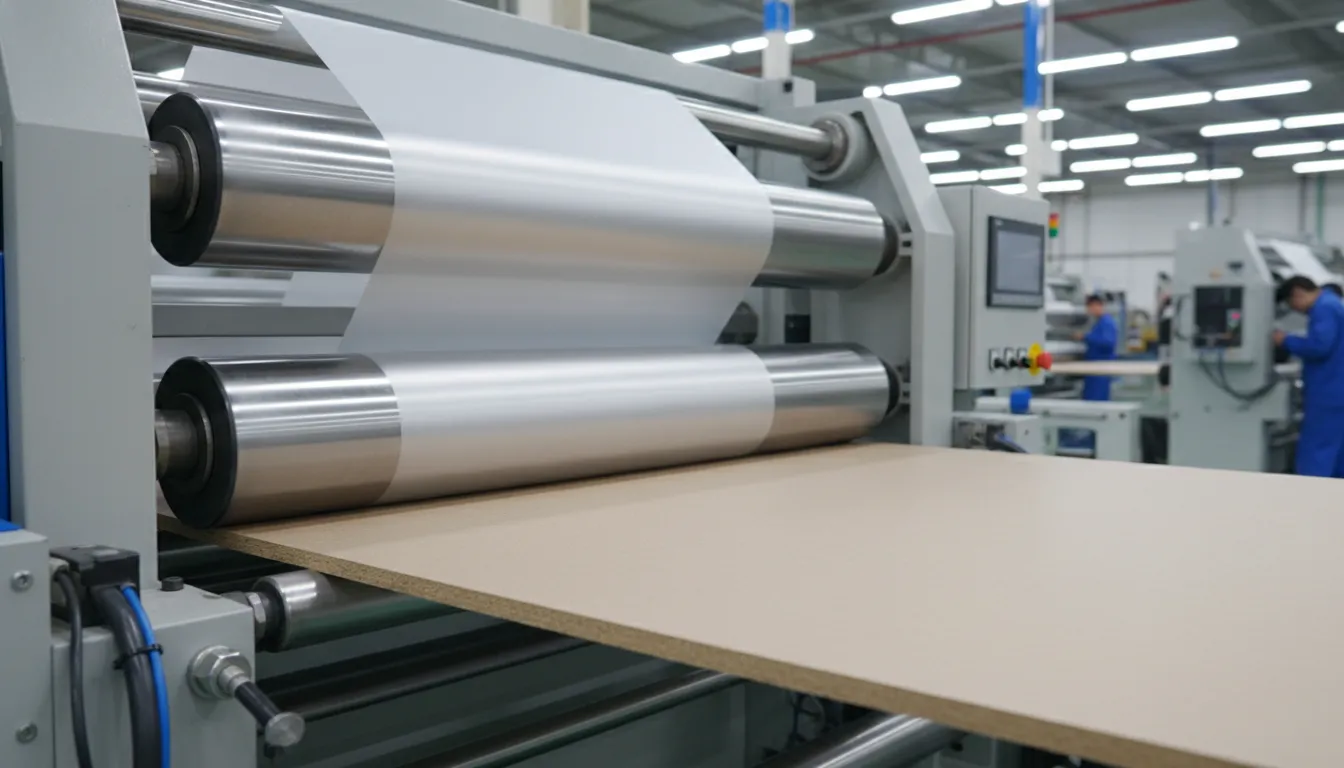
Flat Lamination
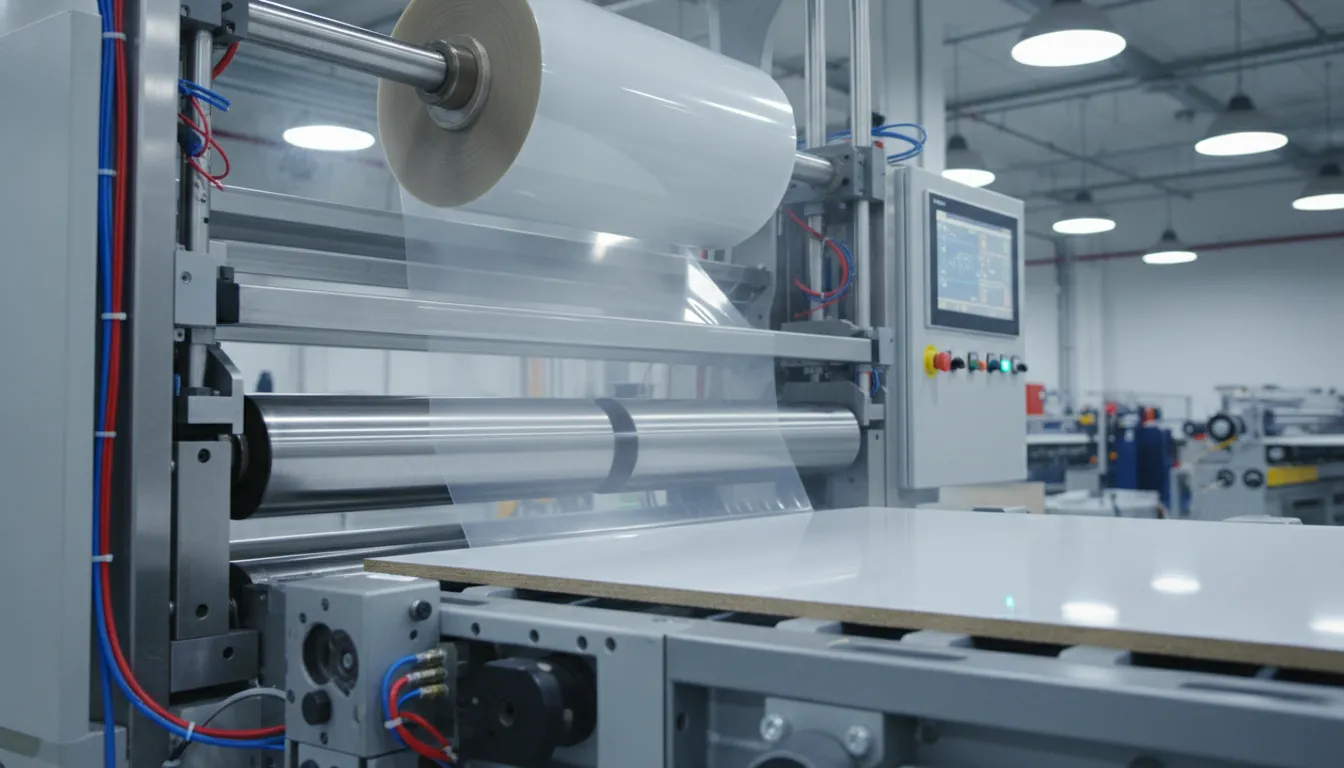
The most common and efficient method for applying PET film to MDF or particle board is continuous flat lamination using PUR (Polyurethane) hot melt adhesive.
- Panel Cleaning: The substrate must be rigorously brushed and vacuumed. PET film, especially in high gloss, will telegraph any dust particle left on the board.
- Adhesive Application: PUR glue is applied via a roller coater directly to the board (typically 40-60 grams per square meter). PUR is highly recommended over EVA or PVA because it cures via a chemical cross-linking process with moisture in the air, creating an irreversible, heat-resistant bond.
- Nip Roller Pressing: The PET film is applied to the glued board and passed through heavy calendering rollers.
- Curing: The panels must be stacked and left to cure for 24 to 72 hours to allow the PUR adhesive to fully cross-link before cutting or edge-banding.
Profile Wrapping and Membrane Pressing
While rigid, high-thickness PET is primarily for flat lamination, WellP also formulates modified, flexible PET films (often blended with a small percentage of G-PET) for profile wrapping and 3D membrane pressing. This allows door manufacturers to wrap intricate shaker-style doors or contoured edge profiles.
Recommended Machine Settings
- Roller Temperature: 120°C – 140°C (depending on line speed and PUR spec).
- Line Speed: 15 – 25 meters per minute.
- Tension Control: Crucial for PET. Over-tensioning during unrolling can cause the film to stretch slightly, which leads to panel bowing (warpage) once the film attempts to shrink back to its original state after cutting.
Comparing PET Film to Alternative Decorative Surfaces
To make informed procurement decisions, panel manufacturers must understand how PET stacks up against legacy materials.
| Feature | PET Decorative Film | PVC Film | Melamine Paper | Acrylic |
| Eco-Friendly / Recyclable | Yes (100%) | No (Contains Halogens) | Moderate | Moderate |
| Scratch Resistance | High (with UV coating) | Low to Medium | High | Medium |
| Anti-Yellowing (UV Stability) | Excellent | Poor | Good | Excellent |
| Flexibility / Machinability | Good (Flat & Wrapping) | Excellent (3D Pressing) | Rigid (Flat only) | Brittle |
| Cost | Medium - High | Low | Low | High |
| VOC Emissions | Zero | Low to Medium | Depends on substrate | Zero |
PET vs. PVC Film
While PVC remains cheaper and highly flexible for deep 3D routing, its environmental drawbacks and tendency to yellow and become brittle over time make it unsuitable for premium 2026 product lines. PET provides a vastly superior optical finish and long-term durability.
PET vs. Melamine Paper
Melamine is highly cost-effective and scratch-resistant, but it is limited to flat pressing and cannot achieve the true, deep "super matte" anti-fingerprint textures or the mirror-like high gloss of PET. Furthermore, melamine edges chip easily during CNC routing, whereas PET cuts cleanly.
PET vs. Acrylic
Acrylic offers excellent high-gloss finishes but is notoriously difficult to machine. It cracks easily during sawing and drilling. PET offers the same optical clarity and depth but with superior machinability, resulting in less factory waste and lower tool wear.
Advantages and Limitations of PET Decorative Films
The Core Advantages
1. Impeccable Color Consistency: Because PET is a highly stable polymer, batch-to-batch color consistency is strictly maintained. A cabinet door produced today will match one produced three years from now.
2. Food-Grade Safety: Derived from the same material used for water bottles, PET is entirely safe for kitchen environments, presenting zero risk of toxic migration.
3. Machinability: PET film acts as a structural layer. When laminated to MDF, it prevents chipping during CNC cutting and edge-banding, leading to higher factory yields.
Limitations and Considerations
1. Cost: PET is generally 20-30% more expensive than standard PVC film. However, the reduction in factory waste and customer defect returns often offsets this initial procurement cost.
2. Substrate Preparation: Because PET is relatively thin (0.15mm - 0.5mm), it requires a high-quality substrate. Standard particle board with a coarse surface will "telegraph" through high-gloss PET. High-density MDF with a sanded, calibrated surface is strongly recommended.
3. Adhesive Requirements: Lamination strictly requires PUR hot melt adhesives for optimal performance; cheaper EVA adhesives will fail, leading to delamination.
2026 B2B Buying Guide: Sourcing the Right PET Film
For purchasing managers, evaluating a PET film supplier involves looking beyond the price per square meter. The quality of the film directly impacts production line efficiency and final product liability.
Quality Indicators to Look For
- UV Weatherometer Testing: Request data on UV resistance. Premium PET should withstand 400+ hours in a Xenon-arc weatherometer with a $\Delta E$ (Delta E) color shift of less than 1.0.
- MEK Rub Test: To ensure the super matte or high gloss topcoat is properly cured, it should pass a Methyl Ethyl Ketone (MEK) double-rub test without degrading.
- Primer Coating: Ensure the back side of the PET film is factory-primed (corona treated or chemically primed). Unprimed PET will not bond securely to PUR adhesive, leading to catastrophic delamination in the field.
Thickness Guidelines by Application
- 0.15mm – 0.20mm: Ideal for flat lamination on wall panels, interior doors, and caravan/RV interiors where weight is a concern.
- 0.25mm – 0.35mm: The sweet spot for flat-panel kitchen cabinets, offering excellent coverage over MDF substrates.
- 0.40mm – 0.50+ mm: Used for premium, heavy-duty applications, high-traffic commercial furniture, or when laminating over slightly uneven substrates like plywood.
Partnering with the Right Manufacturer
At WellP, we specialize exclusively in eco-friendly surface materials, providing PET and PP decorative films engineered for seamless integration into your existing lamination lines. We offer custom color matching, precise tension-controlled master rolls, and rigorously tested primed backings to ensure zero defect rates on your factory floor.
Frequently Asked Questions
1. Does PET decorative film require special machinery to apply?
If you are already performing flat lamination with PVC or acrylic, you likely do not need new machinery. However, you must use a PUR hot melt roller coater. Cold press or EVA hot melt systems are not suitable for PET film.
2. Can PET film be used for 3D membrane pressing?
Standard PET is highly crystalline and rigid, making it unsuitable for deep 3D pressing. However, modified PETG (Glycol-modified PET) or specific flexible PET blends can be used for shallow profile wrapping and simple 5-piece shaker door constructions.
3. How do I prevent the "orange peel" effect when laminating high gloss PET?
Orange peel is usually caused by the substrate or the adhesive, not the film. Ensure you are using premium, double-sanded MDF. Additionally, check your PUR glue spread rate; applying too much adhesive (over 60g/m²) will cause the glue to ripple beneath the film.
4. Is PET film scratch-proof?
No polymeric surface is entirely scratch-proof. However, premium PET films feature a UV-cured hardcoat. Matte PET offers excellent thermal healing for micro-scratches, while high-gloss PET achieves a pencil hardness of 2H to 3H, making it highly resistant to everyday wear.
5. How does WellP ensure the PET film stays bonded to the MDF?
WellP applies a proprietary chemical primer to the reverse side of all our PET films. This primer chemically reacts with the isocyanates in your PUR hot melt adhesive, creating an unbreakable structural bond with the wood substrate.
6. Can PET film be recycled at the end of the furniture's lifecycle?
Yes. PET is a highly recyclable thermoplastic (Recycling Code 1). When separated from the MDF substrate, it can be ground down and re-extruded into industrial fibers or new recycled PET (rPET) products.
Conclusion
The transition from legacy plastics to PET decorative film represents a major step forward for the B2B furniture and panel manufacturing industry. By offering superior aesthetics—from excimer-cured super matte to mirror-finish high gloss—combined with unparalleled environmental credentials and chemical stability, PET is undeniably the surface material of choice for 2026 and beyond.
By understanding the technical nuances of the material, optimizing your PUR lamination lines, and partnering with an experienced manufacturer, your factory can reliably produce premium, high-margin, eco-friendly interior products.
 Why PET Decorative Film Is Leading the Global Surface Materials Market